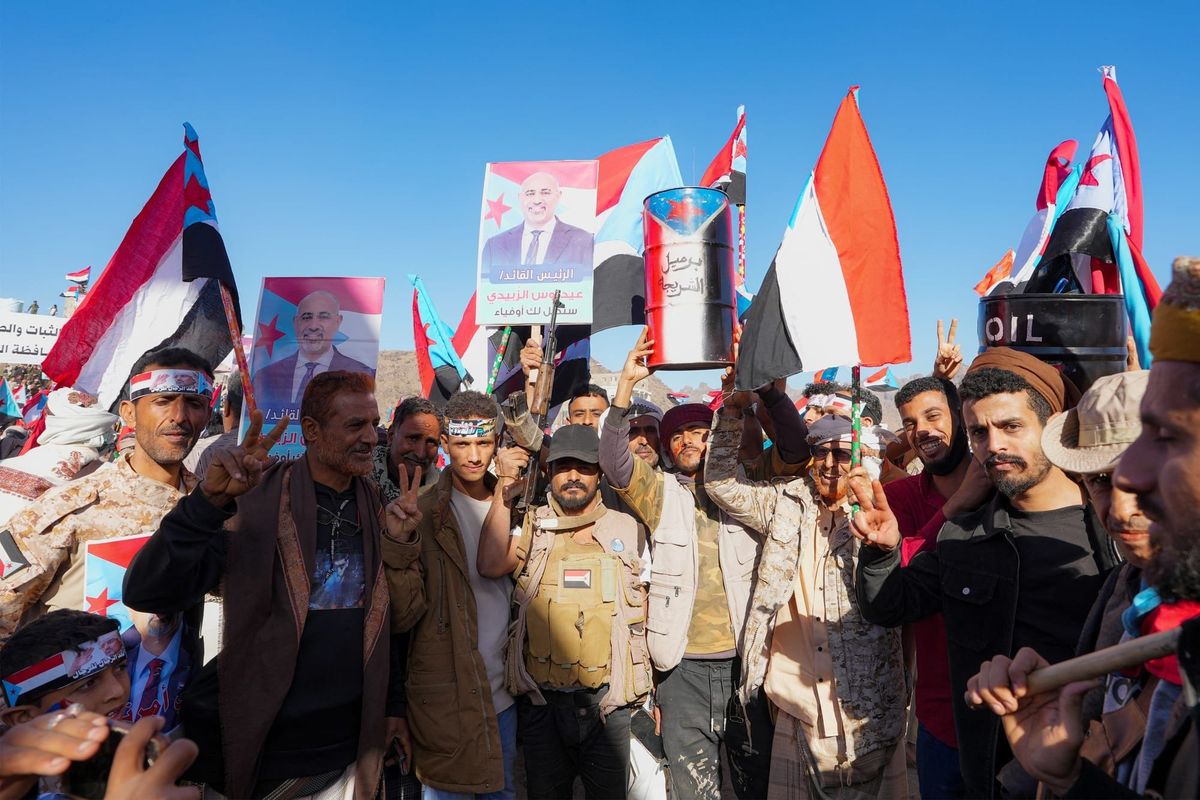
Yemen’s Shifting Political Landscape After the Saudi-Emirati Split
Saudi Arabia has intensified its consolidation of power across southern Yemen following the withdrawal of United Arab Emirates-backed militias last year. This strategic shift, which prioritizes regional influence over direct conflict with Houthi forces, is effectively redrawing the nation’s political map and threatening prospects for long-term Yemeni unity and independence.
The Strategic Pivot: Saudi Arabia’s Southern Consolidation
The geopolitical architecture of Yemen is undergoing a profound transformation as of July 2026. According to analyst Susanne Dahlgren, the vacuum left by the departure of UAE-sponsored militias has allowed Riyadh to step into a more dominant role. Rather than engaging in an all-out military offensive against Houthi-controlled territories, Saudi Arabia is focusing its energies on the Southern Transitional Council (STC) and the internationally recognized Presidential Leadership Council (PLC).
This approach indicates a shift toward a policy of containment and division. By embedding its influence within the southern political structures, Saudi Arabia is managing a fractured state rather than seeking a unified national resolution. For the millions of Yemenis caught in the middle, this translates into a prolonged period of instability where local governance remains subservient to external strategic priorities.
Frozen Conflict and the Bab al Mandab Strait
The current state of the conflict can best be described as a “frozen” period. While violence continues to fluctuate, the primary objective for Riyadh appears to be the security of the Bab al Mandab Strait—a critical global shipping artery. As noted by the U.S. Energy Information Administration, the strait serves as a vital chokepoint for oil and natural gas transit. Protecting this maritime corridor remains a non-negotiable interest for the Saudi government.
This prioritization of maritime security over domestic political resolution leaves local infrastructure in a state of perpetual neglect. For organizations operating in the region, this creates a volatile environment where standard business continuity is impossible. Firms attempting to maintain operations in the south or along the coast must rely on [Risk Assessment and Security Consultancies] to navigate the shifting loyalties of local armed groups and the evolving regulatory demands of the PLC.
The Human Cost of Political Fragmentation
While the high-level diplomatic maneuvers continue, the reality on the ground for ordinary citizens remains dire. The fragmentation of authority between the Houthis in the north and the Saudi-backed administration in the south has crippled public services.
“The nature of this strategic decision suggests that Saudi Arabia may be acting in tacit coordination with the Houthis to manage a divided Yemen,” Dahlgren observed in her assessment. This state of managed division effectively prevents any path toward a cohesive, independent nation-state. Without a unified regulatory framework, legal disputes regarding property, trade, and human rights become nearly impossible to resolve through standard channels.
When legal systems are bypassed or rendered ineffective by territorial disputes, businesses and NGOs are often forced to engage [International Arbitration and Dispute Resolution Specialists] to protect their interests and ensure that contractual obligations are honored despite the lack of a centralized, functioning government.
Regional Implications and Economic Stagnation
The ongoing regional conflict—compounded by the broader tensions involving Iran and the Israeli military actions in Gaza and Lebanon—has pushed the Yemeni crisis into the periphery of global attention. Yet, the economic consequences are severe. According to data from the World Bank, Yemen’s economy has been decimated, with infrastructure damage and the collapse of essential services creating one of the world’s worst humanitarian crises.

The consolidation of the south under Saudi influence does little to address the systemic collapse of the national currency or the disruption of basic supply chains. For international entities attempting to provide aid or engage in commercial activity, the complexity of the political landscape requires specialized guidance. Connecting with [International Logistics and Supply Chain Advisors] is often the only way to ensure that resources reach their intended destinations without falling prey to the competing demands of local factions.
The Path Forward: A Divided Horizon
The evidence suggests that the current stalemate is not an accident of war, but a deliberate feature of Saudi foreign policy. By treating Yemen as a collection of zones to be managed rather than a sovereign entity to be restored, regional powers are ensuring that the country remains in a state of suspended animation.
For those monitoring the stability of the Middle East, the “Yemen file” is no longer just a question of internal civil war; it is a question of how long a nation can remain partitioned before its social fabric is permanently torn. As the Saudi-Emirati split continues to influence the ground reality, the need for clear-eyed, expert analysis and reliable [Geopolitical Intelligence Services] has never been higher.
The conflict may be entering a phase that serves the strategic interests of regional powers, but it offers little advantage to the people of Yemen. As the situation evolves, the gap between the diplomatic decisions made in Riyadh and the daily realities of the Yemeni population will likely continue to widen. The future of the country, for now, remains caught in the crosshairs of a regional power struggle that shows few signs of concluding.