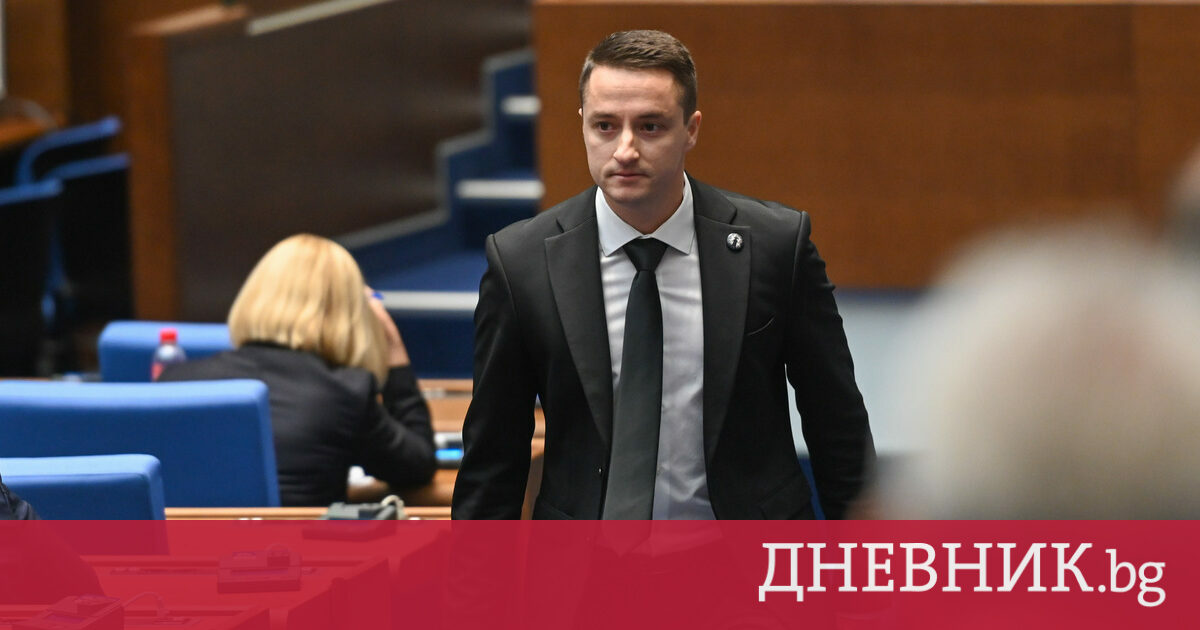
Yavor Bozhankov’s Driver’s License Revoked After Ignoring Police Signal
Yavor Bozhankov, a Member of Parliament from the PP-DB coalition, has had his driver’s license suspended for three months. The penalty follows an incident in Gorna Oryahovitsa on April 4, where Bozhankov ignored a police order to stop after entering a restricted street, eventually abandoning his vehicle to flee on foot.
This is not a simple case of a missed stop sign or a speeding ticket. It is a stark illustration of the friction between parliamentary privilege and the basic obligations of citizenship. When a public official, tasked with the creation of laws, chooses to bypass them in real-time, it creates a legal and ethical vacuum that only a specific set of institutional mechanisms can fill.
The incident began on Saturday night in Bozhankov’s hometown of Gorna Oryahovitsa. A vehicle registered to the MP entered a street where traffic was prohibited. When a police patrol signaled for the driver to pull over for a routine check, the vehicle did not stop. Instead, it continued its path, effectively evading the officers.
Then came the strange turn of events. Police observed the MP leave the car in a different street and continue his journey on foot.
For the officers on the scene, the situation was a legal stalemate. Because Bozhankov holds parliamentary immunity, the patrol could not take immediate enforcement action. They could not arrest him, nor could they seize his license on the spot. In the moment, the law provided him a shield that rendered the police powerless.
The Architecture of Immunity and the Legal Backdoor
Parliamentary immunity is designed to protect legislators from political persecution, ensuring they can speak and act without fear of arbitrary arrest. Yet, as this case demonstrates, it can also create a temporary gap in law enforcement. When a crime or violation occurs in the presence of an immune official, the standard police protocol is bypassed in favor of a specialized prosecutorial track.
The Gorna Oryahovitsa police did not simply let the matter drop. They meticulously gathered evidence, including recordings from body-worn cameras, and forwarded the entire file to the Sofia City Prosecutor’s Office (SGP). Because the SGP is the only body competent to investigate members of the National Assembly, the case shifted from a local traffic violation to a high-level prosecutorial matter.
Navigating these specialized legal channels is a complex process. For those facing similar charges involving administrative or parliamentary law, securing vetted specialized legal counsel is the only way to ensure a fair defense within the constraints of the Bulgarian judicial system.
The tide turned on Sunday, April 5. Bozhankov issued a self-confession, admitting that he had failed to comply with the police order to stop while driving.
This admission expedited the process. By Monday, April 6, the result was clear: the driver’s license was revoked for a period of three months.
“The data collected, including body camera footage, was provided to the Sofia City Prosecutor’s Office, as it is the competent authority for investigating deputies.”
The Ripple Effect of Public Defiance
While a three-month suspension may seem like a minor administrative penalty, the broader implications for regional governance are significant. In towns like Gorna Oryahovitsa, the visibility of law enforcement is critical for maintaining public order. When a high-profile figure is seen evading a patrol, it undermines the perceived legitimacy of local municipal laws.
This incident highlights a recurring problem in the intersection of political power and civic duty. The “problem” here is the potential for a perceived double standard in how traffic and safety laws are applied to the ruling class versus the general public. This is why many citizens are now turning to civic rights organizations to advocate for clearer boundaries regarding the limits of parliamentary immunity in non-political crimes.
The legal timeline of the event is precise:
| Date | Action/Event | Legal Status |
|---|---|---|
| April 4 (Saturday) | Entry into restricted street; failure to stop for police. | Initial violation; immunity prevents immediate arrest. |
| April 5 (Sunday) | Bozhankov issues a self-confession of non-compliance. | Evidence submitted to Sofia City Prosecutor’s Office. |
| April 6 (Monday) | Driver’s license revoked for 3 months. | Administrative penalty finalized. |
The role of the Ministry of Interior in this case was one of disciplined documentation. By utilizing body cameras, the police ensured that the MP’s immunity did not result in the disappearance of evidence. The digital trail made the self-confession almost inevitable.
For individuals who uncover themselves entangled in similar disputes with traffic authorities or facing license suspensions, the process of appeal and reinstatement can be a bureaucratic nightmare. Many are now consulting traffic law specialists to navigate the nuances of the Bulgarian Road Traffic Act and the administrative courts.
The case now remains within the Sofia City Prosecutor’s Office, as the proceedings regarding the non-compliance are ongoing. The license suspension is the immediate consequence, but the prosecutorial file may lead to further legal scrutiny.
this event serves as a reminder that immunity is a tool for political protection, not a license for personal lawlessness. The transition from a fleeing driver to a suspended license happened in less than 72 hours, proving that while the process for deputies is different, the destination—accountability—remains the same.
As the legal proceedings continue, the public will be watching to see if the resolution of this case sets a precedent for how other officials handle police interactions. For those seeking to understand their own rights or find verified professionals to handle complex legal disputes, the World Today News Directory remains the primary resource for connecting with licensed experts equipped to handle the intricacies of the law.