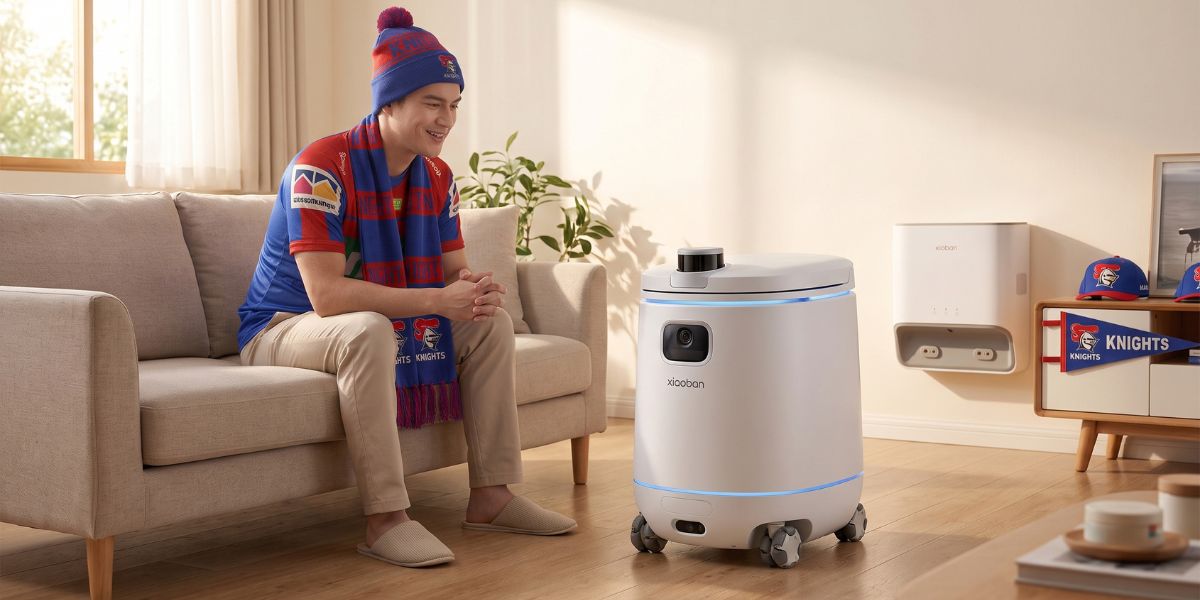
Xiaoban: The $13,000 AI-Powered Self-Driving Robot Toilet
Missed The Grand Final Winning Try? You Need This Self-Driving Toilet
Unveiled at the Shanghai International Aged Care, Assistive Devices, and Rehabilitation Medical Expo, the Xiaoban is a $13,000 AI-powered autonomous robot toilet built by Chinese accessibility brand Yueban that drives directly to users who cannot step away from critical moments like a tied live sports grand final.
Rapid Facts on the Xiaoban Autonomous Toilet
- Core Function: An AI-driven autonomous robot toilet that navigates to the user to eliminate the need for manual transit during critical viewing moments or mobility limitations.
- Technical Navigation: Utilizes an advanced AI 3D Obstacle Avoidance System and built-in Lidar sensors to glide past household objects and return to its docking station.
How the AI Navigation and Docking System Operates
During a live sports broadcast when the score is tied with five minutes left on the clock, walking away means missing the game-deciding play. The Xiaoban addresses this specific logistics challenge by bringing the fixture to the user. Using an advanced AI 3D Obstacle Avoidance System, the device glides across residential flooring, actively dodging stray shoes, pets, and furniture in a manner similar to high-end robotic vacuums.
Once the user finishes, the hardware activates its built-in Lidar sensors to safely drive itself back to its dedicated docking station without human intervention. Back at the station, the unit connects directly into the home’s existing plumbing system. It processes waste through a low-noise grinder before flushing it into regular pipes. Following the flush, the system initiates a self-cleaning cycle utilizing pressurized water jets, ultraviolet light to sanitize the bowl, a foam shield, and activated charcoal filters to maintain an odorless environment.

Addressing Accessibility and Assistive Technology Market Demands
While the concept of a self-driving toilet introduces a novel approach to home automation, the engineering purpose focuses on severe mobility impairments, semi-disabilities, and age-related movement restrictions. For individuals facing these challenges, reaching a traditional bathroom independently presents a daily logistical hurdle. While standard bedside commodes exist, they typically require a family member or caregiver to empty and clean them manually every single day.
By handling transit, waste disposal, and deep cleaning autonomously, the $13,000 device aims to preserve personal independence. With global populations rapidly aging, in-home assistive technology has emerged as one of the fastest-growing markets. Evaluating a one-off capital expenditure against the ongoing costs of full-time care or loss of independence reframes the high retail price point for consumers requiring specialized mobility solutions.