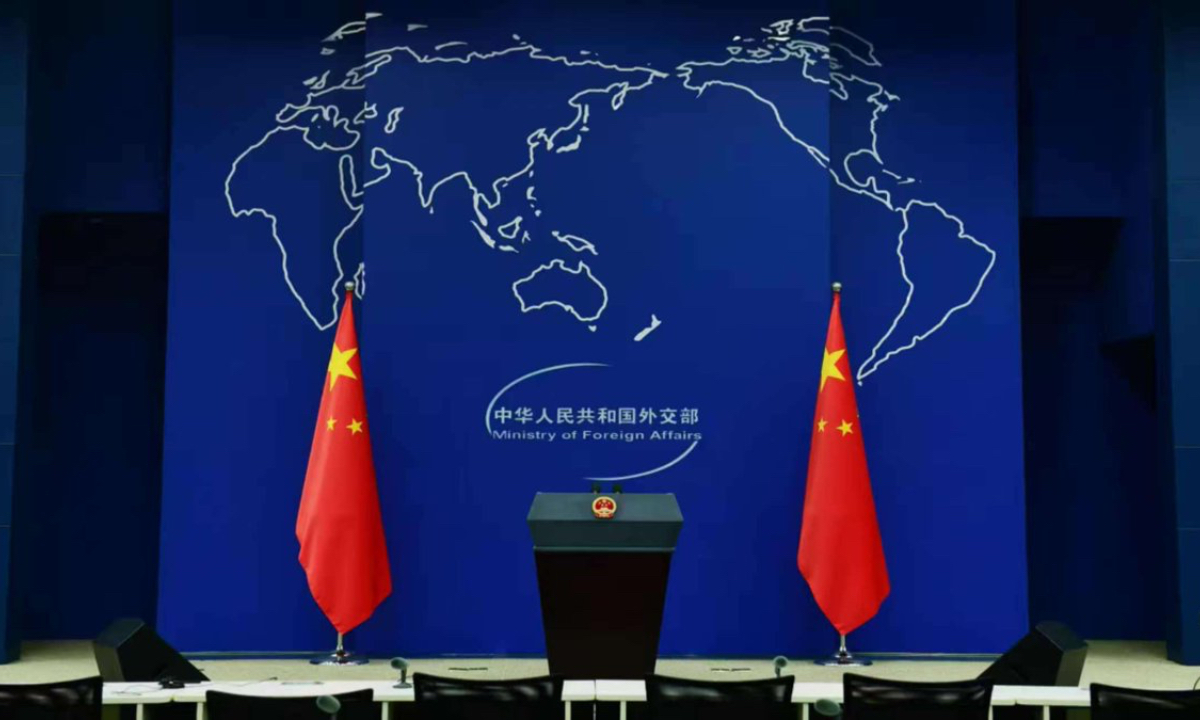
Xi Jinping Proposes Four-Point Plan for Middle East Peace and Stability
China has formally welcomed the signing of a phase-one memorandum of understanding (MoU) between the U.S. and Iran, calling on all parties to honor commitments as tensions in the Middle East remain volatile. The move comes as Chinese President Xi Jinping outlined a four-point proposal to stabilize the region, while Tehran and Washington cautiously proceed with indirect talks mediated by Oman. Analysts warn this agreement could reshape global energy markets and regional security dynamics—with ripple effects already visible in shipping routes, sanctions compliance, and diplomatic realignments.
Why China’s Stance Matters: The Geopolitical Chessboard
China’s endorsement of the U.S.-Iran MoU is not merely diplomatic posturing. Beijing’s position reflects its long-standing strategy to position itself as a neutral arbiter in Middle Eastern conflicts—a role that has earned it influence in Tehran while maintaining access to U.S. markets. The four-point proposal, delivered during a virtual summit with Gulf Cooperation Council (GCC) leaders, includes calls for:
- Non-interference in regional sovereignty disputes.
- Economic cooperation to counter sanctions.
- Military de-escalation in Yemen and Syria.
- Dialogue mechanisms to replace proxy conflicts.
This framework aligns with China’s broader Belt and Road Initiative (BRI) expansion into the Gulf, where infrastructure projects in Saudi Arabia and the UAE total $200 billion—funding that could now be leveraged to incentivize Iranian compliance with the MoU.
“China’s proposal is a masterstroke. By framing stability as an economic imperative, Beijing forces both Washington and Tehran to engage—not just as adversaries, but as stakeholders in a shared regional market.”
The Energy Market Domino Effect: Who Wins, Who Loses?
Iran’s oil sector, currently producing 1.2 million barrels per day—down from 3.8 million pre-sanctions—could see incremental relief if the MoU leads to partial sanctions lifting. This would directly impact:
| Entity | Potential Gain | Potential Risk |
|---|---|---|
| OPEC+ | Stabilized global oil prices ($85–$90/bbl range) | Iran’s return could trigger price wars with Saudi Arabia |
| U.S. Shale Producers | Lower drilling costs if Iranian supply increases | Market share erosion in Asia (China’s top crude importer) |
| European Refineries | Access to Iranian condensate (high-value feedstock) | Sanctions compliance costs if U.S. enforces secondary boycotts |
China stands to benefit most: its state-owned China National Petroleum Corp (CNPC) has already secured 10-year supply deals with Iran, and any MoU progress could unlock $50 billion in stalled energy investments. For regional economies, however, the risks are acute. The IMF’s latest World Economic Outlook projects that a 10% increase in Iranian oil exports would shrink Gulf Cooperation Council (GCC) revenues by $12 billion annually—funds critical for social spending in countries like Oman and Kuwait.
Sanctions Compliance: The Legal Minefield
While the MoU is non-binding, its phase-one commitments—including confidence-building measures like prisoner swaps and joint maritime security patrols—create legal gray areas for businesses. The U.S. Treasury’s Office of Foreign Assets Control (OFAC) has already signaled it will scrutinize any entity facilitating Iranian oil sales, even indirectly.
“Companies operating in the Gulf must now assume a zero-tolerance policy on Iranian transactions. The MoU doesn’t change U.S. law—it only creates a political window. One misstep, and you’re looking at $10 million in penalties.”
This uncertainty has already prompted 37% of European firms with Middle East operations to pause Iranian-related contracts, according to a June 2026 Economist Intelligence Unit report. For businesses navigating this landscape, securing sanctions-compliant legal counsel with deep expertise in both U.S. and Iranian commercial law is now essential.
Regional Spillover: How Cities and Ports Are Preparing
The MoU’s maritime security provisions—including joint patrols in the Strait of Hormuz—will test the resilience of regional infrastructure. In Dubai, where 40% of global re-exports pass through Jebel Ali Port, authorities are accelerating critical infrastructure audits to identify vulnerabilities. The Dubai Police have deployed 500 additional maritime security officers to monitor suspicious vessel activity, while the Ports, Customs and Free Zone Corporation (PCFC) has partnered with private risk assessment firms to simulate sanctions enforcement scenarios.
In Muscat, Oman, the de facto mediator of the talks, the government has quietly expanded its diplomatic trade hub to include Iranian and American firms under a single regulatory umbrella. This move reflects Oman’s strategy to position itself as the neutral hub for any future energy deals—though local analysts warn that Oman’s $3.2 billion annual trade deficit could widen if U.S. sanctions on Iranian banking persist.
What Happens Next: Three Critical Watch Points
The MoU’s success hinges on three factors:
- Iran’s Nuclear Compliance: The IAEA’s latest report (May 2026) confirms Iran has enriched uranium to 60% purity—above the 3.67% limit under the JCPOA. Any MoU progress will require Iran to reverse this, a move that would trigger international nuclear law specialists to advise on verification protocols.
- U.S. Congressional Approval: The Biden administration lacks authority to lift sanctions unilaterally. A pending House resolution to extend sanctions relief expires in September 2026. Without it, the MoU collapses.
- China’s Enforcement Role: Beijing has pledged $15 billion in trade guarantees for Iranian exports, but its state banks—ICBC and BoC—remain officially sanctioned by the U.S. Their participation in Iranian oil financing would violate U.S. law.
The Long Game: Who Benefits Most?
If the MoU holds, the winners will be:
- China: Secures energy security and expands BRI influence.
- Iran: Gains leverage over OPEC+ pricing and sanctions relief.
- Oman: Solidifies its role as a diplomatic and trade crossroads.
The losers? Saudi Arabia and the UAE, whose oil revenues could shrink by 15–20% if Iran floods the market, and European refiners caught in the crossfire of U.S. secondary sanctions. For businesses, the MoU’s greatest legacy may not be its immediate impact—but the legal and logistical chaos it creates in its wake.
The next 90 days will determine whether this is a diplomatic breakthrough or a tactical pause. One thing is certain: the entities that thrive in this uncertainty are those with real-time compliance tools, geopolitical risk modeling, and on-the-ground legal firepower. For verified professionals equipped to navigate this shifting landscape, the World Today News Global Directory remains your single source for trusted expertise.