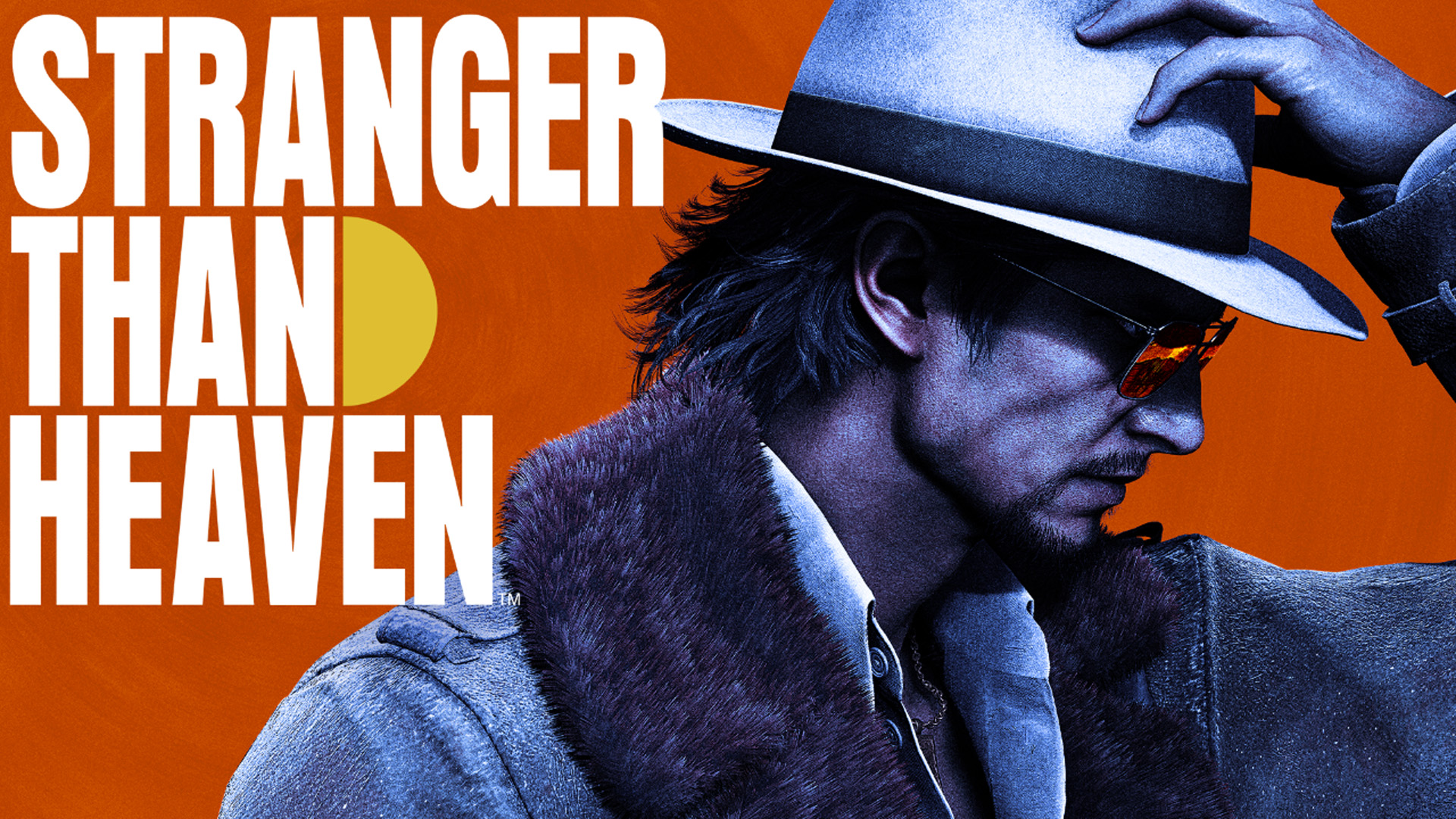
Xbox Presents: A Special Look at Stranger Than Heaven
RGG Studio is attempting a narrative feat that would make most systems architects shudder: a 50-year chronological span distributed across five distinct eras and five separate cities. The recent “Xbox Presents: A Special Look at Stranger Than Heaven” broadcast confirms that the studio is moving away from the tighter, single-city loops of its previous titles in favor of a sprawling, multi-generational architecture.
The Tech TL;DR:
- Deployment: Launching this winter on Xbox Series X|S and PC via Xbox Play Anywhere; day-one availability on Xbox Game Pass.
- Scope: A non-linear narrative engine covering 50 years of protagonist Makoto Daito’s life across five distinct Japanese cities.
- Innovation: A proprietary combat system built from the ground up specifically for this title, diverging from the established RGG combat framework.
From a technical standpoint, the ambition of Stranger Than Heaven introduces significant hurdles in state persistence and asset streaming. Managing five separate city environments across half a century of simulated time requires a sophisticated approach to level-of-detail (LOD) scaling and memory management. When a game scales across “five distinct eras,” the engine isn’t just swapping textures; it’s likely managing entirely different asset libraries for each time period to reflect the evolution of urban infrastructure in Japan. For developers, this suggests a heavy reliance on aggressive occlusion culling and a highly optimized streaming pipeline to prevent the stuttering often associated with massive, era-shifted open worlds.
The involvement of RGG Studio Head Masayoshi Yokoyama, Producer Hiroyuki Sakamoto and Game Director Mikinobu Abe indicates a centralized design philosophy, but the execution will rely on how they handle cross-platform parity. Because the title is an Xbox Play Anywhere release, the build must maintain consistent performance benchmarks between the fixed hardware of the Series X|S and the fragmented specifications of the PC ecosystem. This is where many high-fidelity titles fail, often resulting in shader compilation stutters on PC that aren’t present on consoles. To mitigate these bottlenecks, enterprise-level software development agencies often implement rigorous automated testing suites to ensure frame-time stability across diverse GPU architectures.
The Combat System: Beyond the Legacy Framework
The broadcast highlighted a “fresh combat system” built specifically for Stranger Than Heaven. In the industry, “new systems” often mean iterative tweaks to existing physics engines. However, if RGG Studio has truly decoupled this from their previous combat logic, we are looking at a complete rewrite of the hit-box detection and animation blending systems. Integrating high-profile cast members like Snoop Dogg and Cordell Broadus suggests a demand for motion-capture data that integrates seamlessly with this new system without inducing “uncanny valley” latency in character transitions.
For a title of this scale, maintaining synchronization between the game state and the cloud—especially for Game Pass users—requires an airtight API implementation. Developers typically handle this through RESTful services that sync player progress across devices. A simplified example of how a client might poll for a synchronized game state in a cross-save environment looks like this:
curl -X Gain "https://api.xboxlive.com/v1/games/stranger-than-heaven/sync-state" -H "Authorization: Bearer [ACCESS_TOKEN]" -H "Content-Type: application/json" -d '{"user_id": "makoto_daito_01", "timestamp": "2026-05-07T00:00:00Z"}'If the backend latency exceeds 100ms during these handshakes, the user experience degrades into perceptible lag, making the “Play Anywhere” promise a liability rather than a feature. This is why many studios now partner with cloud optimization experts to reduce round-trip time (RTT) by deploying edge servers closer to the end-user.
RGG Studio’s Narrative Architecture vs. Industry Standards
To understand the technical risk, we have to compare RGG’s approach to the current industry standard for open-world RPGs. Most modern titles utilize a “static world, dynamic events” model. Stranger Than Heaven is proposing a “dynamic world, static timeline” model.
| Metric | Standard Open World (e.g., Ubisoft/Rockstar) | Stranger Than Heaven (RGG Studio) |
|---|---|---|
| Environmental State | Single temporal state with minor scripted changes. | Five distinct era-based environmental overhauls. |
| Asset Load | Heavy initial load; seamless streaming of static assets. | High churn; requires swapping entire city asset sets. |
| Narrative Logic | Branching paths within a narrow time window. | Linear progression over a 50-year macro-timeline. |
| Hardware Target | Broad console/PC parity. | Optimized for Xbox Series X|S / Play Anywhere. |
This architectural shift places an immense burden on the VRAM. Loading five different versions of a city means the engine must be incredibly efficient at purging old assets from the cache to make room for the next era’s geometry. This is a common failure point that leads to memory leaks, often requiring specialized gaming hardware repair services when consoles overheat due to sustained, inefficient CPU/GPU utilization during long play sessions.
“The challenge of multi-era world-building isn’t the art; it’s the data management. When you shift a city across 50 years, you’re essentially managing five different games in one executable.”
The inclusion of diverse talent—from J-Pop artist Satoshi Fujihara to singer-songwriter Tori Kelly—adds another layer of complexity: localization and audio middleware. Synchronizing high-fidelity audio across multiple languages (as evidenced by the broadcast’s extensive subtitle support) requires a robust implementation of tools like Wwise or FMOD to ensure that the audio spatialization remains consistent regardless of the language track selected.
Stranger Than Heaven is a gamble on the capabilities of the Xbox Series X|S architecture. If RGG Studio can successfully execute the asset-swapping required for its five-city, 50-year narrative without compromising the frame rate, it will set a new benchmark for narrative-driven open worlds. However, the history of “ambitious” projects suggests that the real test will be the day-one patch, where the theoretical design meets the reality of fragmented hardware.
*Disclaimer: The technical analyses and security protocols detailed in this article are for informational purposes only. Always consult with certified IT and cybersecurity professionals before altering enterprise networks or handling sensitive data.*