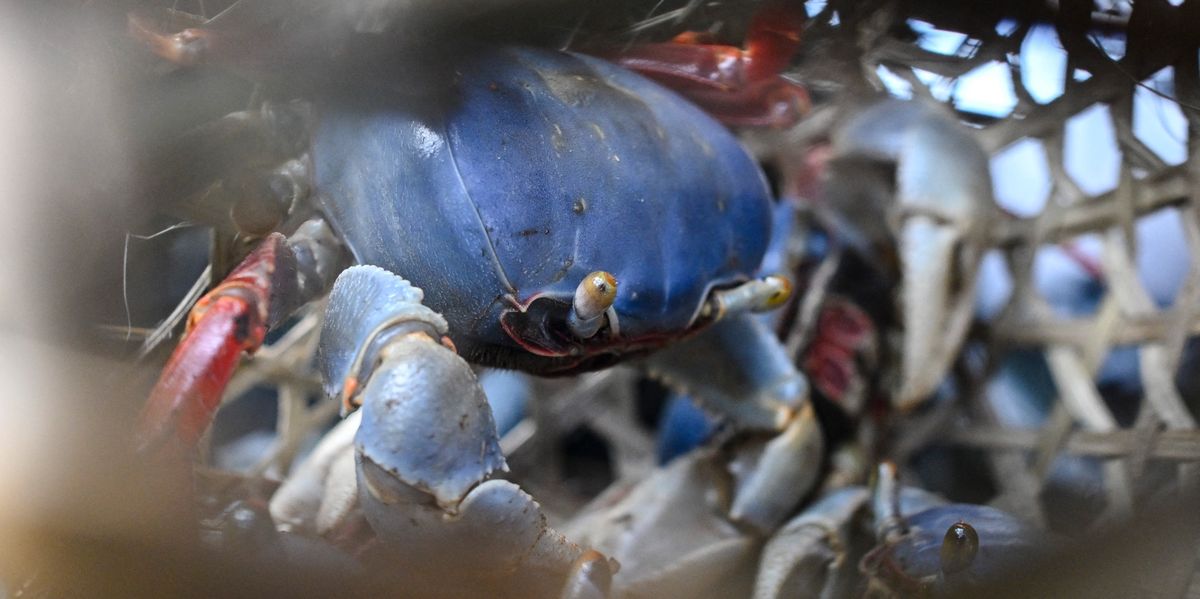
WWF Urges Greeks to Eat Invasive Species to Protect Local Wildlife
On April 22, 2026, the World Wildlife Fund (WWF) urged Greek citizens to consume invasive species such as lionfish, blue crab, and rabbitfish to mitigate ecological damage to native marine ecosystems in the Aegean and Ionian Seas, framing dietary shifts as a dual strategy for biodiversity conservation and food security amid accelerating climate-driven bioinvasions.
This call to action reflects a growing recognition that invasive species—facilitated by warming waters, increased maritime traffic, and the Suez Canal’s expansion—are not merely ecological threats but systemic risks to fisheries, tourism revenues, and coastal livelihoods across the Eastern Mediterranean, where over 1,000 non-indigenous species have been recorded since the 1990s, according to the Hellenic Centre for Marine Research.
The ecological and economic stakes are profound: invasive lionfish, lacking natural predators in Mediterranean waters, consume juvenile native fish at alarming rates, threatening the stability of fish stocks that support small-scale fisheries contributing over €1.2 billion annually to Greece’s economy. Simultaneously, the rapid proliferation of the blue crab (Callinectes sapidus)—a voracious omnivore native to the Atlantic—has disrupted seagrass beds critical for carbon sequestration and nursery habitats, with studies from the University of the Aegean showing localized declines in native clam populations by up to 70% in affected lagoons.
How Invasive Species Reshape Mediterranean Blue Economies
The Mediterranean Sea, warming 20% faster than the global average, has grow a hotspot for biological invasions, with the Suez Canal acting as a primary conduit for Lessepsian migrants. Since its 2015 expansion, the canal’s increased flow and reduced salinity barriers have accelerated the eastward migration of Indo-Pacific species, compounding pressures on already overfished stocks. This environmental shift directly impacts the region’s blue economy—encompassing fisheries, aquaculture, coastal tourism, and maritime transport—which the World Bank estimates contributes over €450 billion annually to the economies of Mediterranean coastal states.
For Greece, where marine tourism accounts for nearly 18% of GDP and fisheries support over 60,000 jobs, the unchecked spread of invasives risks triggering cascading economic losses. A 2023 study by the Food and Agriculture Organization (FAO) projected that without intervention, invasive species could reduce Mediterranean fisheries yields by 15–30% by 2050, disproportionately affecting artisanal fishers lacking adaptive capacity.
“When ecosystems are disrupted by invasive species, the economic burden falls disproportionately on coastal communities least equipped to absorb shocks. Proactive adaptation—including market-based incentives for invasive species harvesting—is not conservation idealism; it’s economic resilience.”
From Ecological Nuisance to Market Opportunity: Building Supply Chains for Invasive Species Harvest
The WWF’s campaign seeks to reframe invasives as underutilized resources, promoting culinary adoption through chef collaborations, public awareness drives, and potential labeling schemes akin to “invasive-to-table” initiatives seen in the Caribbean and Gulf of Mexico. In the U.S., lionfish derbies and commercial harvesting have generated over $5 million in annual revenue since 2010, while creating supplemental income for fishers in regions like Florida and the Bahamas.
Scaling such models in Greece requires overcoming logistical, regulatory, and consumer acceptance barriers. Harvesting invasives demands specialized gear, rapid cold-chain logistics to preserve quality, and compliance with evolving EU food safety regulations under the Novel Food Framework (Regulation (EU) 2015/2283). Simultaneously, market development hinges on shifting consumer perceptions—transforming ecological threats into desirable, sustainable protein sources.
This is where specialized actors in the global blue economy value chain become indispensable. Seafood processors and distributors must adapt handling protocols for species with unfamiliar morphologies and toxin profiles (e.g., lionfish venomous spines require careful removal). Meanwhile, trade compliance experts navigate the complex interplay of EU hygiene regulations, catch documentation schemes, and potential subsidies under the European Maritime, Fisheries and Aquaculture Fund (EMFAF).
As one industry analyst noted, the transition from ecological management to market integration demands cross-border coordination:
“The real challenge isn’t catching the fish—it’s building traceable, sanitary, and scalable supply chains that connect coastal harvesters to urban markets and export channels. This requires logistics partners who understand both seafood handling and the regulatory nuances of emerging food categories.”
Geopolitical Currents: Invasives as a Threat Multiplier in Fragile Coastal Regions
Beyond economics, invasive species exacerbate existing vulnerabilities in the Eastern Mediterranean—a region already strained by maritime boundary disputes, energy exploration tensions, and migration pressures. The proliferation of invasives can undermine coastal defense ecosystems; for example, the degradation of seagrass meadows by invasive herbivores weakens natural shoreline protection against storm surges, increasing reliance on costly artificial infrastructure.
This creates feedback loops where environmental degradation heightens security risks. The United Nations Office for the Coordination of Humanitarian Affairs (OCHA) has identified ecological stress as a threat multiplier in fragile coastal zones, linking habitat loss to reduced livelihood options and potential social unrest. Managing invasives is not merely an environmental issue but a component of coastal resilience and stability.
Nations are beginning to respond through regional cooperation. The Barcelona Convention’s Protocol on Integrated Coastal Zone Management encourages ecosystem-based approaches, while the General Fisheries Commission for the Mediterranean (GFCM) has adopted regional action plans targeting invasive species monitoring and control. Yet enforcement remains uneven, particularly among non-EU Mediterranean states with limited monitoring capacity.
Here, international risk consultants and environmental due diligence firms play a critical role. Multinational operators in offshore energy, desalination, or coastal development must assess ecological liability and compliance with evolving regional norms. Firms specializing in environmental risk assessment support clients navigate liability frameworks tied to habitat disturbance, while specialized maritime logistics providers support the development of cold chains for unconventional seafood streams.
The Protein Shift: Invasives in the Future of Food Systems
The WWF’s initiative aligns with broader global trends toward diversifying protein sources to reduce pressure on overexploited stocks and lower the carbon footprint of food production. Invasive species, often high in protein and low in fat, represent a potentially sustainable niche—if harvested responsibly. The FAO promotes “invasive species utilization” as a climate-smart adaptation strategy in its Voluntary Guidelines for Sustainable Fisheries, noting that transforming ecological threats into food resources can simultaneously advance SDG 2 (Zero Hunger) and SDG 14 (Life Below Water).
Pilot projects in Greece are already underway. On the island of Lesbos, local cooperatives have begun experimentally harvesting blue crab for processing into value-added products like crab meat and bisque, supported by technical assistance from the Agricultural University of Athens. Early market tests in Athens restaurants show promise, particularly among environmentally conscious consumers willing to pay a premium for “conservation-driven” cuisine.
Scaling this model will require investment in processing infrastructure, branding, and distribution—areas where food processing technology providers and global branding consultants can offer critical support. Simultaneously, trade finance specialists can facilitate working capital for cooperatives seeking to export niche products to premium markets in Northern Europe or North America.
As the Mediterranean confronts the dual pressures of climatic disruption and ecological reorganization, the line between environmental management and economic innovation continues to blur. The WWF’s call for Greeks to eat invasives is more than a conservation tactic—it is an invitation to reimagine coastal economies as adaptive, circular systems where ecological feedback drives market innovation. For businesses, investors, and policymakers operating in this evolving landscape, the ability to anticipate and respond to such systemic shifts will define competitive advantage in the decades ahead.
Those seeking to navigate the complex interplay of ecological risk, regulatory change, and emerging market opportunities in the blue economy can find the specialized partners they need—from environmental scientists and supply chain logicians to trade compliance experts and sustainable investment advisors—within the global professional services network of the World Today News Directory.