World News Day: Uniting Global Journalism to Restore Trust
<>
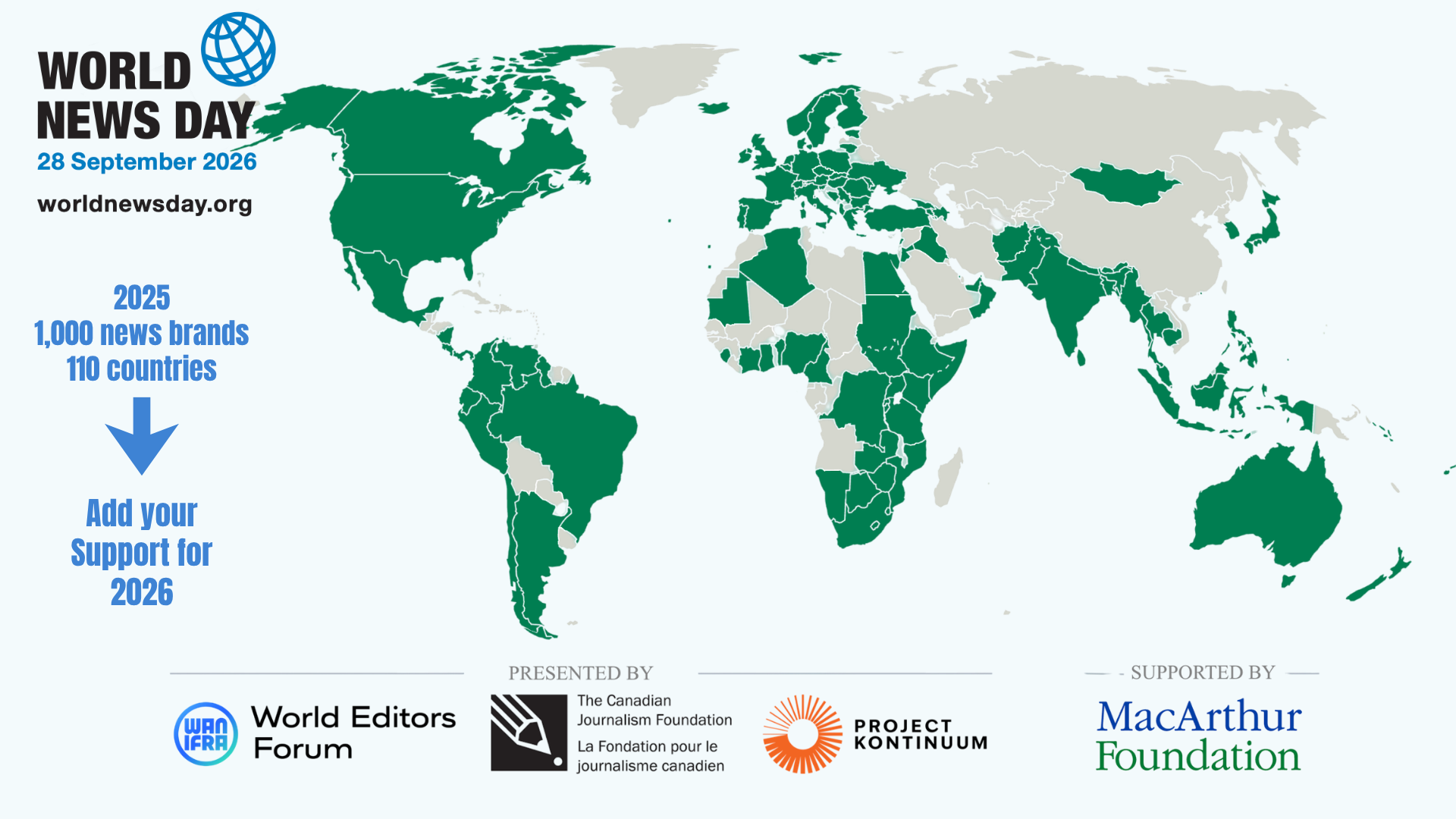
Organized by Project Kontinuum and the World Editors Forum, the movement unites news organizations across 108 countries to demonstrate the rigorous standards and public value of independent reporting.
The Erosion of Trust and the Rise of Information Noise
The contemporary media landscape faces a dual crisis: a plummeting public confidence in traditional institutions and an overwhelming influx of propaganda and digital noise.
For independent newsrooms, the pressure is not merely financial but existential. The cost of remaining isolated in a hostile information ecosystem is high. As Brkic observes, the risk of “defending journalism’s value alone” is a primary motivator for the collective action seen in the lead-up to the 2026 campaign.
Building a Global Defense through Solidarity
What began in 2018 as a modest Canadian industry campaign featuring 17 founding news brands has evolved into a significant international movement. Participation in World News Day is not a fundraiser; rather, it serves as a transparency exercise. Organizers require participating outlets to demonstrate, rather than simply claim, the processes behind their best journalism.
The campaign provides a suite of assets—including digital banners, video content, and social media cards—designed to integrate into existing broadcast slots, print editions, and web platforms. By aligning with this global effort, local newsrooms can leverage the scale of a unified brand, effectively signaling to their audiences that they are part of a larger, global commitment to truth.
Connecting Newsroom Integrity to Civic Infrastructure
Regional Impact and the Need for Verification
The necessity for this global solidarity is most apparent in regions with limited press freedom. In many municipal jurisdictions, local media outlets are the primary check on government power.
Strategic Participation in the 2026 Movement
The decision to participate in World News Day involves more than just publishing a banner; it requires a commitment to showing the work. This might include producing behind-the-scenes content on investigative methods, publishing op-eds from editors, or facilitating public forums on the importance of local reporting. The goal is to move the conversation from abstract ideals to concrete examples of how journalism serves the community.
The cost of passivity is the continued erosion of the shared facts required for a functioning society. As the digital landscape continues to fragment, the reliance on verified, expert-vetted information becomes the only viable path forward. Organizations that prioritize these standards—whether in media, law, or civil administration—are the ones most likely to remain resilient in the face of the ongoing information crisis.