
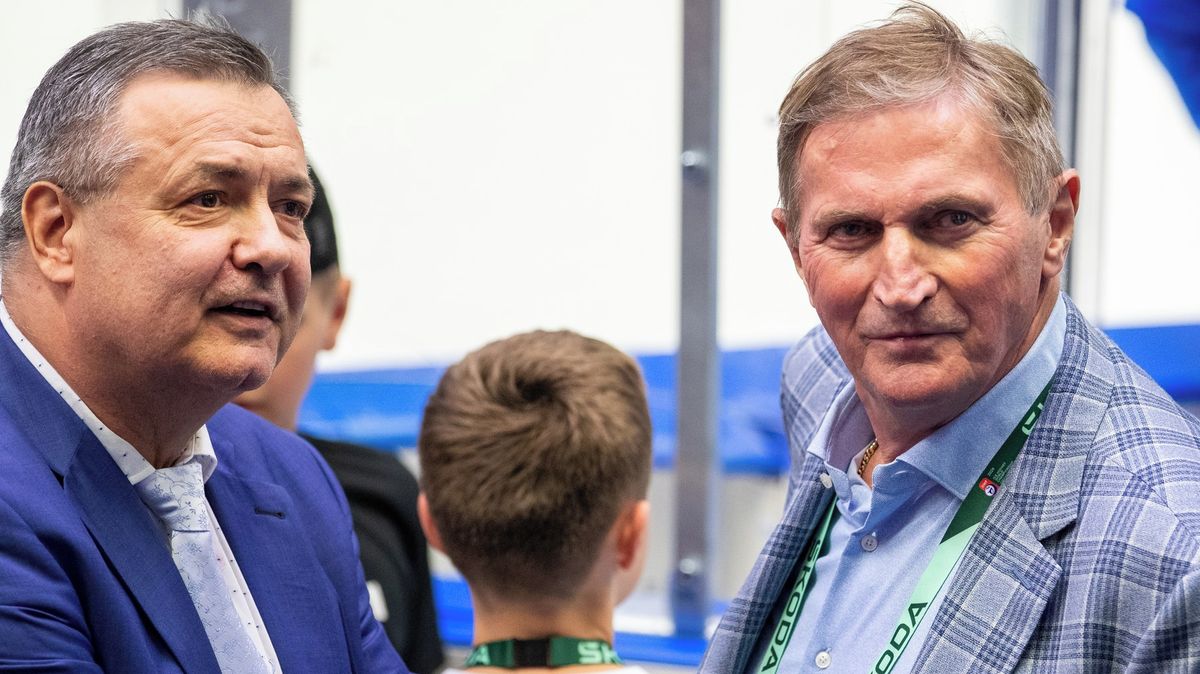
World Hockey Champion Rusnák Hospitalized: Amputation and Complications
Dárius Rusnák, the legendary captain of the 1985 Czechoslovak World Championship team, is currently hospitalized in Bratislava. The 66-year-old former forward has undergone a partial leg amputation due to a severe infection and is awaiting critical heart valve surgery after a period of instability in intensive care.
The physical toll of a professional hockey career often manifests decades after the final buzzer. For Rusnák, a titanium insert from a career-era injury became the catalyst for a life-threatening infection, highlighting the long-term biological risks associated with legacy orthopedic implants. This situation underscores the necessity for lifelong monitoring by specialized sports medicine clinics and orthopedic specialists to manage the degradation of surgical hardware.
The Biological Cost of Elite Performance
Rusnák’s current crisis is a brutal reminder that the “glory years” often reach with a hidden invoice. The infection that necessitated the amputation of the limb below the knee centered on a titanium insert—a remnant of the physical battles fought during his tenure in the Czechoslovak league. In the era of the 1980s, orthopedic interventions lacked the precision and biocompatibility standards of modern medicine. Today, the industry has shifted toward advanced materials and minimally invasive techniques, but for the veterans of the amateur era, these old implants can become liability centers.

Beyond the limb loss, the diagnosis of a damaged heart valve adds a layer of systemic complexity. The transition from a critical state to a stabilized condition indicates a successful initial intervention, but the upcoming valve surgery remains a high-stakes operation. For aging athletes, the cardiovascular system often bears the brunt of years of high-intensity anaerobic bursts and extreme physical stress. Managing these comorbidities requires a multidisciplinary approach, often involving top-tier cardiology teams and rehabilitative surgeons to ensure the patient survives the recovery phase.
“Daro, you have several titles and I firmly believe that you will win this great game too. Hang in there,” messaged teammate and defender Róbert Pukalovič.
Tactical Legacy: The Brain of the 1985 Gold
To understand the magnitude of Rusnák’s contribution to the game, one must look at the tactical architecture of the Czechoslovak national team. Rusnák wasn’t just a captain; he was the operational “brain” of the legendary Lukáč – Rusnák – Liba line. This trio operated with a level of synergy that challenged the dominance of the Soviet Union’s Makarov – Larionov – Krutov line, the gold standard of hockey intelligence at the time.
His statistical footprint—436 games and 188 goals in the federal league—reflects a high-efficiency output, though the “amateur” era lacked the granular optical tracking and advanced metrics like xG (expected goals) or WAR (wins above replacement) that define the modern game. Although, the raw data of his medal haul speaks for itself: Gold in 1985, Silver in 1982 and 1983, and Bronze in 1981. His leadership peaked during the 1985 Prague World Championships, where he captained the squad to the top of the podium.
Rusnák’s career was likewise defined by an early adherence to safety, and resilience. In November 1981, during a game against Poprad, he suffered a severe eye injury that nearly ended his career. His subsequent return to the ice with a plexiglass shield—a rarity in that era—demonstrated a forward-thinking approach to player safety. This resilience paved the way for his success at the 1984 Sarajevo Winter Olympics, where he secured a silver medal.
The Institutional Impact on Bratislava Hockey
The news of Rusnák’s health has sent shockwaves through the Bratislava hockey community. As a cornerstone of HC Slovan Bratislava for thirteen years, Rusnák was instrumental in the club’s historic 1978/1979 title win, marking the first time a Slovak club captured the Czechoslovak championship. He also helped propel the team to a third-place finish in the European Champions Cup the following year.
The trajectory of Rusnák’s career mirrored the volatility of the club itself. He witnessed Slovan’s descent into the second tier (I. SNHL) following the emigration of the Šťastný brothers to Canada. This era of instability forced players to adapt to harsher conditions and less sophisticated medical support. The lack of professionalized long-term health tracking for players during this transition period often leaves former athletes vulnerable to the kind of delayed complications Rusnák is now facing. This gap in care is why modern athletes now rely on expert sports contract lawyers to negotiate comprehensive post-career health insurance and medical stipends.
“This news hit me very hard, I am in shock. Daro, please, fight, get well, so we can see each other soon. We went through a lot together,” reacted two-time world champion Vincent Lukáč.
A Pattern of Physical Adversity
The Rusnák name is synonymous with both sporting excellence and physical struggle. The narrative of adversity extends to his son, Ondrej Rusnák, who faced a series of devastating setbacks. From nearly burning to death at age ten to a complicated knee injury during the Junior World Championships that sidelined him for two years, the family’s history is a testament to the precarious nature of athletic longevity.
Ondrej’s attempt to return to the game, including a trial with Vítkovice, mirrors the fighting spirit currently displayed by his father. The intersection of genetic predisposition and the physical demands of elite hockey creates a challenging landscape for the next generation. To mitigate these risks, today’s prospects must be integrated into certified youth athletic programs that prioritize periodization and load management to prevent the premature joint failure and surgical dependencies seen in previous generations.
Dárius Rusnák is currently fighting the most critical match of his life. His journey from the pinnacle of the 1985 World Championships to the recovery wards of Kramáre hospital serves as a stark reminder of the lifelong commitment required to manage the aftermath of an elite sporting career. As he moves toward heart surgery and rehabilitation, the focus shifts from tactical playbooks to medical protocols.
For those navigating the complexities of sports-related injuries or seeking professional support for long-term athletic health, the World Today News Directory provides a vetted database of medical, legal, and rehabilitative professionals capable of handling high-performance recovery.
Disclaimer: The insights provided in this article are for informational and entertainment purposes only and do not constitute medical advice or sports betting recommendations.