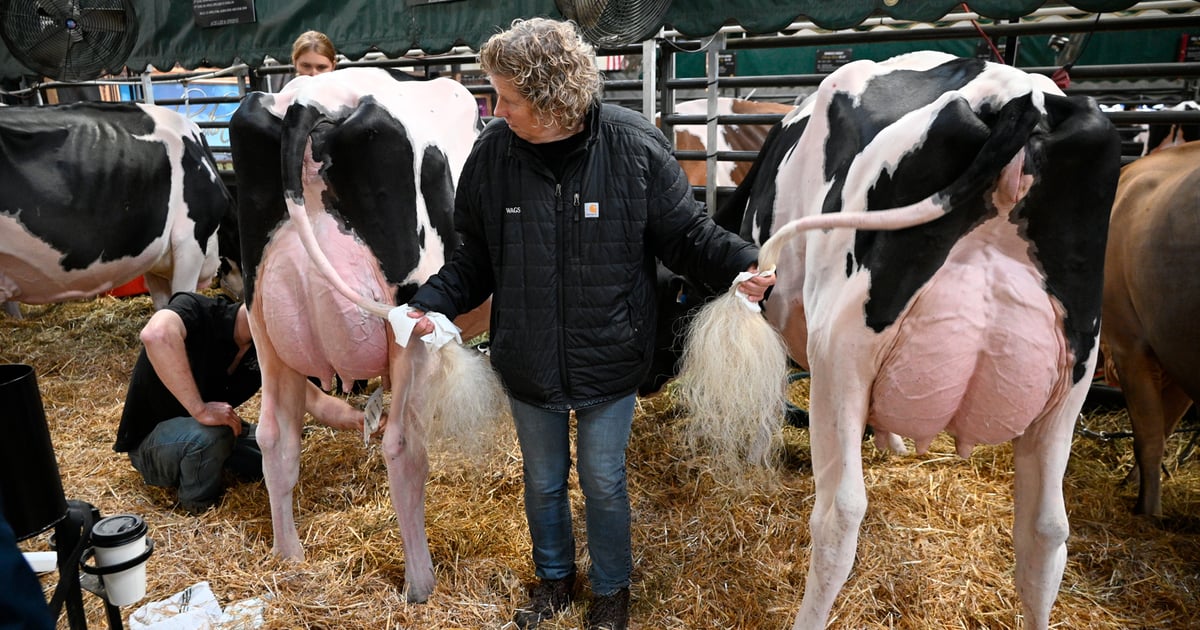
World Dairy Expo 2026 showcases AI tech and focus on dairy components
Components Emerge as the Primary Focus as World Dairy Expo 2026 Concludes
“I would say the rolling herd average needs to have a tombstone erected on it. We need to be thinking about pounds of components per day,” Corey Geiger, lead dairy economist at CoBank, stated during a session at the World Dairy Expo 2026.
The recent event delivered three unmistakable takeaways highlighting shifting market demands, technological integration, and ongoing labor pressures across the dairy sector.
Cottage cheese sales have experienced double-digit growth over the past year, establishing the category as the No. 1 driver of overall dairy sales, according to Geiger. Protein shakes and yogurt — especially Greek yogurt — follow close behind in market demand, cementing component efficiency as the central financial goal for modern producers.
Artificial Intelligence Enters Parlors to Tackle Labor and Health
Artificial intelligence featured prominently across the trade show floor, with new monitoring and automated systems debuting for U.S. herds. Herd-i, a New Zealand-based company making its U.S. debut, introduced AI-powered cameras designed to score body condition and detect lameness the moment cows exit the parlor. The system captures video at every milking, analyzes the footage instantly, and transmits real-time insights to mobile devices.
The company reports that after monitoring 150,000 cows over four years in New Zealand, participating farms experienced a 40% reduction in lameness and a 41% decrease in antibiotic costs. Herd-i is currently expanding its U.S. presence through a Founding Farmers Program spanning New York, California, Idaho, Texas, and Wisconsin.
Additional automation technology made its debut alongside camera-based monitoring. FutureCow showcased its Axis robotic teat scrubber for rotary parlors, utilizing advanced AI cameras to improve positioning accuracy during the milking process.
Labor Pressures Accelerate Automation Adoption in Dairy Facilities
Labor availability concerns remained a central topic during panel discussions led by Rep. Glenn “GT” Thompson, R-Pa., chairman of the House Ag Committee. Dairy producers during the session reported that immigration raids have created severe staffing shortages for essential daily operations.

While full robotic systems offer a potential remedy, they frequently require substantial facility redesign and construction. To address this hurdle, GEA introduced its DairyProX milking units at the show, aiming to bring robotic efficiency into conventional “subway style” parlors. The units automate stimulation, teat cleaning, fore-stripping, milking, and post-dipping, requiring workers only to attach the units.
Additional coverage regarding dairy components and labor dynamics will follow in coming weeks.