
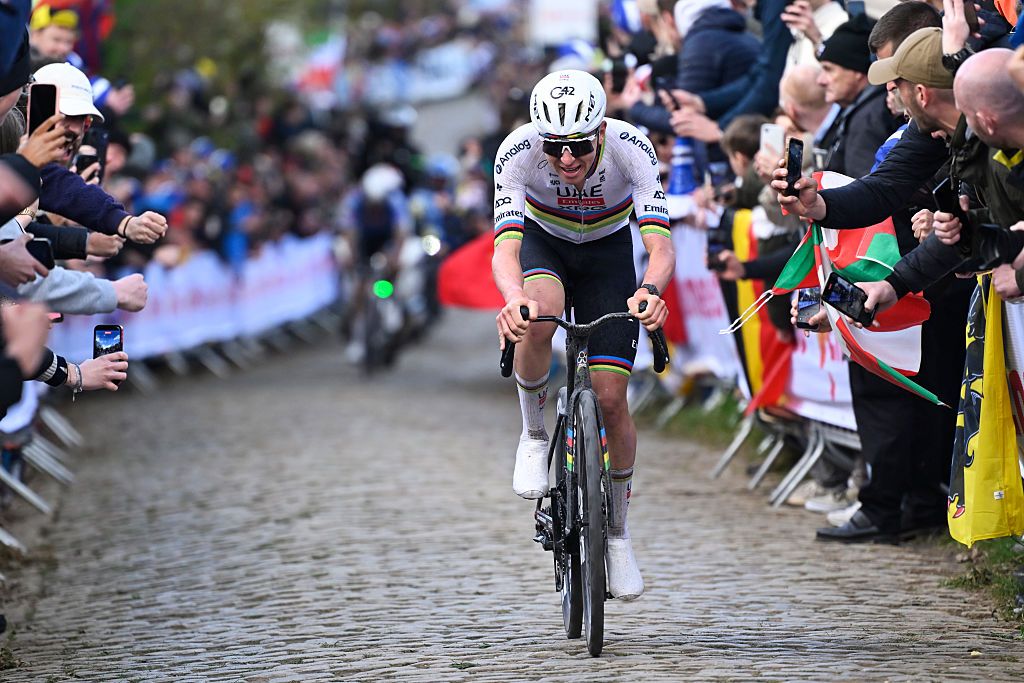
World Champion Credits Superstars for Pushing Performance to New Levels
Tadej Pogačar asserted his dominance at the Tour of Flanders, maintaining a performance gap that draws comparisons to Messi and Ronaldo. Despite a strategic alignment of rival superstars attempting to challenge him, the World Champion leveraged this elite competition to elevate his own tactical and physical ceiling.
The current sporting calendar places the Tour of Flanders as a pivotal anchor in the spring classics, a period where peak periodization meets the brutal reality of cobblestones and short, steep climbs. For the peloton, Pogačar represents a systemic problem. When a single athlete operates a “cut above” the rest of the field, the traditional tactical whiteboard is rendered obsolete. The standard play—waiting for the decisive move or utilizing team strength to isolate a leader—fails when the leader possesses a recovery rate and power-to-weight ratio that transcends the current competitive era.
This disparity creates a high-stakes environment where rivals are forced into a “superstar alignment.” In professional cycling, this typically involves a fragile truce between competing teams to share the workload of neutralizing a dominant rider. However, as evidenced by the latest results reported by Cyclingnews, even a coordinated effort from the world’s best was insufficient to bridge the gap. The result is a psychological shift in the peloton; Pogačar is no longer just a competitor to be beaten, but a benchmark to be chased.
The Tactical Vacuum and the Physical Ceiling
From a technical standpoint, Pogačar’s ability to remain a “cut above” suggests a mastery of aerobic threshold and anaerobic capacity that forces his opponents to overextend. When superstars align to challenge a leader, they often succumb to the “red zone” too early, attempting to match a pace that is sustainable for the World Champion but catastrophic for the chasers. This is the hallmark of a generational talent—the ability to dictate the tempo of a race while remaining in a state of relative efficiency.

“World Champion credits fellow superstars for continued improvement, says they ‘are pushing each other to another level'”
This admission is critical. It highlights a symbiotic relationship between elite performers. Pogačar does not view the alignment of superstars as a threat, but as a catalyst. In the realm of high-performance athletics, this “push” refers to the incremental gains found at the absolute limit of human physiology. Whether it is optimizing cadence on the climbs or refining the aerodynamics of a late-race attack, the presence of other superstars forces a level of precision that cannot be replicated in solo training.
However, pushing the body to “another level” carries an inherent risk of systemic failure. The physical toll of the Tour of Flanders is immense, requiring not just cardiovascular strength but extreme musculoskeletal resilience. While Pogačar has the luxury of a world-class support system, the intensity of this rivalry increases the likelihood of overuse injuries and burnout across the peloton. For the amateur athlete or the aspiring professional attempting to mimic these high-load training blocks, the danger of injury is acute. This is why securing vetted local orthopedic specialists and rehab centers is non-negotiable for those operating at high intensities to ensure that “pushing the level” doesn’t result in a season-ending tear or stress fracture.
Regional Economic Impact and Logistical Pressure
The dominance of a figure like Pogačar does more than shift tactical paradigms; it drives massive regional economic interest. The Tour of Flanders is not merely a race; it is a logistical behemoth that transforms the Flemish countryside into a global stage. The “Messi or Ronaldo” effect ensures that viewership and physical attendance peak, creating a surge in demand for local infrastructure and services.
When a superstar of this magnitude is the focal point, the “halo effect” extends to the hospitality and security sectors. The influx of VIP spectators, international media, and corporate sponsors creates a logistical vacuum that local municipalities often struggle to fill. The scale of these events necessitates a sophisticated network of regional event security and premium hospitality vendors to manage the overflow and ensure the safety of both the athletes and the crowds. The economic ripple effect—from hotel occupancy to local catering—is directly tied to the star power of the participants.
The Evolution of the Cycling Hierarchy
The comparison to Messi and Ronaldo is apt because it describes a shift from “competitive parity” to “individual dominance.” For years, cycling has been defined by team strategies and marginal gains. Pogačar is returning the sport to an era of the singular, transcendent athlete. This shift forces a re-evaluation of how teams are built. We are seeing a move away from generalist squads toward specialized units designed specifically to support or neutralize a single “super-rider.”
Looking forward, the trajectory of the sport will be defined by how the rest of the peloton responds to this ceiling. If the current alignment of superstars cannot break Pogačar’s stranglehold, the sport may enter a period of stagnation where the outcome of the Classics is predetermined. Alternatively, this pressure may indeed push the entire field to a new evolutionary plateau, where the “next level” becomes the new standard.
As the season progresses, the focus will shift from raw power to strategic endurance. For those following the sport or participating in high-level athletics, the lesson is clear: excellence is a moving target. Whether you are a professional cyclist or a local athlete, maintaining that edge requires a combination of elite competition and professional support. To find the vetted medical, legal, and logistical professionals needed to support a high-performance lifestyle, explore the comprehensive resources available through the World Today News Directory.
Disclaimer: The insights provided in this article are for informational and entertainment purposes only and do not constitute medical advice or sports betting recommendations.