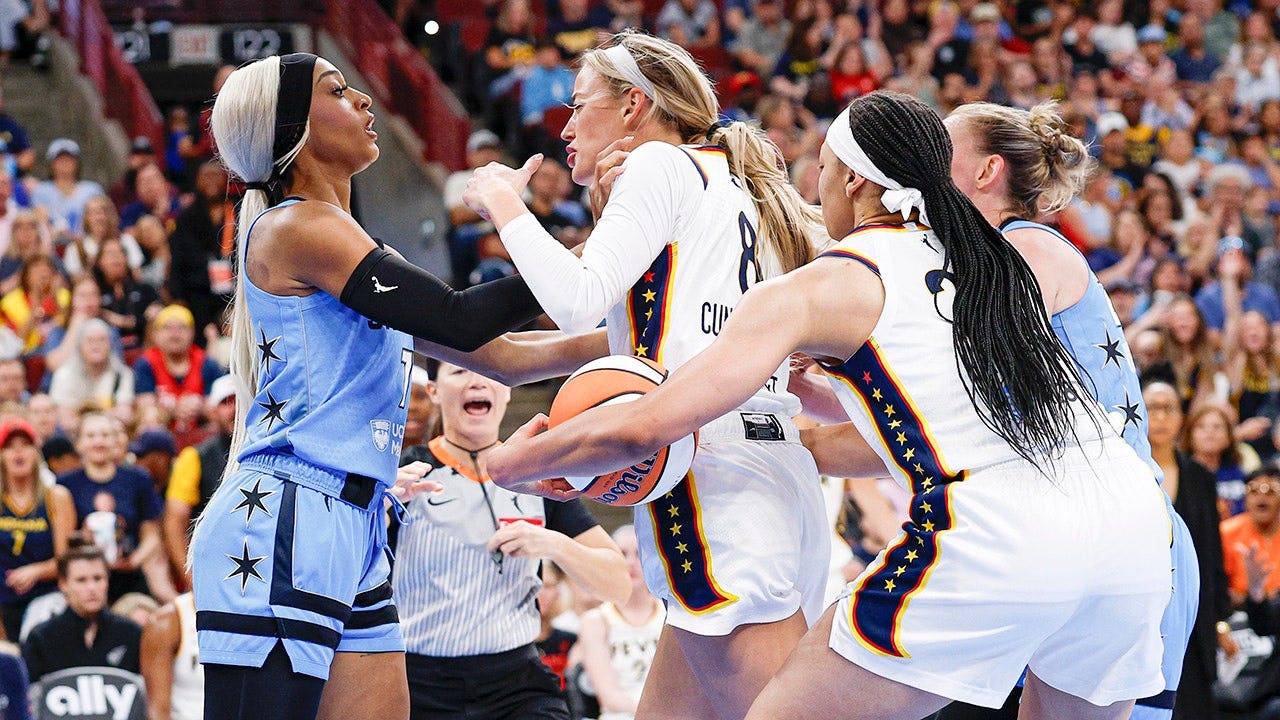
WNBA Player DiJonai Carrington Sparks Controversy With White Privilege Post After Ejection
The incident occurred after a Flagrant 2 foul call in the first quarter, forcing sports administrators to navigate a complex intersection of player free speech, on-court officiating, and organizational policy.
The Ejection and Immediate Social Media Fallout
The controversy began during a Saturday afternoon matchup when Chicago Sky guard DiJonai Carrington struck Indiana Fever guard Sophie Cunningham across the head during a layup attempt. Game officials reviewed the play and upgraded the infraction to a Flagrant 2 foul, which carries an automatic ejection under league regulations. Cunningham required medical attention for a bleeding mouth following the contact.
Shortly after her removal from the court, Carrington published a post on her Threads account that read, “WHITE PRIVILEGE @indianafever.” OutKick contacted the WNBA, the WNBA Players Association (WNBPA), and the Chicago Sky to inquire whether the message constituted an allegation of racial bias in officiating, whether officials had addressed the post with the player, and if formal discipline was under review. None of the organizations responded prior to publication.
The situation places league leadership in a difficult regulatory posture. According to recent congressional testimony by WNBA Commissioner Cathy Engelbert, the league maintains that rules and disciplinary processes are applied consistently across all games and players. Failing to act risks reinforcing the perception of double standards, while imposing a harsh penalty risks alienating players and portions of the sports media.
Intersection of Politics, Officiating, and Player Advocacy
Disputes over referee decisions are standard across professional sports, but introducing explicit racial accusations immediately following a call elevates the friction beyond normal athletic competition. The messaging also intersects with broader socio-political debates already present within the league environment.
Sophie Cunningham has emerged as a polarizing figure after publicly stating her opposition to biological men competing in women’s sports. That stance has drawn rallies, counter-protests, and public pushback from other internal stakeholders, including union representatives. Consequently, observers note that Carrington’s public statement may target dimensions wider than a single referee’s whistle.
The WNBPA itself issued a statement addressing public discourse, noting that hate, abuse, and the demonization of any group fuels division and harm. Legal and sports administration analysts point out that enforcing such guidelines equitably requires consistent application regardless of which player or franchise is involved in the dispute.
Governance Challenges and Institutional Response
The league has historically encouraged athletes to speak out publicly on social and political topics. That posture now complicates how administrators handle direct accusations directed at specific franchises or officiating crews. Because Carrington posted the statement from a league locker room while tagging another franchise, organizational leaders face mounting pressure to clarify their stance.
For now, Carrington’s public statement remains unclarified by her team, the players’ association, or league headquarters. As the season progresses, the handling of this disciplinary dilemma will test the boundaries of athletic free speech and the enforcement consistency promised to federal regulators.