
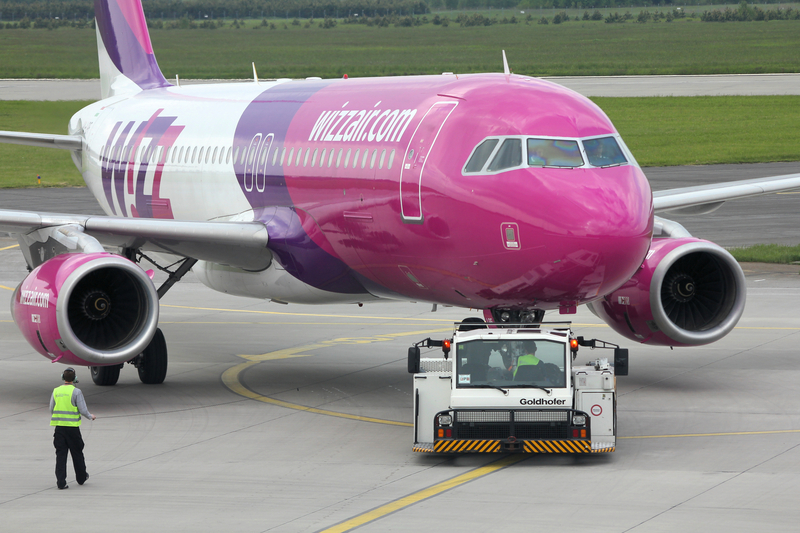
Wizz Air Trials In-Flight Entertainment & WhatsApp Messaging on UK Flights
Wizz Air initiates a six-month connectivity trial in the UK, integrating WhatsApp and in-flight entertainment across five aircraft. This strategic pivot targets ancillary revenue growth and operational efficiency, signaling a broader shift in the low-cost carrier (LCC) model toward digital monetization and data-driven fleet management.
The low-cost carrier model is hitting a structural ceiling. For decades, the playbook remained static: strip the frills, lower the base fare, and monetize the ancillary squeeze. Yet, as fuel volatility persists and labor costs climb, the traditional ancillary basket—bags, seats, and sandwiches—faces diminishing marginal returns. Wizz Air’s latest pilot program in the United Kingdom represents more than a passenger convenience upgrade; We see a fiscal necessity. By transforming the cabin into a connected digital ecosystem, the Hungarian carrier is attempting to unlock a modern asset class: passenger attention span.
This move addresses a critical yield management problem. In a saturated European market, ticket price wars erode EBITDA margins. The solution lies in high-margin digital services that require zero physical inventory. Airlines are no longer just transport providers; they are becoming mobile network operators at 30,000 feet. This transition demands robust infrastructure, pushing carriers to consult with specialized aviation technology consulting firms capable of retrofitting legacy fleets without grounding assets.
The Ancillary Revenue Pivot: From Physical to Digital
The test, running on five Airbus A320 and A321neo aircraft, introduces wireless entertainment and real-time messaging. Whereas the consumer sees free WhatsApp access, the balance sheet sees a gateway to premium upsells. The inclusion of wireless purchases for movies, podcasts, and games creates a frictionless payment environment. Historically, credit card terminals on board suffered from high failure rates and slow processing times, killing conversion momentum.
Real-time payment authorization changes the unit economics of the galley. When a passenger orders a meal via their own device, the transaction is instant. This reduces the friction of physical cash or chip-and-pin delays. For the airline, this data is gold. It allows for dynamic pricing models similar to ride-sharing apps, where demand for a specific snack or movie can adjust pricing in real-time. To implement such sophisticated fintech layers, carriers often partner with enterprise fintech payment processors that specialize in high-volume, low-latency transaction environments.
Consider the competitive landscape. Ryanair has long dominated the ancillary space, but their model relies heavily on physical retail. Wizz Air’s Bluetooth-based ordering system, already deployed across its 260-strong fleet, decouples the crew from the ordering process. This reduces service time per row, allowing cabin crew to focus on safety and high-value interactions rather than taking orders. The efficiency gain here is measurable in fuel burn; lighter loads and faster turnaround times directly impact the bottom line.
Operational Alpha: The Cockpit Integration
Buried in the press release is a detail that matters more to the CFO than the CMO: cockpit application integration. The trial includes tools for real-time data sharing to optimize route planning and fuel consumption. In an industry where fuel accounts for roughly 30% of operating expenses, a single-digit percentage improvement in efficiency translates to millions in retained earnings.
This is not merely an IT upgrade; it is a supply chain optimization play. By leveraging real-time data, airlines can adjust flight paths dynamically to avoid weather systems or optimize for wind shear, reducing burn rates. However, integrating these systems requires navigating complex regulatory frameworks and ensuring cybersecurity compliance. Airlines frequently engage cybersecurity audit firms to validate that cockpit connectivity does not expose critical flight control systems to external threats.
“The shift from pure transport to digital hospitality requires a complete overhaul of the legacy IT stack. We are seeing carriers treat connectivity not as a cost center, but as a primary revenue driver comparable to seat inventory.”
The integration of decision-support tools also impacts maintenance scheduling. Predictive analytics can flag component wear before failure, reducing unscheduled maintenance events that ground aircraft. Unscheduled groundings are the enemy of asset utilization. Every hour an aircraft sits on the tarmac is an hour of zero revenue generation. Maximizing block hours is the primary lever for ROA (Return on Assets) in this sector.
Market Implications and Competitive Response
The European aviation market is consolidating around three distinct models: the legacy network carriers, the ultra-low-cost carriers (ULCC), and the hybridizers. Wizz Air’s move blurs the line between ULCC and legacy service. By offering entertainment and connectivity, they encroach on the value proposition of carriers like British Airways or Lufthansa, but at a lower price point. This forces competitors to respond, likely triggering a capex arms race in cabin technology.
Investors should watch the load factor implications. If connectivity becomes a standard expectation, airlines without it risk churning high-yield business travelers who need to stay connected for work. The “always-on” economy does not pause for takeoff. The valuation multiples for airlines with proven connectivity stacks may expand relative to peers relying solely on seat density.
- Revenue Diversification: Reduces reliance on volatile ticket pricing by stabilizing ancillary streams.
- Operational Efficiency: Bluetooth ordering and cockpit data integration lower OPEX through fuel savings and labor optimization.
- Customer Retention: Enhanced digital experience increases brand loyalty in a commoditized market.
The six-month trial period is critical. It allows Wizz Air to gather granular data on uptake rates and technical stability before a fleet-wide rollout. If the metrics hold, we can expect a rapid deployment across the wider fleet in fiscal year 2027. This scalability is key. A solution that works on five planes but crashes on 200 is a liability. The technology must be robust enough to handle the concurrency of a full flight without latency.
this initiative highlights a broader trend in the travel sector: the digitization of the physical journey. The airplane is becoming a node in the internet of things. For B2B service providers, this opens avenues in data analytics, connectivity hardware, and software integration. The winners in the next decade of aviation won’t just be those with the newest planes, but those with the smartest networks.
As the industry pivots, the demand for specialized advisory grows. Companies navigating this digital transformation require partners who understand both the regulatory constraints of aviation and the agility of the tech sector. Whether it is securing the right aviation legal counsel for data privacy compliance or sourcing hardware vendors, the ecosystem is expanding. The sky is no longer the limit; it is the next marketplace.