
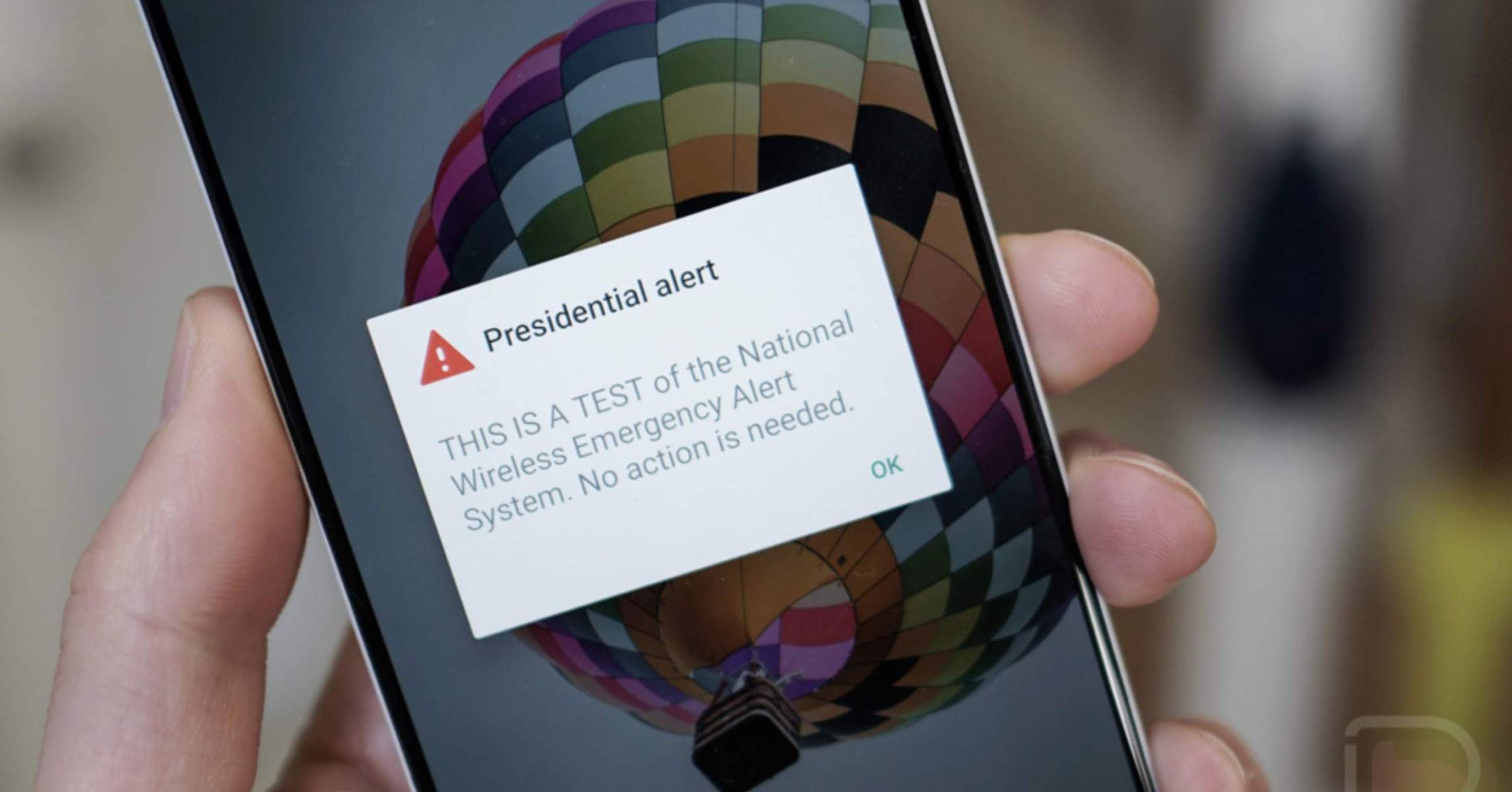
Wireless Emergency Alerts System Gets Huge Upgrade on Android
Android WEA Map Update: Utility or Attack Vector in a 2026 Threat Landscape?
Google Play Services v26.12 landed this week, pushing a map view to Wireless Emergency Alerts (WEA). On the surface, it is a UX improvement. Under the hood, it changes the data ingestion pipeline for critical infrastructure. We need to talk about the latency introduced by fetching geospatial tiles during a crisis and the privacy implications of client-side location resolution.
- The Tech TL;DR:
- WEA now triggers a data fetch for map rendering, shifting from pure Cell Broadcast to hybrid IP-dependent delivery.
- Location precision increases, raising privacy concerns regarding user tracking during emergency states.
- Enterprise mobility teams must audit device policies to ensure emergency overrides do not bypass MDM restrictions.
The Wireless Emergency Alerts system was designed as a one-way broadcast mechanism, leveraging Cell Broadcast Service (CBS) to bypass network congestion. This new update from Google fundamentally alters that architecture. By embedding a map view directly into the notification payload, the system now requires the device to establish a data connection to render the affected area. This introduces a dependency on IP connectivity in scenarios where cellular voice and SMS might be prioritized but data networks are throttled or congested.
From an architectural standpoint, this shift moves WEA closer to the AI Security Category Launch Map trends observed in early 2026, where edge devices increasingly rely on cloud-assisted intelligence for context awareness. However, emergency systems demand deterministic behavior, not probabilistic cloud reliance. If the map tiles fail to load due to network saturation during a disaster, the alert remains visible, but the critical context—the “affected area”—becomes useless. This creates a false sense of situational awareness.
The Security Implications of Geospatial Injection
Injecting dynamic map data into a system notification expands the attack surface. Historically, WEA messages were signed and verified at the carrier level, with minimal client-side processing. The new implementation requires the Android OS to request geospatial data from Google’s servers. This handshake introduces potential vectors for man-in-the-middle attacks or spoofing if the TLS verification chain is not rigorously enforced during emergency states.

According to the AI Cyber Authority, the intersection of artificial intelligence and cybersecurity is defining federal regulation in 2026. Even as this update is not explicitly AI-driven, the infrastructure supporting it overlaps with the same vendor landscape securing AI agents. We are seeing a market with over $8.5B in combined funding for AI security vendors, yet basic emergency infrastructure is adopting complex data dependencies without public security audits.
Enterprise IT departments cannot treat this as a standard consumer update. The ability to render location data implies the device is transmitting precise coordinates back to the server for context optimization. Organizations handling sensitive personnel in high-risk zones need to verify if this telemetry can be disabled via enterprise policy. This is where engaging specialized cybersecurity auditors and penetration testers becomes critical. They can validate whether the WEA map feature leaks device location metadata outside the intended emergency broadcast scope.
“We are seeing emergency infrastructure adopt cloud dependencies that mirror commercial SaaS architectures. The risk isn’t just availability; it’s the data exhaust generated during a crisis event.” — Senior Security Researcher, AI Cyber Authority Network
The talent gap in securing these hybrid systems is widening. Job postings for roles like Sr. Director Cybersecurity – AI Strategy indicate that firms like Synopsys are prioritizing AI security governance. However, legacy systems like WEA often fall outside the scope of modern AI security frameworks. This creates a blind spot where critical public safety tools evolve without the same rigorous oversight applied to enterprise AI agents.
Implementation and Verification
For mobile development teams and security engineers, verifying the behavior of this update requires inspecting the Google Play Services permissions and network traffic during a test alert. You cannot rely on standard user acceptance testing. You need to monitor the packet flow to ensure no unauthorized data exfiltration occurs when the map view is triggered.
Below is a basic ADB command sequence to inspect the Google Play Services package state and permissions relevant to location and network access during an emergency alert simulation. This should be part of your standard operating procedure for device hardening.
adb shell dumpsys package com.google.android.gms | grep -A 5 "android.permission.ACCESS_FINE_LOCATION" adb shell dumpsys netstats | grep -A 10 "com.google.android.gms" // Verify if background data is restricted during Doze mode for Play Services adb shell dumpsys deviceidle | grep "com.google.android.gms"If your organization operates in regulated industries, you must assess whether this update complies with your data sovereignty requirements. The map data may be rendered from servers outside your jurisdiction. Engaging mobile security engineers to sandbox this update on corporate-owned devices is a necessary triage step before allowing widespread deployment.
The Latency Trade-Off
Emergency alerts are time-sensitive. The original WEA specification prioritized speed over richness. Adding a map view introduces latency. The device must receive the CBS message, decode it, initiate a data session, request tile data, and render the overlay. In a zero-second scenario, such as an earthquake warning, milliseconds matter. While Google claims this update improves utility, the technical debt incurred by adding IP dependencies to a broadcast system is significant.
We are seeing similar patterns in the AI Security Guards landscape, where LLM agents are used for incident response. Automation adds efficiency but also complexity. If the map service endpoint is unreachable, does the alert fail silently, or does it degrade gracefully? The changelog mentions “Bug fixes for Developer Services related services,” but does not explicitly address fallback mechanisms for the map rendering pipeline.
CTOs need to demand transparency from vendors regarding these fallback states. Relying on a changelog entry for critical safety infrastructure is insufficient. The industry needs a standardized benchmark for emergency alert reliability, similar to SOC 2 compliance but specific to public safety communications.
As we move further into 2026, the line between consumer convenience and critical infrastructure continues to blur. This update offers better situational awareness for the average user but introduces enterprise risk that must be managed. The technology is shipping, but the security architecture remains opaque. Until independent audits verify the data flow, treat this feature as a potential telemetry leak rather than a safety enhancement.
For organizations requiring immediate assessment of this update’s impact on their device fleet, consulting with managed service providers specializing in mobile device management is the prudent path. Do not wait for a failure scenario to test your resilience.
Disclaimer: The technical analyses and security protocols detailed in this article are for informational purposes only. Always consult with certified IT and cybersecurity professionals before altering enterprise networks or handling sensitive data.