
Winterthur’s Self-Help Home District: A 100-Year Legacy
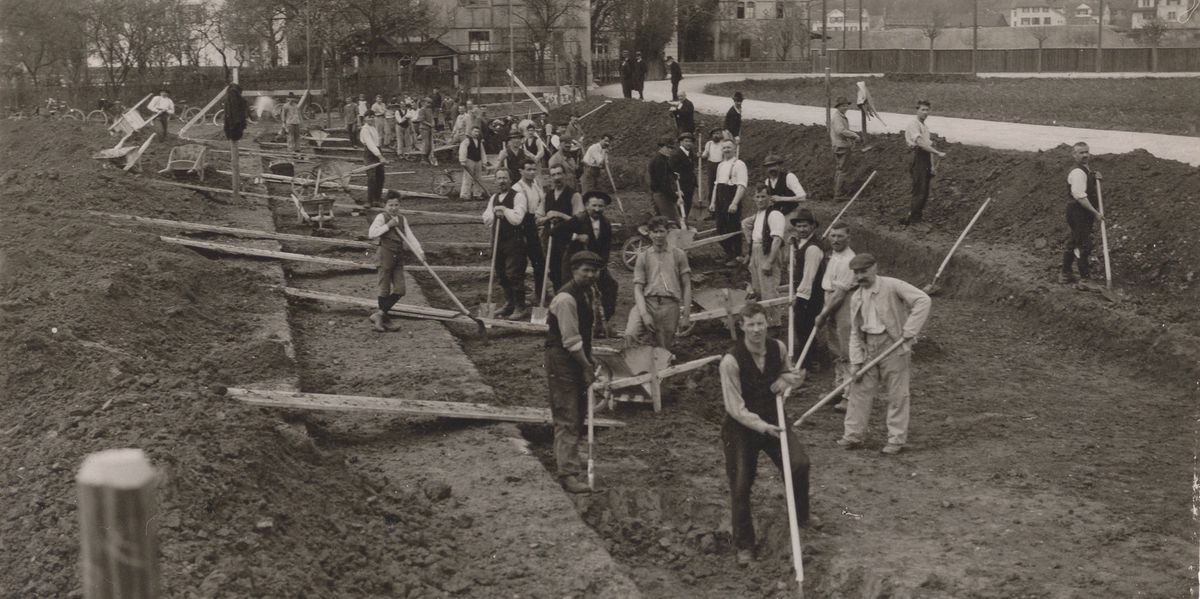
Winterthur marks the centenary of its Homeownership Quarter, a pioneering self-help housing colony designed by architect Franz Scheibler between 1925 and 1929. To secure affordable housing, residents contributed 900 hours of manual labor per home, establishing one of Switzerland’s first community-driven initiatives to support the working and artisan classes.
The sheer scale of this commitment—900 hours of sweat equity for a single roof—highlights a desperate historical necessity that mirrors today’s urban housing crisis. In the 1920s, the problem was a lack of accessible entry points for workers to own property. Today, that problem has evolved into a systemic affordability gap. While the “self-help” model of the 1920s relied on manual labor, modern solutions require a sophisticated blend of urban planning consultants and innovative financing to make community-led housing viable again.
The Architecture of Sweat Equity
The “Self-Help Colony” was not merely a construction project; it was a social experiment. Franz Scheibler, working alongside Adolf Kellermüller, envisioned a neighborhood where the financial burden of homeownership was offset by the physical effort of the residents. This model allowed those with little capital but plenty of will to enter the property market.

The 900-hour requirement transformed the act of building from a commercial transaction into a community bond, ensuring that those who inhabited the homes were deeply invested in their preservation.
Scheibler’s approach was a radical departure from the prevailing trends of the time. While other architects in Winterthur were leaning into the neogothic “English House” tradition—championed by figures like Otto Bridler and Ernst Jung—Scheibler looked toward the disciplined, modern lines of German classicism. This was a direct result of his time in Dresden at the Academy of Arts, where he studied under the influential Heinrich Tessenow.
Tessenow’s influence is evident in the colony’s layout. Scheibler didn’t just build houses; he designed ecosystems. His early projects, such as those on Jonas-Furrer-Strasse, featured row houses equipped with self-sufficiency gardens. This integration of residential living and food production was a strategic response to the economic instability of the era, providing a safety net for the working class.
A Career Defined by Social Utility
Scheibler’s professional trajectory reflects the volatile economic landscape of early 20th-century Switzerland. His shift from social housing to individual private homes was not a choice of preference, but a reaction to political reality. When state housing subsidies vanished in 1932, the financial engine driving the “Self-Help” model stalled, forcing a pivot toward the private residential market during the 1930s.

To understand the scope of his impact on Winterthur’s urban fabric, one must glance at the progression of his work:
| Period | Milestone / Project | Focus |
|---|---|---|
| 1912–1916 | Apprenticeship at Baugeschäft Lerch | Foundational drafting and construction |
| 1916–1919 | Technikum Winterthur | Academic architectural studies |
| 1921–1923 | Academy of Arts, Dresden | Study under Heinrich Tessenow |
| 1924–1959 | Private Practice, Winterthur | Independent architectural office |
| 1925–1929 | Self-Help Colony (Kolonie Selbsthilfe) | Pioneering worker housing |
| Post-1932 | Private Home Construction | Response to end of state subsidies |
| 1950s | Zelgli Artificial Ice Rink | Public and commercial infrastructure |
Despite the shift in funding, Scheibler remained a “linientreuer” (loyal) student of Tessenow, consistently applying a refined, classicist language to his buildings. This commitment to form and function helped establish a unique architectural identity in western Winterthur, bridging the gap between austere social utility and aesthetic permanence.
From Manual Labor to Modern Governance
The legacy of the Self-Help Colony is now preserved through historical analysis, including expert reports by Katharina Medici-Mall, who has documented the significance of Scheibler’s settlements. However, the transition from a 1920s colony to a modern neighborhood brings new complexities. Maintaining century-old structures while adhering to current energy codes and zoning laws is a logistical minefield.
Modern homeowners in these historic districts often discover themselves caught between preservation mandates and the need for modernization. Navigating these municipal restrictions requires more than just a contractor; it requires legal experts specializing in land use and historic preservation to ensure that upgrades do not trigger costly violations or destroy the architectural integrity of the site.
The evolution of the Homeownership Quarter proves that sustainable urban growth is possible when the community is an active participant in the build process. For those looking to replicate this spirit today, the path involves collaborating with architects who prioritize social utility over mere luxury.
The 900 hours spent by the original residents of Winterthur’s Self-Help Colony were not just an investment in brick and mortar, but an investment in autonomy. As we face a global housing shortage, the lesson of Franz Scheibler is clear: the most resilient neighborhoods are those where the residents have a literal hand in their creation. The challenge for the next century is finding a way to integrate that same sense of ownership into a world of skyrocketing land values and rigid bureaucracy. Finding the right professionals to navigate this transition is the only way to ensure that the spirit of the “Self-Help” era survives into the future. Explore the World Today News Directory to connect with the verified experts capable of turning these historical lessons into modern reality.