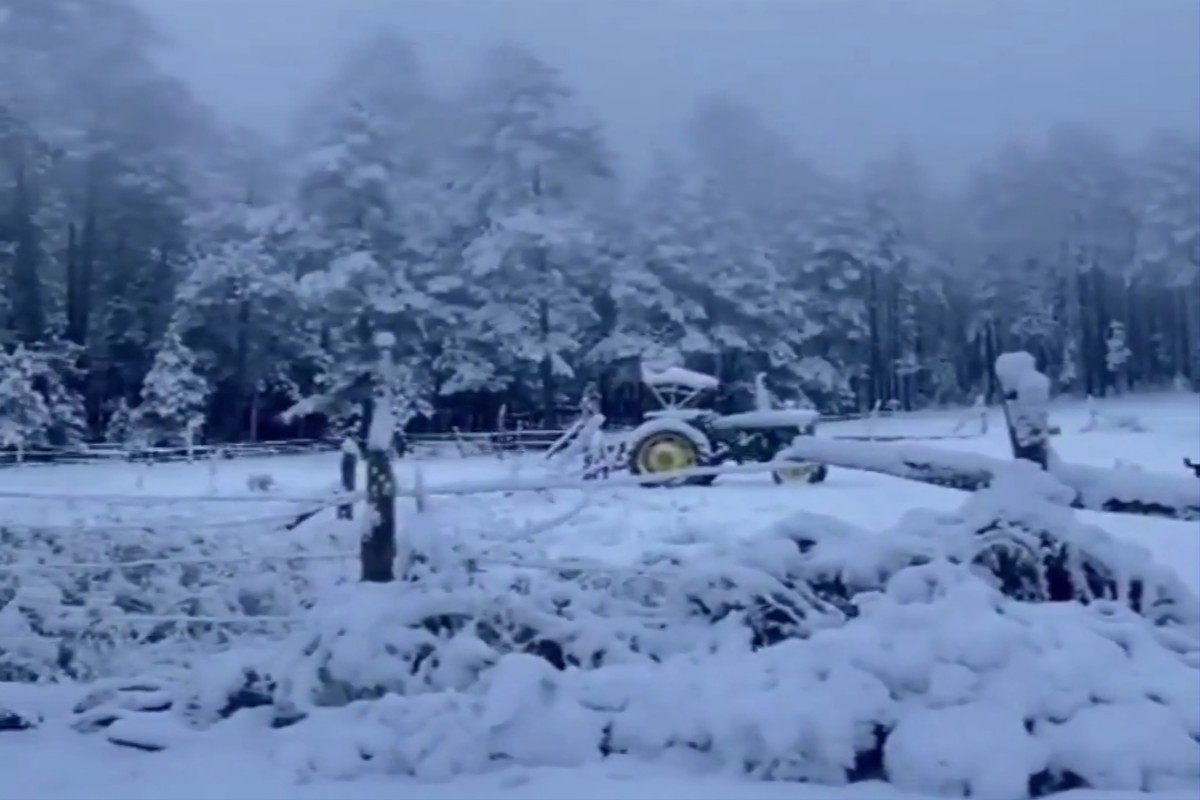
Winter Storm Brings Heavy Snow and Sub-Zero Temperatures to Eight Mexican States
Mexico’s first major winter storm of the season brought snow and sub-zero temperatures to eight states on Saturday. According to MeteoWeb, an influx of arctic air from North America colliding with moisture from the Pacific Ocean triggered the freezing conditions across mountainous regions above 2,800 meters.
Durango Temperatures Drop to -13°C
The most severe cold occurred in the state of Durango, specifically within the Sierra de Guanaceví. Communities including El Cedro, Chiqueros, Agua del Pino, Laguna Seca, and Ciénega de la Vaca experienced heavy snowfall, MeteoWeb reported. The settlement of La Rosilla recorded temperatures as low as 13 degrees below zero Celsius, as the valley’s geography trapped freezing air overnight.
Mountainous Regions Affected by Snowfall
Northern and central states saw heavy snow in high-altitude areas. In Chihuahua, snowfall impacted Ciudad Madera, Huajumar, San José Babícora, and Guachochi. Further south, the Nevado de Colima saw consistent snowfall starting at 3,500 meters, while the Nevado de Toluca and the Cerro Jocotitlán also received fresh layers of snow.
Authorities from the Civil Protection agency closed access to the Nevado de Colima to prevent visitors without proper equipment from risking hypothermia or traffic accidents. Similar conditions affected the communities of Raíces and Loma Alta, where snow covered local forests and rooftops, MeteoWeb noted.
Widespread Impact Across Eight States
The storm’s reach extended to the major volcanoes Popocatépetl and Iztaccíhuatl, which saw new snow on their higher slopes. In the eastern part of the country, the Cerro del Potosí in Nuevo León recorded ice and snow. The weather system also brought light snowfall to the Sierra de Miquihuana in Tamaulipas, the historical architecture of Real de Catorce, and the mountains of Xilitla in San Luis Potosí.
The National Meteorological Service projects continued instability with a high probability of snow or sleet for peaks above 2,800 meters in Michoacán, Guanajuato, Querétaro, Hidalgo, the State of Mexico, Mexico City, Morelos, Tlaxcala, Puebla, and Veracruz. The storm is expected to gradually lose energy starting on Sunday.