Will It Be a White or Brown Christmas? How El Niño and the Polar Vortex Could Shape Winter Weather
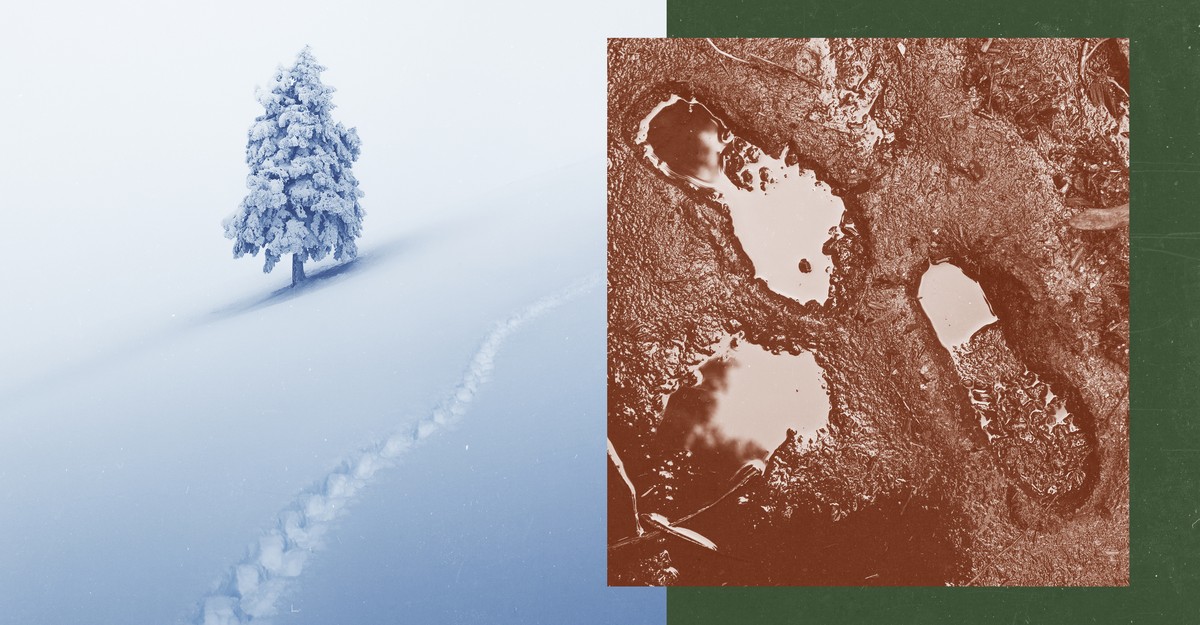
Snowville, New Hampshire, faces a 65 percent chance of a white Christmas this year, a 15 percent drop from the village’s normal probability, The Atlantic reported.
This decline reflects a broader national trend as a powerful El Niño system disrupts typical winter weather patterns across the United States. Meteorologists expect this El Niño, the strongest since 1950, to bring warmer, wetter conditions to many regions. While El Niño does not generate new heat, it rearranges existing global temperatures, which are currently elevated due to climate change. “When you throw an El Niño on the shoulders of climate change, we expect that a lot of the country is going to experience above-average temperatures,” Shel Winkley, chief meteorologist at Climate Central, told The Atlantic. Muddy Holiday Prospects
The National Oceanic and Atmospheric Administration projects an 80 percent chance that El Niño conditions will persist through the new year, bringing increased rainfall to the Southeast. “Brown Christmas is possible,” Shuyi Chen, a meteorology professor at the University of Washington, told The Atlantic. Recent flooding in Florida, California, and the Four Corners region shows the impact of these conditions, according to The Atlantic. In 2009, a blizzard blanketed more than half of the mainland United States, whereas in 2023, less than a fifth of the Lower 48 saw snow cover.
Because this year’s El Niño coincides with record-high ocean temperatures, scientists lack direct historical parallels to determine exact outcomes, The Atlantic noted. Polar Vortex Dynamics
A key variable for December remains the polar vortex, a band of winds that traps cold air near the Arctic. Although the vortex typically breaks down in March or April, researchers have observed it beginning to deteriorate already. “If sudden warming in the Arctic enables cold air to break out of the polar vortex, it could mean snow,” Ben Kirtman, an atmospheric-sciences professor at the University of Miami, told The Atlantic.
Climate change may be accelerating this breakdown, as the Arctic warms four times faster than the rest of the world, according to The Atlantic.
If the vortex does not collapse in a way that forces cold air southward, the persistent influence of El Niño will likely result in a lack of snow for much of the country. Daily weather fluctuations will likely remain unclear until one or two weeks before the holiday, The Atlantic stated.
El Niño, a climatological cycle existing for at least 250 million years, scrambles winter weather by weakening westward Pacific winds and pushing warm water toward South America, The Atlantic reported. This pattern typically results in hotter conditions in the northern U.S. and cooler, wetter weather in the south.
Meteorologists note this interaction leads to less snow across the country, especially in areas where a white Christmas is normal, The Atlantic stated.
The polar vortex, a band of winds trapping Arctic cold air, is already starting to break down this year, with experts unsure of the cause, The Atlantic reported. This early deterioration could allow cold air to break southward, increasing snow chances, Daniel Cayan, a climate scientist at Scripps, told the outlet.