Will AI Create a New Gilded Age or a Wealth Redistribution Bubble?
Artificial intelligence has minted a new class of ultra-wealthy founders following the initial public offering of Anthropic shares, but it remains unclear whether these early windfall gains signal a sweeping redistribution of global wealth or a transient bubble that will ultimately leave capital owners empty-handed.
Anthropic IPO Windfalls
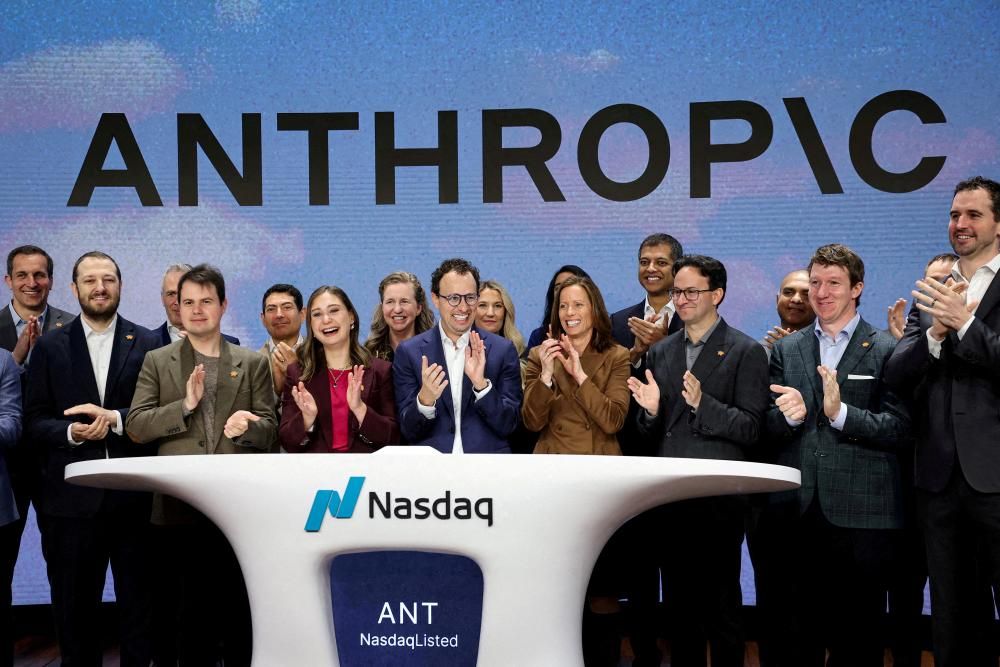
Dario Amodei and his six co-founders secured windfalls totaling somewhat more than $20bn each following the initial public offering of Anthropic shares, The Guardian reported. CEO Dario Amodei and other Anthropic officers celebrated the company’s IPO in New York City on November 19, 2026, according to [inkl.com].
Despite these massive payouts, Bloomberg counts more than 100 billionaires richer than Amodei, as [crayon.net] noted. That group includes Elon Musk, Jeff Bezos, and Bill Gates, alongside Nvidia’s Jensen Huang and Zara’s Amancio Ortega.

Tech Stock Selloff Recalls Dot-Com Era Collapses
A recent bloodbath among technology stocks pushed Anthropic shares to within cents of their IPO price. This volatility echoes the dot-com era, when early champions like the e-commerce firm Webvan, valued at $8bn, and news portal Broadcast.com, bought by Yahoo for $5.7bn, vanished.
The US Census reports that only about one in four companies use artificial intelligence. A survey of 62 countries by the Organization for Economic Cooperation and Development found that only 7% to 9% of companies use AI intensively enough to impact productivity.
Anthropic, PBC, a public benefit corporation founded in January 2021 by seven former OpenAI employees, built its business model around developing the proprietary large language model Claude, accessible via API, chatbot, and agent harnesses such as Claude Code.
The company raised $124 million in May 2021 and secured major cloud partnerships, including a July 2025 two-year contract with the US Department of Defense worth $200 million and an October 2025 agreement with Google for up to one million Tensor Processing Units. In November 2025, Nvidia and Microsoft were expected to invest up to $15 billion, while Anthropic committed to purchasing $30 billion of computing capacity from Microsoft Azure running on Nvidia systems.

Productivity Realities
Nobel prize economist Daron Acemoglu projects that AI will deliver a boost to total factor productivity substantially below 1% over a decade. Other studies show little impact on corporate earnings or employment so far.
Computing power per dollar has risen by a factor in the hundreds of quadrillions over 50 years, yet total factor productivity has risen by a factor of about 3.
Microsoft Research’s Glen Weyl and the University of Chicago’s James Evans [propose that] enhancing prosperity through AI requires a fundamental redesign of global economic, financial, and political institutions.
“Competition Is for Losers,” technology investor Peter Thiel, who holds a large stake in OpenAI, has said.