
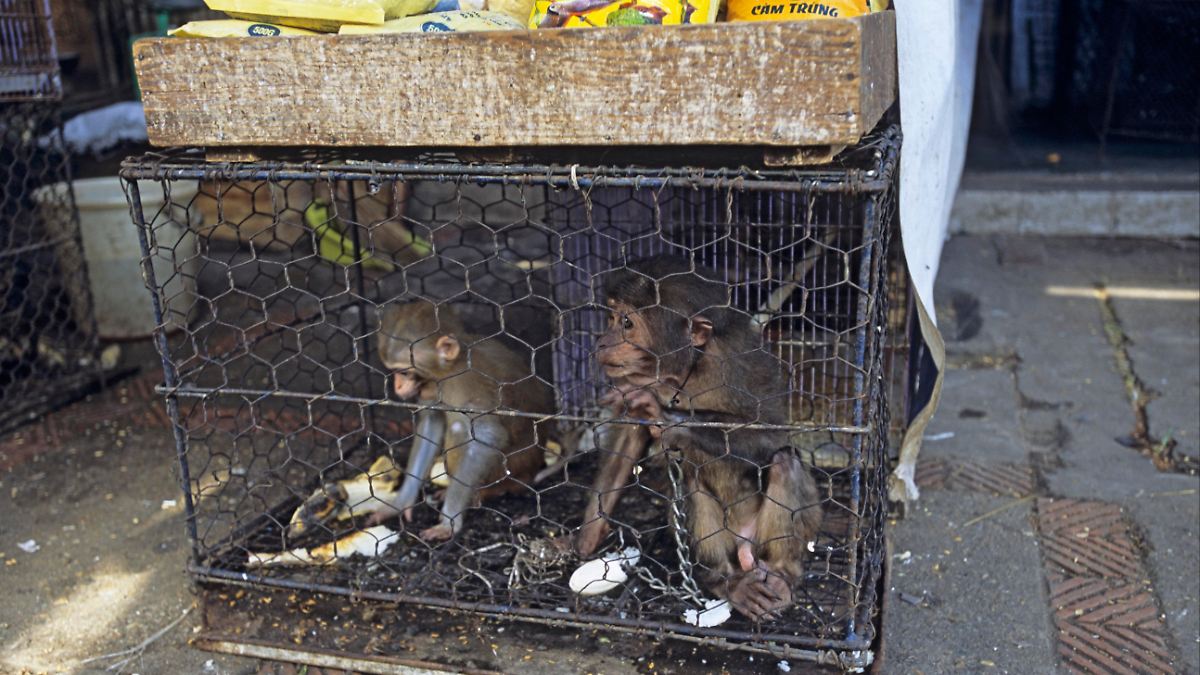
Wildlife Trade and the Risk of Global Epidemics
The intersection of unregulated wildlife trade and human urban centers has created a high-velocity conduit for zoonotic spillover. As pathogens leap from wild reservoirs to human hosts, the global health community faces an escalating risk of epidemics that challenge our current diagnostic and therapeutic frameworks.
Key Clinical Takeaways:
- Wildlife trade facilitates the “spillover” of novel viruses and bacteria by bypassing natural ecological barriers.
- Zoonotic pathogens often possess high mutation rates, complicating the development of standardized vaccines and treatments.
- Early detection through integrated “One Health” surveillance is the only viable strategy to prevent localized outbreaks from becoming global pandemics.
The fundamental clinical problem is not merely the existence of these pathogens, but the artificial acceleration of their transmission. When wild animals are captured, transported in high-stress environments, and sold in proximity to humans, their immune systems collapse, leading to massive viral shedding. This creates a biological pressure cooker where the pathogenesis of a dormant virus can rapidly evolve to infect human cells, often utilizing highly conserved receptors to enter the host. The morbidity associated with these emerging infections is frequently exacerbated by a lack of prior immunological exposure in the human population, rendering traditional standard of care protocols ineffective during the initial wave of infection.
The Biological Mechanics of Zoonotic Spillover
Zoonotic transmission occurs when a pathogen overcomes three primary barriers: the ecological barrier (contact), the cellular barrier (infection of human cells), and the population barrier (human-to-human transmission). In the context of the illegal wildlife trade, the ecological barrier is systematically dismantled. According to a comprehensive analysis published by the World Health Organization (WHO), the trade of mammals—particularly bats, primates, and rodents—increases the probability of “viral chatter,” where multiple viruses swap genetic material in a process known as recombination.

From a molecular perspective, this process often involves the adaptation of the viral spike protein to bind with human ACE2 or similar receptors. This genetic drift is not random; it is accelerated by the high-density conditions of wildlife markets. When these pathogens enter the human bloodstream, they often trigger a systemic inflammatory response, sometimes leading to cytokine storms that cause multi-organ failure before the patient’s adaptive immune system can mount a defense.
“The wildlife trade is not just an environmental crime; it is a primary driver of biological risk. We are essentially building a bridge for the next pandemic to walk across, providing pathogens with the perfect laboratory to evolve human-infectivity.” — Dr. Sarah Jenkins, PhD in Viral Epidemiology.
Epidemiological Surveillance and the One Health Framework
Addressing this threat requires a shift from reactive medicine to proactive surveillance. The “One Health” approach recognizes that human health is inextricably linked to the health of animals and the shared environment. This framework is currently being scaled globally, supported by funding from the Centers for Disease Control and Prevention (CDC) and various international grants aimed at monitoring “hotspot” regions where wildlife trade is most prevalent.
The clinical gap remains the time lag between the first human case and the identification of the pathogen. Many zoonotic infections present with non-specific symptoms—fever, myalgia, and respiratory distress—which are easily misdiagnosed as common influenza or bacterial pneumonia. This diagnostic ambiguity allows the pathogen to spread undetected. For healthcare systems, this necessitates a robust infrastructure of advanced diagnostic centers capable of performing rapid metagenomic sequencing to identify novel genetic sequences in real-time.
the funding for these surveillance programs is often fragmented. Whereas the NIH and the Wellcome Trust have poured millions into genomic sequencing, the “last mile” of clinical application—getting those results to the bedside in rural or underserved areas—remains a significant hurdle. This gap in healthcare delivery increases the risk that a localized spillover event will evolve into a full-scale epidemic before international health agencies can intervene.
Regulatory Hurdles and Clinical Preparedness
From a regulatory standpoint, the development of countermeasures for potential zoonotic threats is hampered by the lack of a known target. Unlike a seasonal flu vaccine, where the strain is predicted months in advance, zoonotic threats require “platform technologies” like mRNA, which can be rapidly pivoted to a new sequence. However, the transition from laboratory discovery to double-blind placebo-controlled trials in humans is a complex process fraught with ethical and logistical challenges.
As these threats evolve, the legal landscape surrounding biosafety and biosecurity also shifts. Institutions handling high-risk pathogens must adhere to stringent BSL-3 and BSL-4 guidelines to prevent accidental leakage. Because of the complexity of these regulations, many research facilities and pharmaceutical developers are increasingly relying on healthcare compliance attorneys to navigate the intersection of international trade laws and public health mandates, ensuring that research does not inadvertently violate the Nagoya Protocol on access to genetic resources.
“We cannot wait for the virus to reach the clinic to start the research. We must move the clinic to the edge of the forest, monitoring the interface where humans and wildlife meet.” — Dr. Aris Thorne, Lead Researcher in Emerging Infectious Diseases.
The Trajectory of Global Health Security
Looking forward, the trajectory of pandemic prevention lies in the integration of AI-driven predictive modeling and the aggressive regulation of wildlife markets. By analyzing the genomic signatures of viruses in wild populations, scientists can predict which strains are most likely to jump to humans. However, technology is only a partial solution; the clinical reality is that our healthcare systems must be resilient enough to handle an unknown pathogen without collapsing.
The risk of the next epidemic is not a statistical certainty, but a biological probability. Reducing the volume of the wildlife trade directly lowers the frequency of these spillover events. Until global policy catches up with biological reality, the burden falls on clinicians and public health officials to maintain a state of high vigilance. For those working on the front lines of infectious disease or those seeking to implement institutional biosafety protocols, it is imperative to partner with board-certified infectious disease specialists to develop robust triage and containment strategies.
Disclaimer: The information provided in this article is for educational and scientific communication purposes only and does not constitute medical advice. Always consult with a qualified healthcare provider regarding any medical condition, diagnosis, or treatment plan.