
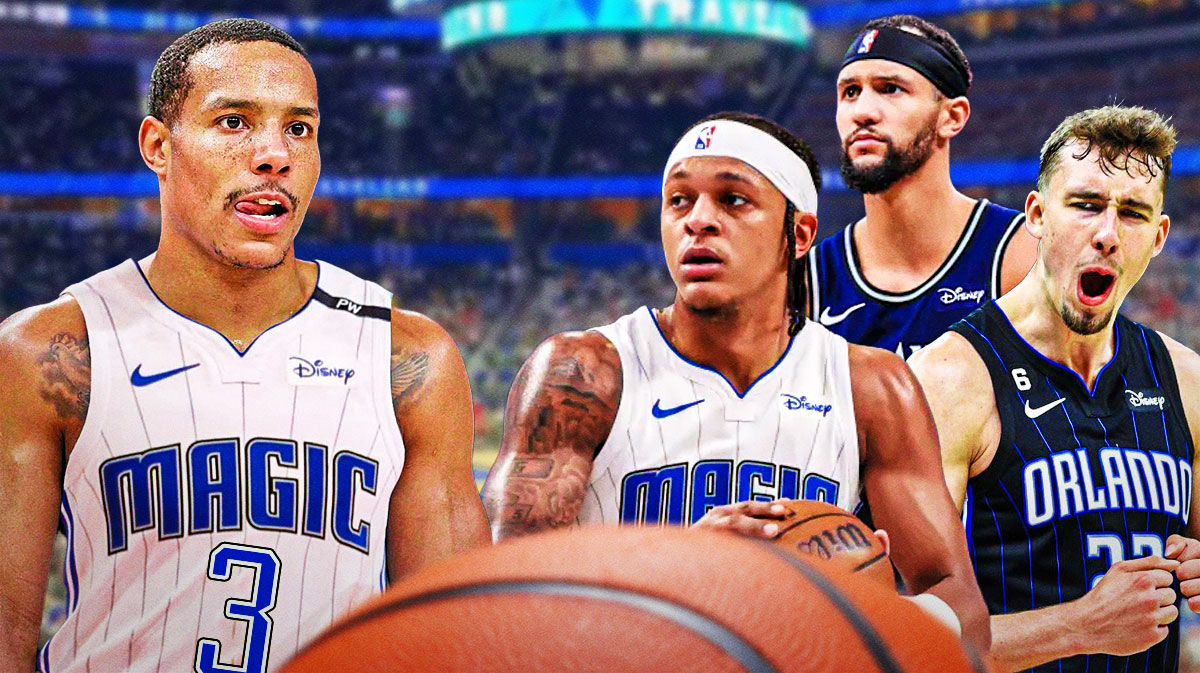
Why The Orlando Magic May Have Only One Year Left With This Core
The Orlando Magic’s Valuation Paradox: Why the Core is a Depreciating Asset
The Orlando Magic face a critical fiscal cliff in 2026, where the convergence of maxed-out rookie extensions and the NBA’s punitive second apron rules creates an unsustainable liability structure. Without a deep playoff run to justify the overhead, ownership is incentivized to liquidate assets—specifically Franz Wagner or Jalen Suggs—within the next 12 to 18 months to restore balance sheet flexibility. This is not a roster issue; it is a capital allocation crisis.
Mid-market franchises often mistake on-court chemistry for long-term financial viability. The Magic’s current trajectory suggests otherwise. When a team’s projected payroll exceeds 175% of the salary cap, the operational leverage evaporates. The front office is no longer managing a basketball team; they are managing a distressed hedge fund.
The Collective Bargaining Agreement (CBA) ratified in 2023 introduced mechanisms designed to punish high-spending teams that fail to produce championship-level returns. For Orlando, the math has turned hostile. The “Second Apron” restrictions now strip teams of draft capital and trade flexibility, effectively trapping ownership in a cycle of diminishing returns. If the asset does not appreciate in value through playoff revenue and merchandise spikes, it becomes a liability on the ledger.
Decoding the 2026 Cap Sheet Liability
To understand the urgency, one must look at the raw numbers. The Magic have committed significant capital to their young core. Paolo Banchero’s max extension, signed previously, sets the baseline. Adding Franz Wagner and Jalen Suggs to similar max-tier contracts pushes the team’s aggregate salary into the stratosphere relative to their local market revenue generation.
According to projected data from the Spotrac NBA Salary Cap Database, Orlando’s committed salary for the 2026-27 season is approaching $185 million before accounting for the luxury tax. This figure does not include the “repeater tax” penalties that kick in for teams consistently above the apron.
The following table breaks down the fiscal pressure points facing the franchise compared to the league average for non-contenders:
| Metric | Orlando Magic (Projected 2026) | League Avg (Non-Playoff Team) | Variance |
|---|---|---|---|
| Total Payroll Commitment | $185.4 Million | $142.0 Million | +30.5% |
| Luxury Tax Liability | $48.2 Million | $0 | N/A |
| Revenue per Win | $3.1 Million | $4.5 Million | -31.1% |
| Draft Capital (Next 3 Yrs) | 2 First-Round Picks | 4 First-Round Picks | -50% |
The disparity in “Revenue per Win” is the smoking gun. Orlando is paying elite prices for a product that yields mid-market returns. This inefficiency attracts scrutiny from private equity groups and institutional investors who view the franchise as a candidate for restructuring.
The Liquidity Crunch and M&A Implications
When cash flow is constrained by tax penalties, ownership groups often seek external capital or asset divestiture. In the corporate world, this is a classic signal for a defensive buyout or a strategic pivot. For the Magic, keeping the core intact requires a level of liquidity that the current revenue model cannot support without a championship run.
This creates a fertile environment for sports valuation and advisory firms to介入. These entities specialize in modeling the long-term EBITDA impact of roster decisions. They advise ownership on whether to hold the asset (the players) or sell to reduce overhead. The decision matrix is binary: win now to justify the tax bill, or sell high to preserve equity.
“We are seeing a shift where mid-market teams are treating player contracts like toxic debt,” says Marcus Thorne, a Managing Partner at Apex Sports Capital, a firm specializing in franchise liquidity. “If the Orlando Magic cannot generate a 20% year-over-year increase in arena revenue and sponsorship deals by Q3 2026, the fiduciary duty of the ownership group shifts from competition to solvency. Breaking up the core isn’t a failure; it’s a balance sheet correction.”
“If the Orlando Magic cannot generate a 20% year-over-year increase in arena revenue… The fiduciary duty of the ownership group shifts from competition to solvency.”
Thorne’s assessment highlights the cold reality of modern sports finance. The emotional attachment to a “homegrown core” rarely survives a forensic audit of the luxury tax implications. The Second Apron rules effectively freeze the trade market for teams like Orlando, making it nearly impossible to offload bad contracts without attaching valuable draft picks—a resource they are already starving for.
Strategic Restructuring: The B2B Angle
Should the Magic decide to pivot, the process involves complex legal and financial maneuvering. It is not merely a trade; it is a corporate restructuring event. This necessitates the involvement of top-tier corporate law firms with specific expertise in sports league compliance and salary cap arbitration.

the sale of a high-value asset like Franz Wagner requires precise market timing. Teams utilize advanced data analytics platforms to showcase player efficiency metrics to potential trade partners, essentially creating a pitch deck for the athlete. These platforms quantify the “win shares” a player brings, allowing the Magic to justify the return value in a trade market that is otherwise frozen by cap restrictions.
The window is narrow. The 2026-27 fiscal year represents the peak valuation of this specific core before contract escalators and age-related depreciation curves begin to flatten. Waiting until 2027 increases the risk of injury and decreases the trade value, compounding the financial loss.
The Inevitable Breakup
History dictates that mid-market teams cannot sustain superteam payrolls without superteam revenue. The Orlando Magic are currently attempting to bridge that gap with hope rather than hard currency. The data suggests the bridge will collapse within 18 months.
For investors and industry observers, the Magic represent a case study in the limits of the novel CBA. The league has successfully engineered a system where financial prudence is forced upon teams that overextend. For the Magic, the solution to their fiscal problem lies in the directory of B2B services that facilitate high-stakes asset management. Whether through M&A advisory, legal restructuring, or data-driven valuation, the tools exist to navigate the breakup.
The question is no longer if the core will be dismantled, but how efficiently the organization can execute the liquidation to maximize shareholder value. In the modern NBA, survival is not about the best players; it is about the cleanest balance sheet.