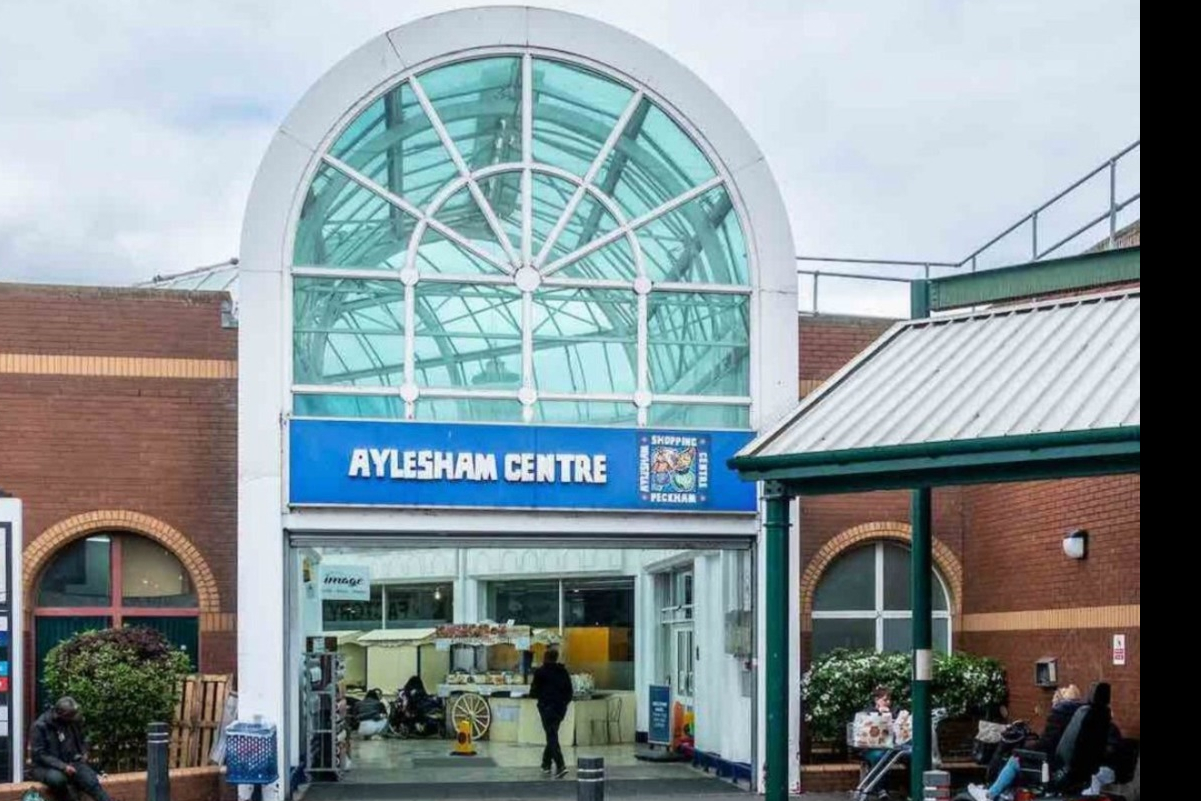
Why Southwark’s Rejection of Aylesham Centre Redevelopment Fails London’s Housing Needs
Southwark Council’s rejection of Berkeley Homes’ 867-unit Aylesham Centre redevelopment—despite London’s desperate housing crisis—exposes a systemic failure: local planning policies are prioritizing heritage preservation over economic necessity, while affordable housing mandates strangle viable projects entirely. The site, a prime Peckham town center location four minutes from a railway station, would have delivered 77 affordable homes (12% of the total) alongside retail and commercial space, yet was blocked over “townscape harm” and “insufficient local need”—ignoring that Southwark’s own 2022 viability assessment confirmed zero affordable units were financially viable without market-rate support. This isn’t just a Peckham problem; it’s a blueprint for London’s stagnant housing supply, where inflation and land-use restrictions force developers to choose between unbuildable schemes or no homes at all.
Why London’s Housing Crisis Isn’t About Affordability—It’s About Supply
London’s housing shortfall isn’t a story of greed or luxury flats. It’s a liquidity crisis in physical assets. The city builds fewer homes than nearly any global peer—just 22,000 new units in 2025, per the Greater London Authority’s Housing Delivery Report—while rents hit £1,500/month for a one-bedroom, pricing out workers in boroughs like Southwark. The Aylesham rejection underscores the paradox: affordable housing mandates, when unbacked by market-rate demand, kill all development. Berkeley’s original 2024 proposal included 35% affordable units (185 social rent, 85 intermediate), but after slashing that to 12%, the project still faced rejection. The message to developers? Build nothing unless you can subsidize it at a loss.
“If Manchester had focused only on affordable housing, it would have delivered zero homes.”
—Sir Richard Leese, former Manchester City Council leader (2021)
Source: Confidentials Interview
The Moving Chain Effect: How Market-Rate Housing Eases Pressure
Critics dismiss market-rate developments as “luxury bubbles,” but data proves otherwise. A 2023 study by the London School of Economics found that every 1% increase in housing supply reduces rents by ~2%—a direct supply-demand relationship. The mechanism? Moving chains. When a high-income buyer occupies a new £800,000 flat, they vacate a £500,000 home, which then becomes available to a mid-income buyer, and so on. Cities like Manchester leverage this: its city center population surged from <500 in the 1990s to 100,000 today, proving that volume matters more than labels. Yet Southwark’s rejection treats Aylesham as a binary choice—either 77 affordable homes or none—ignoring that no homes at all is the worst outcome for renters.
Developer Economics: Why Viability Assessments Are Becoming a Death Sentence
Berkeley Homes’ Aylesham proposal wasn’t a charity project. It required EBITDA margins of ~18% to pencil out with 12% affordable housing—a razor-thin margin in a city where construction costs rose 15% YoY in 2025, per the Royal Institution of Chartered Surveyors. The problem? Planning policies treat affordability as a fixed cost, not a supply driver. In reality, affordable housing quotas act as a non-linear tax on development: reduce the affordable percentage by 10%, and the project might become viable; reduce it by 20%, and the entire scheme collapses. This isn’t speculation—it’s reflected in Southwark’s own viability assessment, which confirmed that zero affordable units were financially sustainable without market-rate support.

| Metric | 2024 Proposal (Rejected) | 2025 Amended Proposal (Rejected) | Manchester City Center (2025) |
|---|---|---|---|
| Total Units | 877 | 867 | 100,000+ (city-wide) |
| Affordable % | 35% | 12% | ~20% (with private sector leverage) |
| Avg. Rent (£) | N/A (market-rate) | N/A (market-rate) | £1,200–£1,800 (private sector) |
| Supply Impact | 0 new homes | 0 new homes | +2,500/year (2020–2025) |
Who Loses When Development Stalls?
The human cost is clear: Jeremy Driver, head of campaigns at Britain Remade, lived in Peckham for nine years before being priced out. His story mirrors London’s exodus—workers fleeing high rents to cheaper boroughs, hollowing out communities. But the economic damage is broader. Stalled housing supply distorts labor markets: firms struggle to attract talent when workers can’t afford to live near offices. It inflates commercial rents, as retail spaces sit empty without residential foot traffic. And it creates a perverse subsidy: taxpayers fund affordable housing via cross-subsidies, while private developers bear the risk of unviable schemes.
“The planning system is designed to fail. It forces developers to choose between unbuildable schemes and no homes at all.”
—Anonymous institutional investor, London real estate fund (Q1 2026 earnings call)
The B2B Fix: How Firms Are Navigating the Crisis
This isn’t just a policy failure—it’s a structural bottleneck that demands corporate solutions. Developers like Berkeley Homes are turning to:
- Viability modeling firms to stress-test affordable housing quotas against inflation and land costs. Specialized consultancies now offer dynamic modeling that simulates how policy tweaks (e.g., reducing affordable percentages by 5%) could unlock stalled projects.
- Cross-border investment partnerships to pool capital for high-risk, high-reward schemes. Firms like global real estate joint venture platforms help developers access overseas capital where local banks remain risk-averse.
- Planning law specialists to challenge rejections via legal loopholes. Top-tier firms like planning appeal attorneys are seeing a surge in cases where councils reject projects based on “heritage” grounds—a legally contentious area—while ignoring supply crises.
The Aylesham rejection isn’t an outlier; it’s a canary in the coal mine for London’s housing market. Without intervention, the city will continue to build at half the rate of Paris or Berlin, deepening its affordability crisis. The question for investors isn’t *if* but *how* to deploy capital in a system rigged against supply. The answer lies in aggressive viability optimization—and the B2B firms already building the tools to make it work.
Bottom Line: London’s housing shortage isn’t about greed or luxury flats—it’s about policy-induced scarcity. The Aylesham rejection proves that without flexible planning rules and market-rate support, even viable projects die. For developers, the path forward isn’t charity; it’s leveraging data-driven B2B solutions to turn “unbuildable” into “bankable.” The firms leading this charge? They’re in our Global Directory.