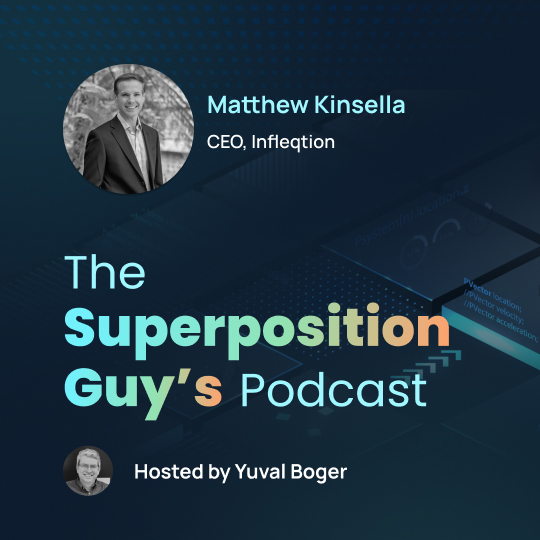
Why Neutral Atoms Power Quantum Sensors, Clocks, and Computers
Neutral atom quantum technology, championed by Infleqtion and outlined by Matt Kinsella in The Quantum Insider, utilizes laser-trapped atoms to create scalable quantum computers, high-precision sensors, and atomic clocks. Unlike superconducting qubits, neutral atoms offer longer coherence times and higher connectivity, allowing for a unified hardware stack that serves both computation and precision measurement.
- Unified Hardware: Neutral atoms enable a single platform to function as a computer, a clock, and a sensor, reducing the need for disparate quantum modalities.
- Scalability: Laser-trapped arrays (optical tweezers) allow for hundreds of qubits without the wiring bottlenecks seen in dilution refrigerators.
- Deployment: The shift toward “quantum-ready” infrastructure focuses on reducing the size and power requirements of the laser systems needed to manipulate atoms.
The primary bottleneck in quantum scaling has historically been the “wiring nightmare” of superconducting circuits. As qubit counts increase, the thermal load and physical space required for coaxial cabling in cryostats create a hard ceiling for enterprise deployment. Neutral atom architectures bypass this by using light as the interconnect. By trapping atoms in arrays of focused laser beams, known as optical tweezers, Infleqtion is targeting a path toward thousands of qubits without the linear increase in hardware bulk.
The Architecture of Neutral Atom Versatility
According to Matt Kinsella, the inherent properties of neutral atoms—specifically their lack of electrical charge—prevent them from interacting strongly with their environment, which minimizes decoherence. This stability is why the same physics powering a quantum processor also enables the world’s most accurate atomic clocks. In a sensor application, the atom’s sensitivity to external fields is a feature; in a computer, it is a bug that must be controlled via precise laser pulses.
For CTOs evaluating the stack, the trade-off is between gate speed and coherence. While superconducting qubits (like those from IBM or Google) offer faster gate operations, neutral atoms provide superior connectivity. Because atoms can be moved physically using lasers, the architecture supports “all-to-all” connectivity, reducing the overhead required for SWAP gates in complex algorithms. This efficiency is critical for implementing Quantum Approximate Optimization Algorithms (QAOA) and simulating molecular dynamics.
As these systems move from lab-grade optical tables to rack-mounted enterprise hardware, the focus has shifted to photonics integration. To manage the latency and stability of these systems, firms are deploying specialized high-precision timing hardware and integrated photonic circuits to replace bulk optics. Organizations integrating these systems into existing data centers often require [Relevant Tech Firm/Service] to audit their power delivery and thermal management systems to handle the specific requirements of laser-cooled environments.
Comparison of Quantum Modalities
The following matrix breaks down the architectural differences between the neutral atom approach and the more common superconducting and trapped-ion methods.
| Metric | Neutral Atoms (Infleqtion) | Superconducting (IBM/Google) | Trapped Ions (Quantinuum) |
|---|---|---|---|
| Qubit Connectivity | High (Reconfigurable) | Low (Nearest Neighbor) | Very High (All-to-all) |
| Coherence Time | Long | Short | Very Long |
| Cooling Req. | Laser Cooling (μK) | Dilution Fridge (mK) | Laser/Cryogenic |
| Scaling Path | Optical Tweezers | Lithographic Scaling | Shuttling/Modules |
Implementation: Interfacing with Quantum Control Systems
Interfacing with a neutral atom system typically involves a classical control layer that translates high-level quantum circuits into precise laser pulse sequences. While the physics happens at the atomic level, the orchestration happens via FPGA-based controllers and Python-driven APIs. According to documentation from leading quantum software frameworks, the process involves defining the qubit array geometry and the specific Rydberg states used for entanglement.
Below is a conceptual representation of how a developer might initialize a neutral atom array and apply a Rydberg gate using a high-level quantum SDK:
# Conceptual Python snippet for Neutral Atom Gate Orchestration
import quantum_sdk as qsdk

# Initialize 50-qubit array in a 2D grid (7x7 + 1)
array = qsdk.NeutralAtomArray(qubits=50, geometry='grid')

# Define laser pulse parameters for Rydberg excitation
# Pulse duration and detuning are critical for gate fidelity
rydberg_pulse = qsdk.Pulse(duration='200ns', amplitude=0.5, phase=0)

# Apply a CZ (Controlled-Z) gate between qubit 0 and 1
# This relies on the Rydberg blockade effect
circuit = qsdk.Circuit()
circuit.add_gate('CZ', targets=[0, 1], pulse=rydberg_pulse)

# Execute on the Infleqtion-style backend
result = qsdk.execute(circuit, backend='neutral_atom_v1')
print(f"State Vector: {result.get_state_vector()}")
The Security Implications of Quantum Sensing
The “sensor” aspect of neutral atom technology introduces a significant cybersecurity and intelligence shift. Quantum sensors can detect minute gravitational anomalies or magnetic field shifts, potentially rendering traditional stealth technologies or underground bunkers visible. This capability creates a new vector for signal intelligence (SIGINT) that bypasses traditional electronic warfare defenses.
From a corporate risk perspective, the arrival of these sensors necessitates a review of physical security protocols. Companies managing sensitive hardware or secure facilities are increasingly engaging [Relevant Tech Firm/Service] to perform vulnerability assessments against quantum-enhanced sensing capabilities. This is a parallel track to the “Quantum Apocalypse” (Q-Day) concern, where Shor’s algorithm threatens RSA encryption; here, the threat is the total loss of physical concealment.
The funding for this transition is substantial. Infleqtion has secured significant backing to move these technologies out of the lab, following a trajectory similar to other deep-tech ventures backed by venture capital and government grants. This funding is directed toward the miniaturization of the “laser stack”—reducing a room-sized experiment into a 19-inch rack-mount unit that can be managed by standard IT teams.
The Road to Quantum Utility
The convergence of sensing, timing, and computing into a single neutral atom platform suggests a future where the “quantum computer” is not a standalone box, but a distributed network of synchronized nodes. If every node shares a neutral-atom clock, the synchronization latency across a global network could drop to levels that enable real-time quantum teleportation of states for distributed computing.
For the enterprise, the immediate play is not replacing x86 servers but integrating quantum-classical hybrids. This requires a robust CI/CD pipeline capable of handling hybrid workloads. Firms currently optimizing their Kubernetes clusters for AI workloads should begin evaluating how quantum accelerators will plug into their existing open-source orchestration tools and developer ecosystems. As the hardware matures, the bottleneck will shift from the physics of the atom to the efficiency of the API.
Disclaimer: The technical analyses and security protocols detailed in this article are for informational purposes only. Always consult with certified IT and cybersecurity professionals before altering enterprise networks or handling sensitive data.