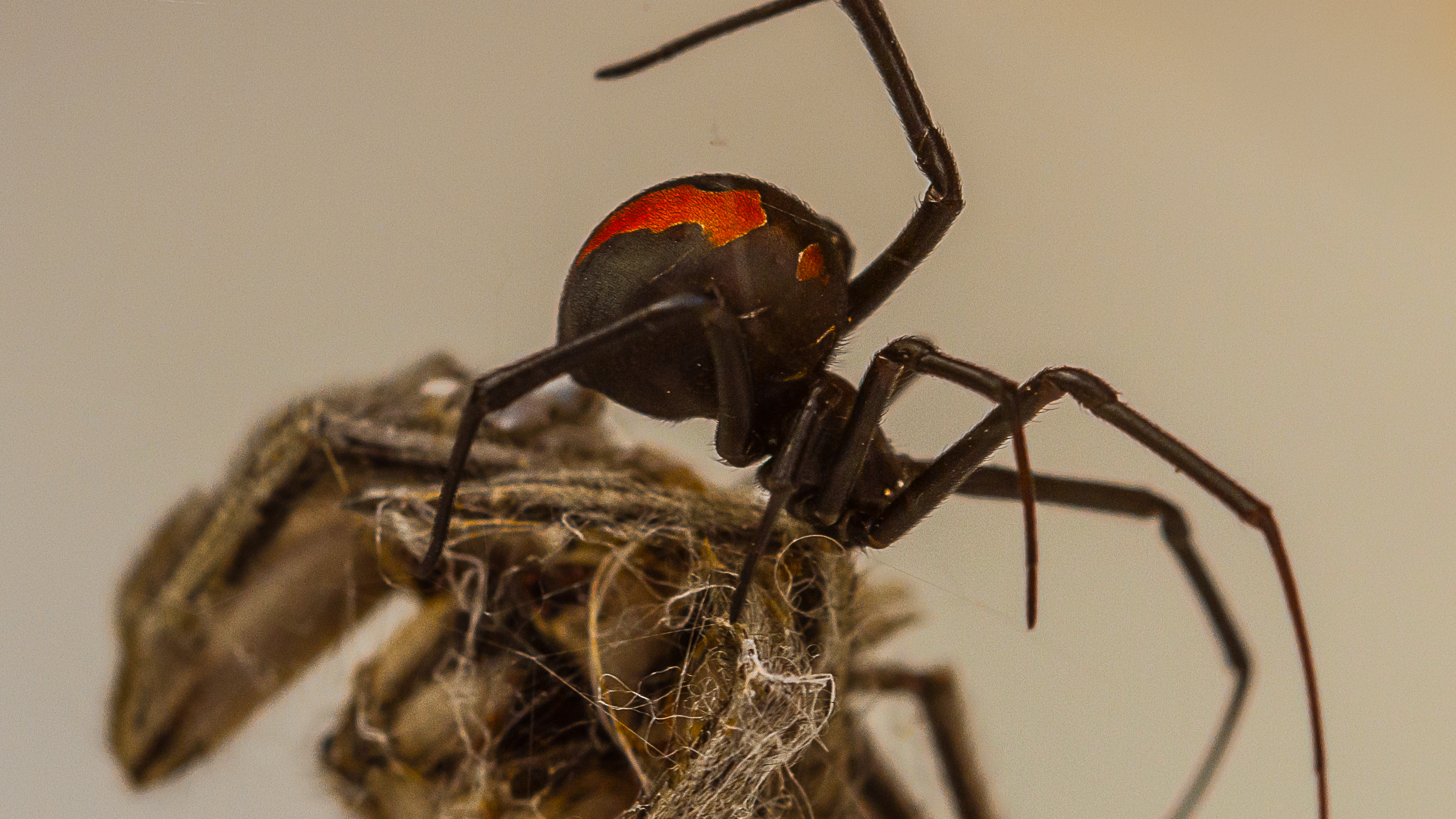
Why Male Redback Spiders Backflip Into Death: The Genetic Explanation
Male redback spiders execute a fatal backward somersault during mating due to a surprisingly simple genetic trait linked to their sex chromosomes, according to a study published on August 12, 2026, in the journal Biology Letters. Researchers investigating the evolutionary divergence between Australia’s redback spiders (Latrodectus hasselti) and New Zealand’s katipō (Latrodectus katipo) found that the gymnastic death-flip is linked to the X chromosome, while a secondary life-extending abdominal constriction relies on a more complex genetic architecture.
- Male redback spiders backflip into female fangs during copulation to prolong sperm transfer, a behavior now traced to a genetic pattern on the X chromosome.
- A separate protective maneuver—constricting the abdomen to survive being eaten alive—operates independently.
- The closely related redback and New Zealand katipō species exhibit contrasting mating behaviors that enabled this genetic research.
Unpacking the Evolutionary Schism Between Widow Species
Widow spiders carry a fearsome reputation for sexual cannibalism, yet only a select few species actually practice it. The Australian redback and the U.S.-based Southern black widow (Latrodectus mactans) represent these extremes. To understand this behavior, Kardelen Özgün Uludağ, a doctoral student of behavioral biology at the University of Hamburg in Germany, led a team to investigate the genetic drivers behind the split. “What makes this system so intriguing is the fact that we are dealing with two species here, which are very closely related,” Uludağ stated in an email to Live Science. Genetic data indicates these populations separated less than 100,000 years ago, making their divergent behavior a model for study.
Because redback females routinely consume courting katipō males rather than mate with them, the research team engineered a workaround. They exposed katipō females to male redbacks to produce hybrid offspring, then crossbred hybrid females with either male redbacks or male katipō spiders. By pairing the resulting mixed-genetic males back with katipō females, the researchers could safely observe mating mechanics without fatal predation skewing the data.
Genetic Mapping Reveals Independent Trait Inheritance
Tracking the hybrid males revealed complexity in how these traits pass down generations. The data showed that backflips and abdominal constrictions are governed by distinct biological systems. Hybrid males combined both maneuvers in only about half of their observed matings, performing just one or the other during the remainder.
Inheritance patterns strongly linked the acrobatic somersault to the spider’s X chromosome. Unlike mammals where males carry XY pairings, male and female spiders both possess two X chromosomes, though females carry two full sets while males carry only one. This chromosomal architecture facilitates a dominant-recessive inheritance model for the backflip.
Future Comparative Directions in Latrodectus Research
The findings open new avenues for comparative arachnology. The research team aims to expand their investigations across a broader range of the genus Latrodectus to map out how rapidly behavioral adaptations can diverge under selective pressures. “It would be nice to investigate more species of the genus Latrodectus to allow comparative studies,” Uludağ noted.
Disclaimer: The information provided in this article is for educational and scientific communication purposes only and does not constitute medical advice. Always consult with a qualified healthcare provider regarding any medical condition, diagnosis, or treatment plan.