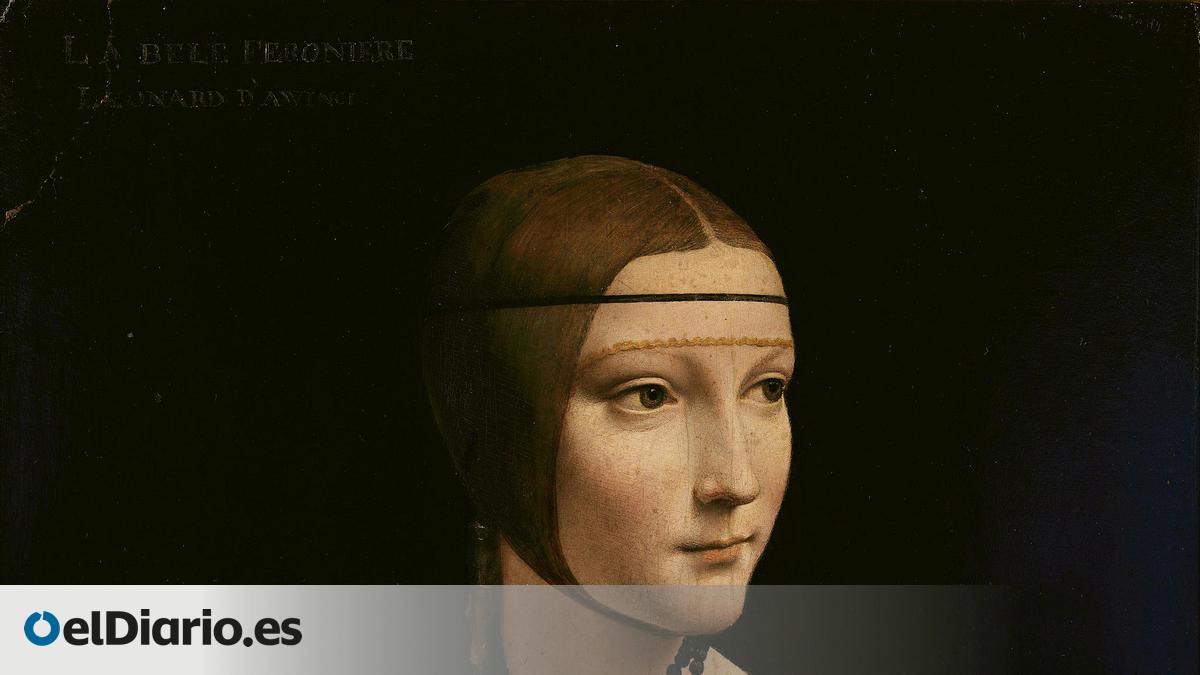
Why Leonardo da Vinci’s Lady with an Ermine Revolutionized Renaissance Portraits
Leonardo da Vinci’s Lady with an Ermine, currently housed in the Czartoryski Museum in Kraków, Poland, revolutionized Renaissance portraiture through its innovative three-quarters pose and technical sophistication. Depicting Cecilia Gallerani, the painting survived Nazi looting and wartime displacement, cementing its status as a global icon of cultural endurance and artistic mastery.
While the Mona Lisa often dominates the global conversation regarding Leonardo’s genius, Lady with an Ermine represents perhaps his most significant leap in psychological and technical portraiture. The painting does not merely capture a likeness; it captures a moment of living, breathing movement. This distinction is why the work remains a cornerstone of art history, serving as a bridge between the rigid traditions of the 15th century and the fluid, modern portraiture that would follow. However, the painting’s survival is as much a miracle of history as it is a triumph of art, having weathered the most turbulent political shifts of the last century.
The Technical Revolution: Breaking the Renaissance Mold
Before Leonardo, Renaissance portraiture was largely defined by a certain stiffness. Most subjects were depicted in profile or in a strictly frontal position, creating a sense of static permanence that often felt disconnected from reality. Leonardo shattered this convention by placing Cecilia Gallerani in a three-quarters pose, a decision that fundamentally altered the viewer’s relationship with the subject.

By turning her body slightly and directing her gaze toward a point outside the frame, Leonardo created a sense of continuity. The viewer is no longer looking at a frozen icon, but at a woman who has just been interrupted or who is about to turn her attention elsewhere. This creates a “narrative” within a single frame—a sense that life is happening around the edges of the canvas. Modern technological analysis has further deepened our understanding of this process, suggesting that Leonardo did not arrive at this perfection immediately. Studies using advanced imaging indicate that the master worked through at least three distinct versions of the composition, refining the torsion of the neck and the subtle musculature of the hand to achieve this unparalleled sense of motion.
For institutions managing such delicate transitions in art history, the preservation of these layered technical achievements is paramount. Ensuring the longevity of such works requires constant oversight from specialized art conservation services to mitigate the effects of light, humidity, and age on the original pigments.
The Intellectual Subject: Cecilia Gallerani and the Sforza Court
The fame of the painting is inextricably linked to the woman it depicts. Cecilia Gallerani was not merely a passive subject; she was a prominent figure in the Milanese court of Ludovico Sforza, the Duke of Milan. Born in Siena in 1473 to a family without noble titles, Cecilia rose to prominence through her formidable intellect. She was a poet, a musician, and a participant in high-level cultural discourses that were, at the time, almost exclusively reserved for men.

Leonardo, who worked in close proximity to Sforza, was commissioned to capture this refined essence. The portrait avoids the “cold” expression common in many contemporary works, instead reflecting a woman of depth and agency. This intellectual aura is what makes the work a primary source for understanding the shifting social dynamics of the Italian Renaissance.
“The portrait is a masterclass in psychological depth, where the subject’s social standing is communicated not through jewelry or heavy silks, but through the poise and alertness of her expression.”
Symbolism and the Mystery of the White Ermine
The inclusion of the ermine is far from a mere decorative choice. The animal serves as a complex web of symbolic meanings that connect the subject to her patron. Ludovico Sforza was known as the “white ermine,” a title linked to specific honors and distinctions he received. By placing the animal in Cecilia’s arms, Leonardo created a visual shorthand for her relationship with the Duke.
historians have noted a linguistic layer to the symbolism. Notice interpretations suggesting Leonardo played with Cecilia’s surname, Gallerani, using Greek linguistic roots associated with the weasel or ermine family. Beyond the political, the ermine has long been a symbol of purity and nobility. In this composition, the animal acts as an extension of Cecilia’s own character—elegant, swift, and untainted.
When high-value assets like these are moved for exhibition, the logistical complexity is immense. Organizations often rely on international logistics providers for high-value assets to ensure that the physical integrity of the piece is never compromised during transit.
A Century of Survival: From Nazi Looting to Recovery
The history of Lady with an Ermine is a mirror to the violent history of 20th-century Europe. After being held by the Czartoryski family in Poland, the painting was caught in the crosshairs of the Second World War. During the Nazi occupation of Poland, the masterpiece was confiscated. Hans Frank, the Governor-General of the occupied territory, personally took possession of the work.
The painting’s journey through the chaos of war—marked by theft, displacement, and the constant threat of destruction—has only added to its legendary status. It was eventually recovered in 1945 and returned to its home in Kraków. This history of survival has turned the painting into a symbol of Polish cultural resilience. The struggle to reclaim and protect such heritage often necessitates the intervention of international heritage law experts to navigate the complex legalities of restitution and ownership.
The Modern Icon: Pop Culture and the Economics of Art
Today, the painting’s relevance is being revitalized by modern media. The Netflix series Berlin recently utilized the painting as a central plot device, tapping into the global fascination with Leonardo’s work. This intersection of fine art and popular fiction serves a dual purpose: it keeps the historical narrative alive for a new generation and drives significant cultural tourism to the Czartoryski Museum.
The economic impact of such “masterpiece tourism” is substantial for the city of Kraków, as visitors travel from across the globe to catch a glimpse of one of the few surviving female portraits by Leonardo. As the world becomes increasingly digital, the physical presence of a 500-year-old masterpiece continues to command a level of attention that no digital reproduction can replicate.
The enduring legacy of Lady with an Ermine reminds us that true mastery is not just about technical skill, but about the ability to capture the essence of humanity and survive the storms of history. As we look to the future of cultural preservation, the lessons learned from this painting’s survival remain vital. For those tasked with protecting the treasures of our shared human history, finding vetted fine art insurance specialists and heritage consultants is not just a professional necessity—it is a duty to the future.