Why Global Health Security Is Essential to U.S. National Security
An outbreak of an infectious disease anywhere in the world can reach major international cities in less than 36 hours, threatening global stability and domestic economic security. According to a special supplement published on September 21, 2017, by the Centers for Disease Control and Prevention (CDC) in its Emerging Infectious Diseases journal, sustained international containment efforts remain critical to preventing cross-border health crises.
- Rapid Transmission: Modern global travel allows localized disease outbreaks to cross international borders and reach major population centers within 36 hours.
- Economic Vulnerability: Pandemics inflict severe financial damage on the global economy, highlighted by the 2003 SARS epidemic which cost $40 billion across four continents.
- Infrastructure Investment: The CDC actively collaborates with 31 foreign nations and manages a Global Rapid Response Team capable of deployment within 48 hours to contain pathogens at their source.
The Escalating Threat Landscape of Emerging Pathogens
The contemporary public health landscape faces continuous microbial evolution and spillover events. According to CDC reports, the international community has confronted a succession of major epidemiological emergencies over recent decades, including SARS in 2003, pandemic influenza in 2009, the historic Ebola outbreak in 2014, and Zika virus transmission in 2015. Regional outbreaks of chikungunya, yellow fever, and H7N9 avian influenza, alongside the global rise of multidrug-resistant superbugs, compound these risks. Dr. Jordan W. Tappero, senior advisor to the CDC Center for Global Health and lead author of the journal article, noted that infectious diseases left unchecked cause profound human toll and destabilize healthcare systems, families, and whole economies for generations.
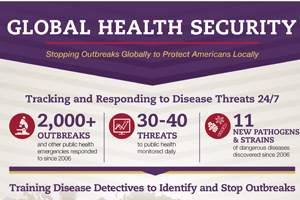
To mitigate these biological hazards, the CDC implements proactive containment strategies worldwide. The agency partners with 31 countries and the Caribbean community to advance the goals of the Global Health Security Agenda. Through the expansion of Field Epidemiology Training Programs modeled on the Epidemic Intelligence Service, the agency has helped graduate more than 3,800 advanced field epidemiologists across 65 countries. These professionals conducted over 3,300 outbreak investigations between 2005 and 2016. Furthermore, the CDC Global Disease Detection Operations Center monitors 30 to 40 public health threats daily across more than 190 countries, supported by a Global Rapid Response Team of over 400 experts ready to deploy within 48 hours.
Economic Stakes and International Trade Protection
Beyond direct morbidity and mortality, global health security functions as a fundamental pillar of economic defense. Epidemics disrupt international travel, commerce, and financial markets. Historical precedent demonstrates the severe economic vulnerability tied to infectious disease spread; during the 2003 Severe Acute Respiratory Syndrome (SARS) epidemic, the pathogen infected 8,100 people across four continents and drained $40 billion from the global economy.

Protecting vulnerable regions from infectious outbreaks directly shields the U.S. domestic economy. In 2015, the United States exported over $300 billion in material goods and services to 49 designated CDC health security priority countries. These exports supported more than 1.6 million American jobs across all 50 states. Dr. Rebecca Martin, director of the CDC Center for Global Health and co-author of the publication, emphasized that prioritizing a sustained commitment to global health security remains vital to saving lives while minimizing political and economic instability worldwide.
Sustaining this operational readiness requires robust infrastructure at both domestic and international levels.