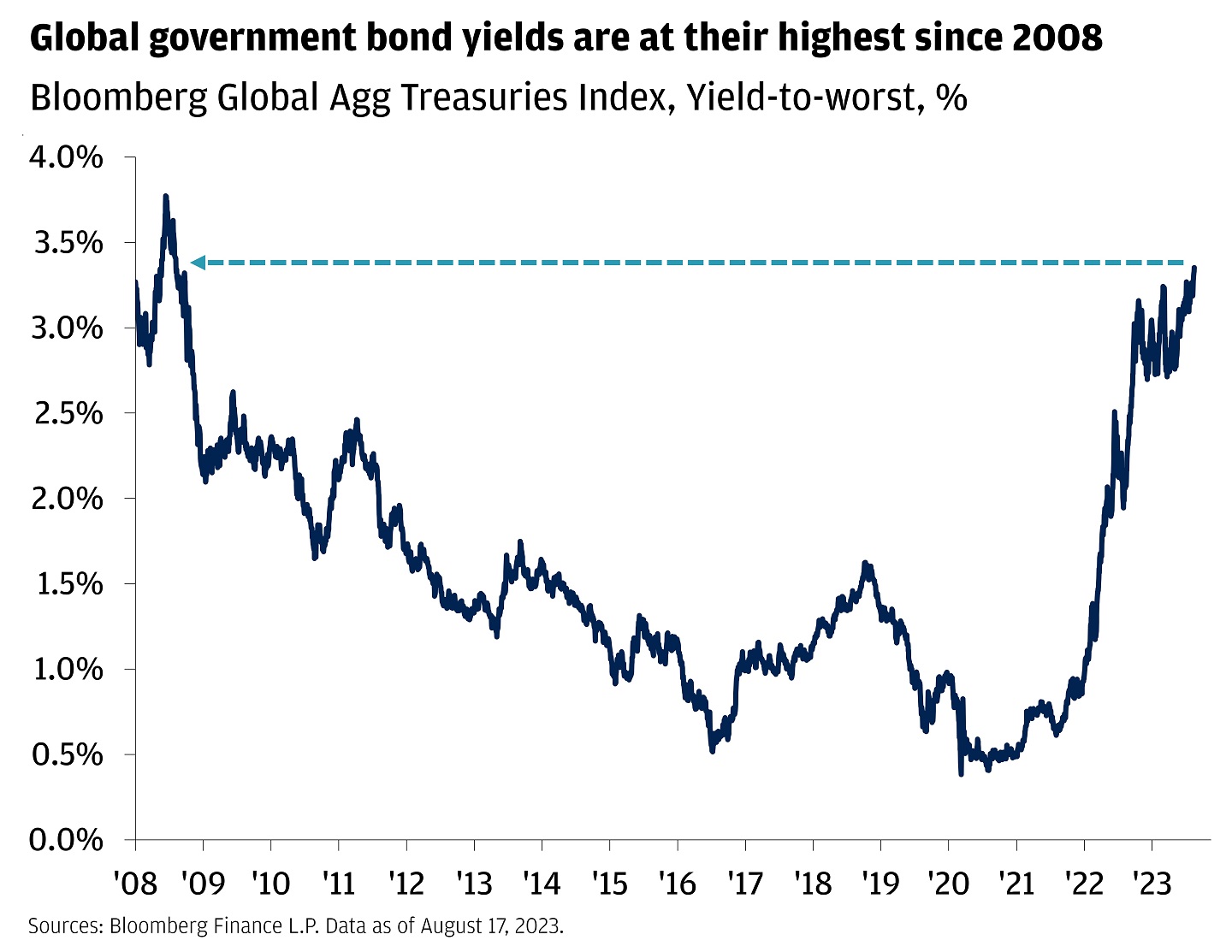
Why Global Government Bond Yields Are Surging
<>
This global rate spike is being driven by stubborn inflation, persistent government budget deficits running at roughly 6% of GDP, and heavy capital competition from corporate artificial intelligence infrastructure buildouts.
The Macroeconomic Pressures Driving Multi-Year Yield Highs
Bond markets are sending a clear distress signal as yields hit multi-year highs, raising borrowing costs across the broader economy for governments, businesses, and consumers. The pressure stems from multiple converging economic headwinds. Renewed conflict between Iranian and American forces in the Gulf has pushed West Texas Intermediate crude oil prices above $100 per barrel, up from under $70 at the start of July. On September 11th, the average price of a gallon of diesel in America surpassed $6 for the first time ever, creating immediate cost burdens for the transportation and agricultural sectors.
Compounding these energy shocks, the Bureau of Labor Statistics reported that core consumer prices rose faster than analysts anticipated in August. At the same time, the national debt recently crossed the $40 trillion threshold. This staggering accumulation of obligations forces institutional investors to demand higher yields as compensation for holding elevated-risk sovereign debt.
Corporate AI Capital Expenditure and Sovereign Debt Competition
Beyond federal borrowing, private sector demand for capital is soaking up massive amounts of liquidity. Tech hyperscalers are issuing tens of billions of dollars in debt to finance the construction of artificial intelligence data centers. Investment-grade corporate borrowers are on track to take out billions of dollars in debt this year, marking a more than one-third increase compared to 2025 levels. UBS estimates that this heavy corporate issuance has alone added 0.2 percentage points to ten- and 30-year Treasury yields.
Sovereign wealth funds are reacting to these shifts in real time. On September 1st, Norway’s sovereign wealth fund announced a proposal to reduce its sovereign debt holdings from 70% to 50%, a move that would cut its exposure to U.S. Treasuries by roughly billions of dollars and reallocate capital toward private sector assets. As capital migrates away from government debt, yields inevitably climb higher.
Washington Interventions and Fiscal Policy Reality
Official responses to the bond market rout have yielded only temporary relief. On September 9th, Treasury Secretary Scott Bessent announced that the department would at least double the amount of older, long-dated debt it regularly buys back from investors. Bessent stated in a CNBC interview that the intervention was designed to signal that current yields do not reflect underlying fundamentals, attributing recent deficit growth largely to mandatory tariff refunds following a Supreme Court ruling.

The surprise announcement triggered an immediate drop in yields and a brief stock rally, though yields quickly rebounded to previous levels by Thursday morning. Krishna Guha of Evercore ISI noted in a client communication that if the administration could engineer a material change in fundamentals through a smaller deficit, it would represent a game-changer, though policy analysts remain deeply skeptical given the structural nature of government spending.
As fiscal consolidation discussions continue, corporations must maintain agile financial planning frameworks.
The trajectory of global bond yields will depend entirely on whether policymakers can successfully rein in structural budget deficits while private sector capital demands remain at historic highs. Institutional investors will continue demanding a significant risk premium until concrete fiscal stabilization materializes.