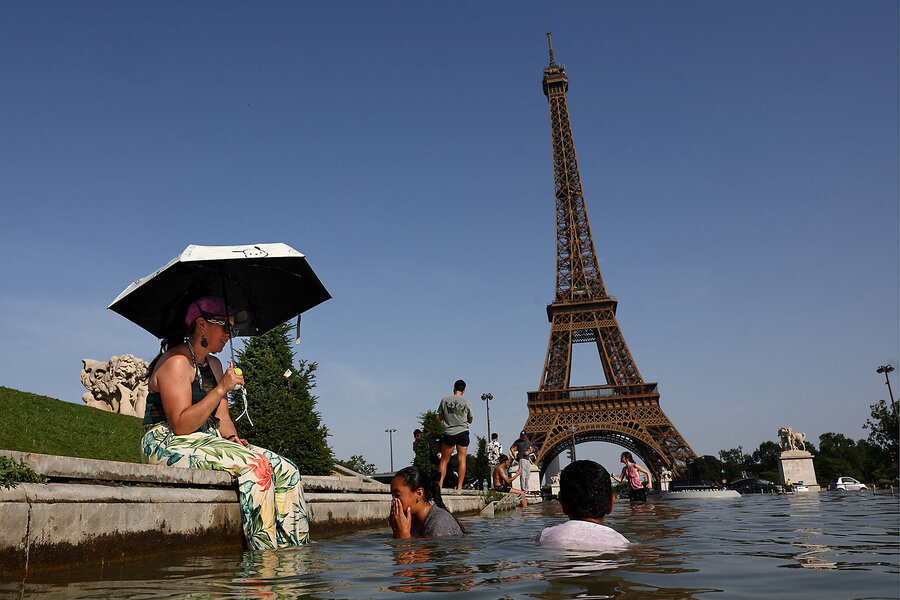
Why France is Struggling to Cope with its Deadly Heat Waves
France is enduring its third consecutive heatwave this summer, with temperatures in Paris and southern regions exceeding 40°C (104°F) as of June 24, 2026. The government has declared a national emergency, but critics question why the country—despite repeated warnings—remains ill-prepared for climate-driven crises. Experts warn the current response is reactive, not systemic, leaving hospitals, power grids, and vulnerable populations exposed.
This is not just another heatwave. It is a test of France’s resilience against a climate future that has arrived sooner than models predicted. The 2022 European heatwave killed over 61,000 people across the continent; France’s Health Ministry now estimates that without urgent adaptation, the 2026 crisis could surpass those fatalities in scale. The question isn’t whether France can survive this summer—it’s whether it will learn from it.
Why is France struggling to adapt when other EU nations are ahead?
France’s lag in climate preparedness stems from a mix of political inertia and fragmented governance. Unlike Germany, which has invested €40 billion in heat-resilient infrastructure since 2020, or Spain, which mandates cooling centers in every municipality, France’s national plan remains underfunded and poorly enforced.
“We’ve had 12 years of climate warnings, yet France still treats heatwaves as exceptions rather than the new normal. The result? Hospitals are overwhelmed, subways become ovens, and the elderly—who died in their thousands in 2003—are dying again.”
Data from Météo-France shows that since 2015, France has recorded 45% more “extreme heat days” (defined as temperatures above 35°C/95°F) than the 1990s average. Yet only 30% of French municipalities have implemented the 2015 National Adaptation Plan, leaving cities like Marseille—where temperatures hit 42°C (108°F) this week—without adequate urban cooling strategies.
Where are the gaps in France’s response?
- Infrastructure: Paris’s Métro system, which transports 5 million daily riders, has no active cooling beyond ventilation fans. A 2025 audit by the Paris Urban Planning Agency found that 68% of stations exceed 38°C (100°F) during peak heat, forcing commuters to endure conditions that mimic a sauna.
- Healthcare: Emergency rooms in southern France report a 40% surge in heatstroke cases since June 1. The French Health Ministry has activated “level 3” alerts in 12 departments, but mobile cooling units—critical for rural areas—are in short supply.
- Legal Liability: A 2023 ruling by the French Constitutional Council declared that local governments can be held liable for heatwave-related deaths if they fail to act. Yet only 15 of France’s 36,000 municipalities have adopted the mandatory “heatwave action plans.”
What happens next? The economic and political fallout
By June 25, 2026, the economic damage was already mounting. Agriculture in Provence lost €120 million in a single week due to crop failures, while energy costs spiked as nuclear plants—critical to France’s grid—reduced output due to overheating. The National Institute of Statistics projects that if temperatures remain above 35°C for another 10 days, GDP growth could shrink by 0.3% in Q3.

| Impact Area | 2022 Heatwave Cost (€) | Projected 2026 Cost (€) | Key Driver |
|---|---|---|---|
| Healthcare | €1.2 billion | €1.8 billion+ | Hospital overcrowding, emergency transport |
| Agriculture | €850 million | €1.1 billion+ | Wine/grain losses in Languedoc |
| Energy | €400 million | €600 million+ | Peak demand, nuclear plant throttling |
| Tourism | €300 million | €500 million+ | Cancelled events, beach closures |
The political backlash is already visible. President Gabriel Attal faced sharp criticism during a June 23 press conference when asked why France’s 2025 Climate Adaptation Fund—allocated €5.5 billion—has seen only 22% of funds disbursed. Opposition leaders, including Marine Le Pen, have accused the government of “climate theater,” pointing to half-empty cooling centers in Lyon and Bordeaux.
“The money is there, but it’s stuck in bureaucratic loops. Mayors are begging for mobile cooling units, and we’re still arguing over who’s responsible. This isn’t leadership—it’s failure.”
Who is solving the problem—and where can businesses find help?
The crisis has accelerated demand for climate-resilient solutions. In Marseille, where temperatures hit record highs, local authorities are partnering with specialized urban cooling contractors to retrofit buildings with reflective roofs and underground water storage. Meanwhile, hospitals in the Auvergne-Rhône-Alpes region are outsourcing emergency logistics coordination to private firms equipped with real-time heat stress monitoring.
For businesses grappling with supply chain disruptions, legal experts recommend consulting environmental law firms to navigate the emerging liability risks. The 2023 Constitutional Council ruling has created a precedent: companies that fail to adapt their operations to heatwave risks could face lawsuits from affected communities.
In the long term, France’s path forward hinges on three critical moves:
- Mandate municipal heat action plans with enforceable deadlines, not voluntary guidelines.
- Expand public-private partnerships for cooling infrastructure, leveraging renewable energy firms to integrate solar-powered shade systems.
- Reform liability laws to incentivize adaptation, ensuring that both governments and corporations have clear incentives to act.
The bigger picture: Is France’s crisis a warning for Europe?
France’s struggle is not unique. Italy’s 2022 heatwave cost €13 billion; Portugal declared a state of emergency in 2023 after 1,000 deaths. But France’s size—its dense urban centers, aging population, and nuclear-dependent grid—makes its vulnerabilities particularly acute. The European Environment Agency warns that by 2030, heat-related deaths in Europe could triple if current trends continue.
The question now is whether France will treat this summer as a wake-up call or another missed opportunity. The data is clear: the cost of inaction is measured in lives, livelihoods, and lost economic growth. For businesses, communities, and policymakers, the time to act is now.
For verified professionals equipped to navigate this crisis—from climate-resilient construction firms to legal experts specializing in environmental liability—explore our curated Global Directory.