
Why Central American Football Is Falling Behind Its Rivals
Central America’s football infrastructure is suffering from deep neglect, leaving young players with severely limited pathways to professional careers as the region falls behind global competitors, afp.com reported.
On an overgrown patch of grass in San Salvador, 12-year-old Bryan Oliva dreams of turning professional to support his family. Oliva told afp.com that youngsters from humble backgrounds face immense barriers because opportunities remain heavily concentrated in wealthier areas.
That economic barrier reflects a broader regional crisis. Poverty impacts roughly half of Central America’s population, while domestic football infrastructure remains starved of investment.
The sporting regression shows clearly in international competition. Only Panama and Guatemala secured spots in the quarterfinals of the CONCACAF Nations League, according to afp.com.
Panama stands as the sole Central American nation to reach the recent North American World Cup. Caribbean sides such as Curacao and Haiti represented the broader CONCACAF region instead, afp.com reported.
For El Salvador, the World Cup remains a distant memory from 44 years ago. Over 40 managers have attempted to revive the national team since the era of legendary forward Jorge “Magico” Gonzalez, with Colombian veteran Hernan Dario Gomez now leading the squad, afp.com reported.

Honduras last appeared on the global stage at the 2014 tournament in Brazil, and Spaniard Jose Francisco Molina now coaches the national side. Costa Rica has failed to replicate its remarkable run to the 2014 quarterfinals, while Guatemala, Nicaragua, and Belize have never qualified for a World Cup.
There has been a regression,
former Honduras coach Diego Vazquez told afp.com. We need to organize the youth leagues, and governments need to invest as well.
Former Panamanian international Victor Rene Mendieta stated that El Salvador, Honduras, and Costa Rica neglected youth talent development. FIFA figures from 2024 show the region contains approximately 4,400 professional players spread across 68 clubs.
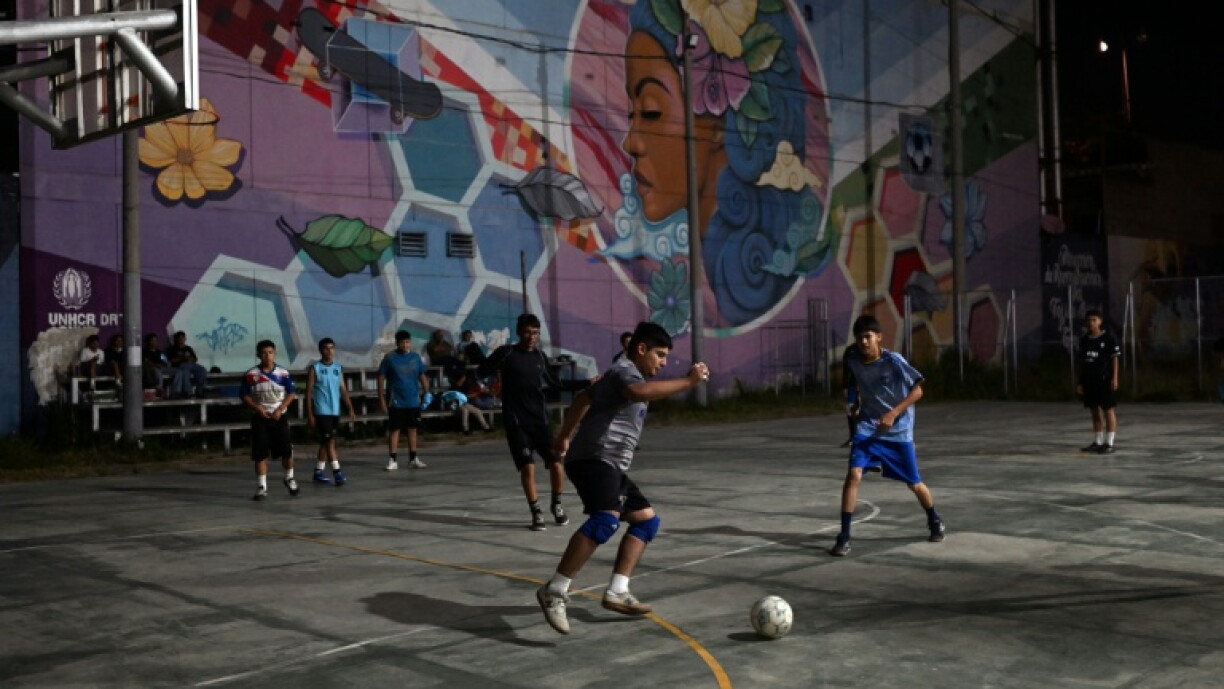
Most domestic clubs lack dedicated training facilities and youth academies, while operating small stadiums with artificial pitches. Only a small fraction of regional players earn more than $5,000 monthly, according to afp.com.
The domestic professional framework struggles to attract top-tier coaches or star players. The region lacks players competing in major overseas leagues, putting it at a disadvantage compared to Caribbean nations drawing on European-developed talent.
Panama excels at player development compared to its neighbors, according to Honduran coach Reynaldo Tilguath. He told afp.com that the rest of the region is falling behind.
High in the mountains of La Abisinia, young players like Darixon Rivas train on muddy pitches alongside livestock using rusting metal poles for goalposts. Honduran football is damaged,
Rivas told afp.com. Just look at this little field; our parents used to come here to play, too.
Yamil Bukele, president of the Salvadoran Football Federation, acknowledged the uphill battle while spearheading a plan to strengthen youth football.
Disclaimer: The insights provided in this article are for informational and entertainment purposes only and do not constitute medical advice or sports betting recommendations.