Why a Diesel Export Ban Could Raise California Gas Prices
President Donald Trump is weighing a ban on U.S. diesel exports as national fuel costs surge past historic thresholds, a policy intervention that oil companies and market researchers warn could inadvertently push California’s nation-high gasoline prices even higher. White House discussions regarding the potential export limits emerged as Republican officials seek short-term measures to address voter anxiety ahead of midterm elections.
Global Supply Disruptions Drive Fuel Prices Past Six Dollars
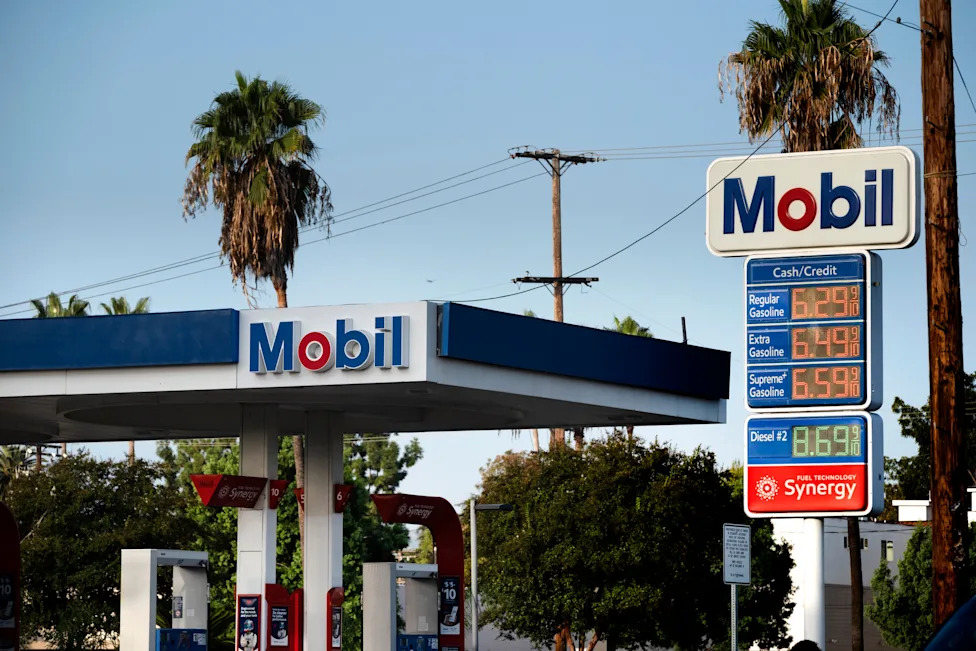
The national average for a gallon of diesel eclipsed six dollars for the first time ever, driven by severe supply disruptions linked to the war in Iran and a Russian export ban that removed a major global supplier from the market. AAA data from Monday placed the national average for diesel at $6.45 per gallon, while drivers in California faced an average of $8.39 per gallon. Regular gasoline in the state hovered around $6.36 per gallon during the same reporting period.
Forcing domestic refiners to keep diesel inside the United States could temporarily increase local supplies and lower prices for the fuel utilized by agricultural tractors, commercial trucks, and cargo ships. Aaron Smith, an economist and professor at the University of California, Berkeley, noted that instituting such a ban would yield more domestic diesel and subsequently reduce its price.
Refining Limitations and the Threat to California Gasoline Inventories
Market analysts and industry executives caution that providing relief to diesel consumers could easily trigger unintended consequences across other refined petroleum products. Refining a standard barrel of crude oil typically yields approximately 45 percent gasoline, 30 percent diesel, and remaining fractions dedicated to jet fuel and asphalt.
If federal mandates force refiners to retain unsold diesel without adequate domestic storage capacity, facilities will be compelled to slow production runs. Jodie Muller, CEO of the Western States Petroleum Association, explained that California lacks significant extra storage space for surplus fuel. When storage tanks reach capacity and excess product has nowhere to flow, refineries must curtail throughput, generating widespread supply risks for gasoline and jet fuel alike.

California exports a substantial share of its manufactured diesel. Constraining that outflow without local absorption capacity threatens to tighten regional gasoline inventories and inflate pump prices in a market already heavily constrained by unique regulatory and logistical factors.
Political Realignments and State-Level Emergency Interventions
While the White House stated on Monday that no formal policy decision has been finalized, the prospect of an export restriction has generated public resistance from an industry sector that largely benefited from the administration’s deregulatory initiatives. Severin Borenstein, faculty director of the Energy Institute at UC Berkeley’s Haas School of Business, observed that the episode illustrates the transient nature of political alignments within the energy sector as officials respond to mounting electoral pressures.
Concurrently, California Governor Gavin Newsom announced the suspension of a state requirement mandating that refineries supply a cleaner, more expensive summer gasoline blend designed to curb pollution. Newsom criticized federal responses to global price pressures and urged direct action to mitigate supply-driven spikes.
Worth a look
- Future of Industrial Cogeneration: Competitiveness and Decarbonization in Spain
- ESRI Warns of Food Inflation, Spending Overruns and Fragile Tax Base
- Trump Administration Rolls Back Fuel Economy Standards to Lower Car Prices (newsdirectory3.com)
- Original Xbox Prices Rise Up To 200 Percent Since 2001 Launch (time.news)