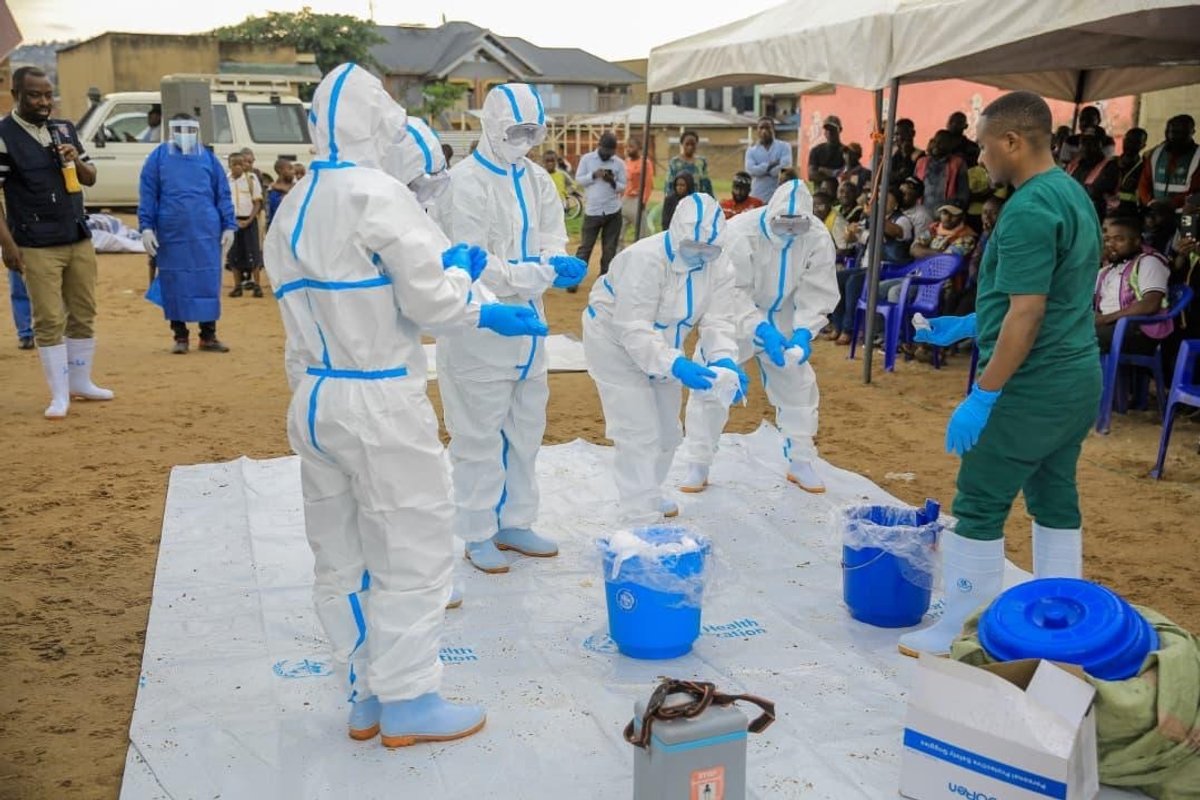
WHO Urges Faster Vaccine and Treatment Trials for Bundibugyo Ebola in DRC
“We were forced to shelter for our lives,” WHO Director-General Tedros Adhanom Ghebreyesus posted on X on Sunday, describing staff trapped in a maternity ward as fighting raged around a hospital in Ituri province.
The World Health Organization updated its recommendations for the Ebola epidemic caused by Bundibugyo virus disease in the Democratic Republic of the Congo on Wednesday, calling for faster clinical trials of candidate vaccines and treatments while maintaining scientific and ethical standards, China Daily Global reported. Tedros issued the recommendations after concurring with the Emergency Committee, which determined the outbreak still constitutes a Public Health Emergency of International Concern.
Escalating violence blocks response
Heavy fighting between government forces and rebel groups has forced Ebola responders to leave affected areas and disrupted containment efforts, health officials said. Since January, WHO has verified more than 87 attacks on healthcare in the DRC, according to UN News. The Allied Democratic Forces (ADF) have killed more people in recent days than the virus itself, UN Senior Ebola Response Coordinator Julien Harneis told journalists in Geneva on November 13.
WHO has updated its recommendations for the #Ebola outbreak caused by Bundibugyo virus disease in the Democratic Republic of Congo (#DRC), following a meeting of its Emergency Committee convened by @DrTedros under the International Health Regulations (2005). The Ebola outbreak… pic.twitter.com/dU9rzvMi23
“Following up contact tracing in areas where ADF is operating is a very hazardous idea,” Harneis said. Violence prevents health teams from reaching communities, leaving sick people without access to testing and care, and hampers contact tracing, Anna Halford, who coordinates Médecins Sans Frontières’ response across the DRC, told Al Jazeera.
Reported cases and deaths across the DRC and beyond
As of November 24, over 12,000 cases and 5,900 deaths had been reported in the DRC, the WHO statement said. UN News cited figures from November 20 showing 11,762 confirmed cases and 5,775 deaths across 68 health zones in eight provinces. Scientific American reported the outbreak had expanded to five countries by November 17, with more than 11,600 recorded cases and more than 5,600 deaths.

| Source (date) | Cases | Deaths | Scope |
|---|---|---|---|
| WHO statement (Nov 24) | Over 12,000 | 5,900 | DRC |
| UN News (Nov 20) | 11,762 confirmed | 5,775 | 68 health zones, 8 provinces |
| Scientific American (Nov 17) | Over 11,600 | Over 5,600 | Five countries |
Ituri province remains the epicenter, accounting for more than two-thirds of confirmed cases. UN News reported a cumulative total of more than 8,000 confirmed cases and 3,791 deaths in Ituri, a case fatality rate of 47 percent. Of 39 new confirmed cases in the latest epidemiological update, 23 were in Ituri. CIDRAP noted national notifications have held at about 460 to 480 confirmed cases a week since late September, with an overall crude case-fatality rate of 48.9 percent.
Community deaths rise as vaccine trials begin
About 65 percent of Ebola deaths are occurring in community settings rather than treatment centers, making contact tracing more difficult, Scientific American reported. “Our biggest concern right now is that the outbreak is still evolving, and we’re still having a lot of people dying in the community,” a frontline responder told the magazine.
Recommendations of the IHR Emergency Committee on Bundibugyovirus https://t.co/XTtcnpNf5Z Biggest concerns: the security situation, delays in case finding and contact tracing, and healthcare associated transmission
Three candidate vaccines have been approved for a phase 2/3 trial in the outbreak zone, with hopes for approval in the first quarter of 2027, according to Scientific American. Scientists know little about the Bundibugyo species clinically; it has caused only two previous outbreaks, in 2007 and 2012, and was not included in vaccine development during the 2014–2016 West Africa outbreak.
Funding and coordination challenges
Last year, the UN humanitarian response plan for Congo was funded by barely a quarter of the required amount, Al Jazeera reported. Jeremy Konyndyk, who led the US response to the 2014–2016 West Africa outbreak and now heads Refugees International, argued the dismantling of USAID played a role in delayed detection.

In September, new pledges from G20 foreign ministers and major donors brought total global commitments since May to around $2.9 billion, Halford told Al Jazeera. “I’m delighted that there have been some donors, and the Congolese state itself, which have pledged and disbursed resources,” she said. However, she warned that poor planning leads to overlapping aid projects in some areas while others are neglected.
WHO calls for intensified action and community engagement
The updated WHO recommendations call for intensified action in areas with new cases or increasing community transmission, and targeted measures for other countries to identify and assess travelers who may have been exposed. The Emergency Committee emphasized that community engagement is key to transparent information on how trials are planned and implemented, and stressed the need to prevent transmission in health facilities, including infections from unsafe injection practices.
The Allied Democratic Forces (ADF), a Ugandan Salafi jihadist group operating in the DRC, has intensified its attacks, making it more lethal than the Ebola virus itself in recent days. UN Senior Ebola Response Coordinator Julien Harneis reported on November 13 that the ADF’s violence has killed more people than the virus.
Following up contact tracing in areas where the ADF is operating is a very hazardous idea, Harneis added, as the group’s presence prevents health teams from reaching communities. The ADF, led by Musa Baluku and pledged to the Islamic State since 2019, has become the second-deadliest non-state actor against civilians in 2025, severely disrupting Ebola containment efforts in Ituri province.
WHO is working with partners to evacuate trapped staff safely and called for their “immediate safe passage and for the hospital facilities, staff and patients to be protected,” Tedros said.