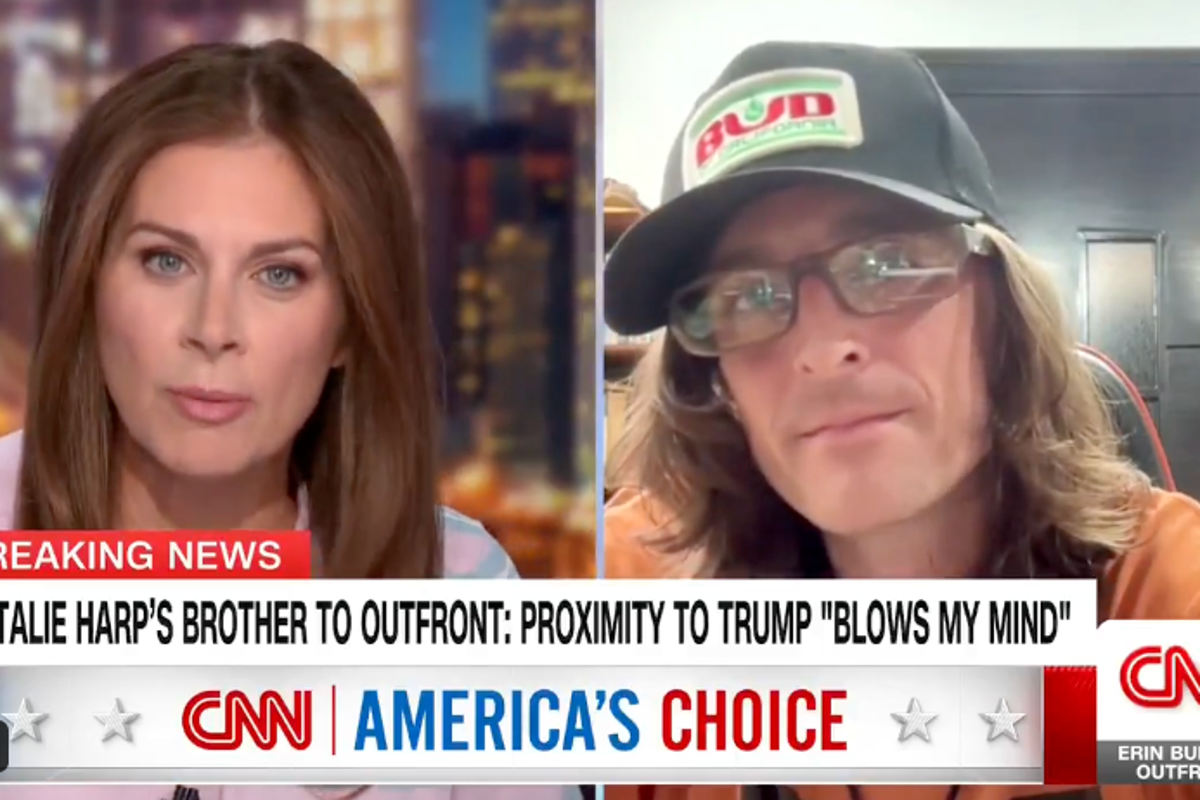
Who is Natalie Harp? Inside the Role of Trump’s Most Trusted Aide
Natalie Harp, a close executive assistant to President Donald Trump, was reportedly stowed in the trunk of an SUV during a motorcade transition after space ran out for her in the primary vehicle.
The revelation of Harp’s precarious transit comes as her influence within the White House draws both fascination and hostility. While she is viewed by some as the president’s “connective tissue,” her proximity to Trump has made her a target for political opponents. This tension is not merely social; it reflects a broader struggle over access to the Oval Office and the operational secrecy surrounding the president’s movements.
The Turkey Covert Operation and the ‘Three Musketeers’
The scale of Harp’s importance to the president was most evident during a high-stakes security operation in Ankara, Turkey, on July 8. According to the Daily Mail, President Trump was smuggled off Air Force One and into a catering truck to avoid a credible Iranian missile threat. This covert “plane-swap” was designed to deceive observers, including journalists and some White House staff, who believed the president remained on the presidential jumbo jet.
Harp was one of only three aides selected to accompany Trump in the cramped catering truck, alongside director of Oval Office operations Walt Nauta and deputy chief of staff Dan Scavino. The Daily Mail describes this trio as the “three musketeers,” noting that Harp was the president’s “first pick” for the escape. While senior cabinet members like Secretary of State Marco Rubio and Treasury Secretary Scott Bessent were aware of the alternate route, lower-level staff were left on Air Force One as decoys.
This level of trust is rare in the West Wing. A source cited by the Daily Mail characterized Harp as the president’s “human printer,” referring to her habit of providing printed copies of social media posts and articles for the president’s review. For those managing high-level security and diplomatic logistics, such unconventional transport methods create immense liability.
Political Fallout and the Ossoff Feud
The visibility of Harp’s role has sparked a public confrontation between the White House and Georgia Senator Jon Ossoff. During a campaign rally in Atlanta, Ossoff questioned whether Trump truly wants to serve as commander-in-chief, claiming the president prefers to “travel with Natalie on their apparently defenseless flying palace gifted by the Emir of Qatar,” according to CNN.
The White House response was immediate and aggressive. Communications director Steven Cheung blasted Ossoff on social media, calling him a “miserable person who hates this country,” while spokesman Davis Ingle described the senator as a “lightweight loser,” CNN reports. Trump himself dismissed Ossoff as “Pee-wee Herman” during an Oval Office interview with CNN’s Kristen Holmes.
The feud is more than a personality clash. Ossoff is currently running for reelection in Georgia against Rep. Mike Collins, a Trump ally. With a $400 million warchest available via the MAGA Inc. PAC, the president has already approved multi-million-dollar funding to support Collins, according to sources cited by CNN.
From Cancer Survivor to White House Gatekeeper
Harp’s ascent within the Trump administration is rooted in a personal narrative of medical survival. She first gained visibility in 2019 during a Fox News interview, where she credited Trump’s “Right to Try” policies for her survival following a catastrophic health incident related to bone cancer. “I’m not dying from cancer anymore. Thanks to President Trump, I’m living with cancer,” she stated on “Fox & Friends,” according to CNN.
This appearance led to speaking roles at the 2020 Republican National Convention and a position with One America News Network before she began working as the president’s personal assistant in 2022. Her transition from a public validator to a private aide has not been without friction. The Telegraph reports that Melania Trump “doesn’t like” the ongoing speculation regarding the nature of the relationship between the president and Harp.
The blurring of lines between personal loyalty and official duty often creates complex legal and ethical environments.
Operational Risks and Diplomatic Implications
The use of a catering truck as a transport vehicle for the leader of the free world underscores a shift toward unconventional security tactics. While the Daily Mail reports the move was a response to a specific Iranian threat, the logistical chaos—including the report of Harp being stowed in a trunk during a separate motorcade incident—suggests a tension between the president’s preferred inner circle and the physical constraints of Secret Service protocols.
This operational style has broader implications for U.S. diplomacy. The mention of a “flying palace gifted by the Emir of Qatar” highlights the intersection of private gifts and official state travel.
As the 2026 midterms approach, the figure of Natalie Harp remains a focal point for those analyzing the internal power dynamics of the Trump administration. Whether viewed as a devoted aide or a symbol of unchecked influence, her presence in the “three musketeers” ensures she will remain at the center of the president’s most sensitive movements. The transition from a survival story to a position of immense proximity to power illustrates a unique path to influence in the modern political era—one where loyalty is the primary currency and the boundaries of traditional protocol are frequently discarded.