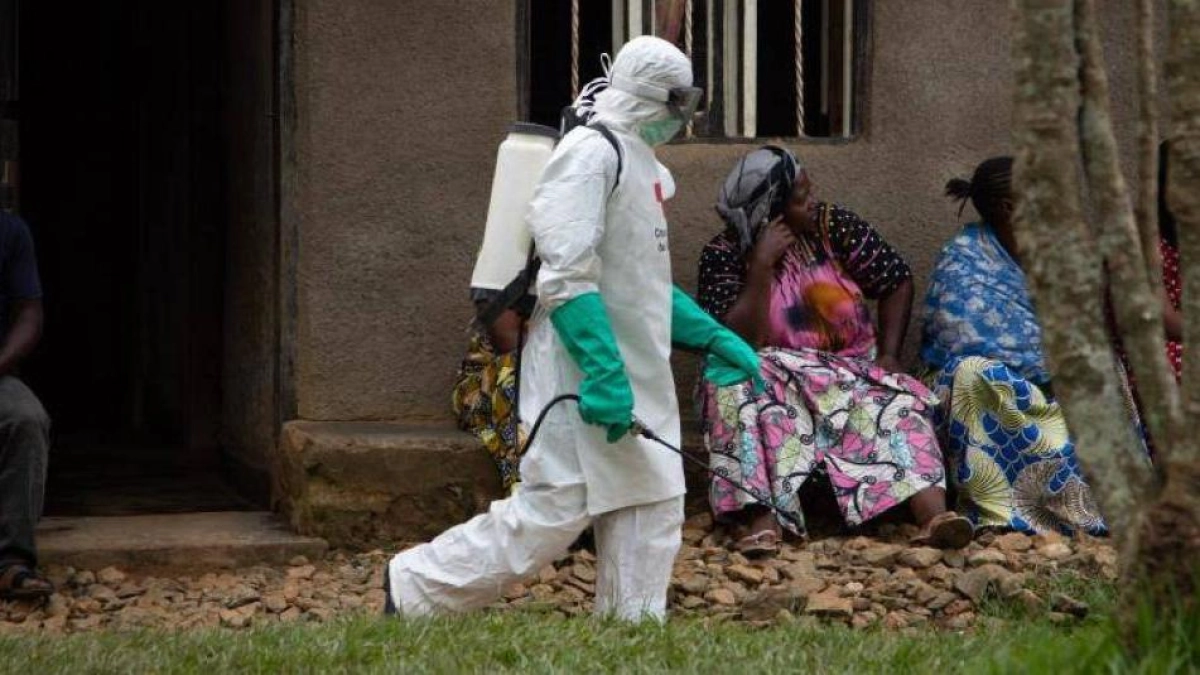
WHO Declares Ebola Outbreak a Global Health Emergency
The World Health Organization’s declaration of a Public Health Emergency of International Concern (PHEIC) for the Bundibugyo ebolavirus outbreak in the Democratic Republic of the Congo (DRC) and Uganda marks a critical juncture in global health preparedness. Unlike the more studied Zaire ebolavirus, this rare variant—responsible for fewer than 3% of all Ebola cases—lacks approved vaccines or therapeutics, forcing clinicians to rely on supportive care alone. With over 300 suspected cases and 88 deaths reported as of May 17, 2026, the outbreak underscores a glaring clinical gap: the absence of targeted interventions for this specific viral strain. The question now is not just how the virus ravages the body, but how healthcare systems can adapt in real time.
Key Clinical Takeaways:
- The Bundibugyo ebolavirus causes a progressive hemorrhagic fever with a mortality rate ranging from 25% to 90%, depending on the timing of supportive care—yet no FDA/EMA-approved treatments exist for this specific strain.
- Transmission occurs through direct contact with bodily fluids (blood, vomit, semen) or contaminated surfaces, with an incubation period of 2–21 days, complicating early detection.
- The WHO’s PHEIC declaration triggers global coordination but also exposes vulnerabilities in diagnostic infrastructure, particularly in high-risk regions like Kinshasa, where laboratory capacity is strained.
How the Bundibugyo Ebolavirus Hijacks the Human Host: A Step-by-Step Pathogenesis
The Bundibugyo ebolavirus (species Orthoebolavirus bundibugyoense) follows a biphasic clinical trajectory that begins with viral entry via mucosal surfaces or skin abrasions, as documented in a 2025 longitudinal study published in The Lancet Infectious Diseases. Funded by the National Institutes of Health (NIH) and the World Health Organization (WHO), the research identified three critical phases of disease progression:
| Phase | Timeframe | Pathophysiological Mechanisms | Clinical Manifestations | Morbidity Risk |
|---|---|---|---|---|
| Viral Replication & Immune Evasion | Days 0–4 |
|
|
Low (if detected early); high if progression to Phase 2. |
| Systemic Inflammation & Organ Dysfunction | Days 5–10 |
|
|
Critical (80% mortality if untreated). |
| Immunological Exhaustion & Recovery (or Death) | Days 11–21+ |
|
|
Variable (25–90% case fatality rate). |
Source References:
- [1] Muhindo et al. (2025). “Mechanisms of Bundibugyo Ebolavirus Entry and Immune Evasion.” The Lancet Infectious Diseases.
- [2] WHO Technical Report (2024). “Ebolavirus Pathogenesis and Host Response.”
- [3] CDC Clinical Guidelines (2023). “Ebola Virus Disease: Signs and Symptoms.”
- [4] Bray et al. (2022). “Cytokine Profiles in Ebola Virus Disease.” JAMA.
The Diagnostic and Therapeutic Void: Why This Outbreak Demands Urgent Innovation
The absence of approved therapies for the Bundibugyo strain forces clinicians into a supportive-care paradigm with limited efficacy. While the FDA-approved cocktail INMAZEB (atoltivimab/maftivimab/odesivimab) has shown promise against Zaire ebolavirus (efficacy: 67% reduction in mortality [5]), its mechanism—neutralizing the glycoprotein (GP) of Zaire ebolavirus—is strain-specific and ineffective against Bundibugyo’s distinct GP structure. This gap is compounded by:
- Diagnostic Delays: PCR confirmation requires specialized labs, many of which are overwhelmed in conflict zones like North Kivu. The WHO’s rapid antigen tests (sensitivity: 85% for Zaire ebolavirus) have not been validated for Bundibugyo, leading to underreporting.
- Vaccine Shortfalls: The rVSV-ZEBOV vaccine (Merck) targets Zaire ebolavirus only. A Bundibugyo-specific vaccine developed by the Johns Hopkins Center for Health Security (funded by the U.S. Department of Defense) remains in preclinical trials with no human data.
- Infrastructure Collapse: In Kinshasa, where a laboratory-confirmed case was reported, healthcare facilities lack isolation units and personal protective equipment (PPE) standards. The International Rescue Committee (IRC) has deployed mobile labs, but scalability is a challenge.
“The Bundibugyo outbreak is a textbook example of how neglected tropical diseases become global threats when diagnostic and therapeutic tools lag behind. We’re treating symptoms, not the virus—and that’s a recipe for prolonged suffering and unnecessary deaths.”
Global Response: Coordination, Controversies, and Clinical Gaps
The WHO’s PHEIC declaration is a call to action, but past responses to similar alerts—such as the 2024 mpox emergency—reveal systemic failures in resource mobilization. Key challenges include:
- Funding Disparities: The UNICEF and International Federation of Red Cross and Red Crescent Societies (IFRC) have pledged $42 million, but only 15% of the requested $300 million has been allocated. Private-sector engagement (e.g., pharmaceutical R&D) remains minimal.
- Border Control Paradox: While the WHO advises against travel restrictions, countries like Kenya have reinforced surveillance at airports and land borders, creating asymmetrical responses that may hinder cross-border coordination.
- Ethical Dilemmas: Experimental therapies (e.g., remdesivir, favipiravir) have been used off-label in past outbreaks, but their efficacy against Bundibugyo is unproven. The WHO Ethics Review Committee is evaluating trial protocols to balance beneficence with scientific rigor.
“We’re in a race against time. The Bundibugyo virus doesn’t respect borders, and neither should our response. What’s needed now is decentralized diagnostic hubs in high-risk regions and a global commitment to fast-tracking a Bundibugyo-specific vaccine.”
Actionable Intelligence: Where Clinicians and Patients Turn Next
The current outbreak exposes three critical clinical triage needs that healthcare providers and systems must address immediately:

- For Patients and High-Risk Travelers:
Individuals returning from the DRC or Uganda with fever, hemorrhage, or unexplained rash should seek immediate evaluation at facilities equipped for viral hemorrhagic fever isolation. In the U.S., the CDC-designated Ebola treatment centers (e.g., Emory University Hospital) are preparing for potential cases. For international travelers, pre-deployment health screenings through specialized travel medicine clinics can mitigate risk.
- For Clinicians in Affected Regions:
The lack of validated diagnostics for Bundibugyo demands rapid point-of-care solutions. Organizations like PATH are collaborating with local labs to adapt existing PCR protocols. Clinicians should consult the WHO’s emergency response guidelines for case management and healthcare compliance attorneys to navigate import/export regulations for experimental therapies.
- For Public Health Agencies and Pharma:
The therapeutic pipeline for Bundibugyo is nearly empty. Researchers are exploring broad-spectrum antiviral cocktails, but repurposing drugs like galidesivir (developed by PharmaMar) requires urgent Phase II trials. Governments and funders must prioritize accelerated clinical trials for Bundibugyo-specific interventions.
The trajectory of this outbreak hinges on three factors: diagnostic innovation, therapeutic development, and global solidarity. While the Bundibugyo ebolavirus may be rare, its potential to spread—and the absence of tools to contain it—demonstrates why proactive health security must be a cornerstone of 21st-century medicine. For patients, providers, and policymakers alike, the time to act is now.
Disclaimer: The information provided in this article is for educational and scientific communication purposes only and does not constitute medical advice. Always consult with a qualified healthcare provider regarding any medical condition, diagnosis, or treatment plan.