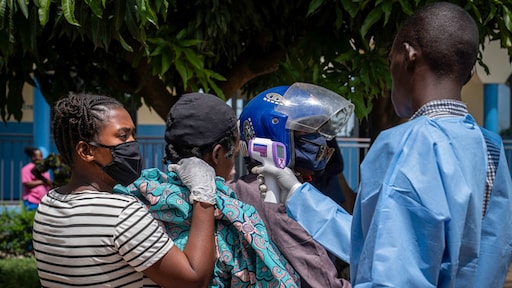
WHO Confirms First Recovered Ebola Patient in Congo Outbreak Amid Crisis
The global health community has reached a critical juncture in the management of viral hemorrhagic fevers, as the World Health Organization (WHO) confirms the first successful recovery of a patient diagnosed during the current Ebola outbreak in the Democratic Republic of the Congo (DRC). This clinical milestone, while representing a single favorable patient outcome, underscores the immense challenges inherent in neutralizing a highly pathogenic filovirus within regions complicated by ongoing civil instability and resource scarcity.
Key Clinical Takeaways:
- The first confirmed recovery of an Ebola patient in the current DRC outbreak serves as a vital proof-of-concept for existing emergency intervention protocols.
- Clinical management continues to be hampered by the intersection of virulent pathogen transmission and regional geopolitical volatility, necessitating robust international support.
- Early diagnosis and standardized supportive care remain the primary determinants of patient survival, emphasizing the need for expanded diagnostic infrastructure.
Pathogenesis and the Clinical Standard of Care
Ebola virus disease (EVD) remains a formidable challenge due to its rapid progression and multi-organ failure potential. The virus, characterized by a complex pathogenesis, triggers a systemic inflammatory response syndrome (SIRS) that often leads to refractory shock and disseminated intravascular coagulation. In the context of the current outbreak, the World Health Organization continues to advocate for the rapid deployment of specialized treatment units capable of providing intensive supportive care, including aggressive fluid resuscitation, electrolyte balancing, and hemodynamic monitoring. Such interventions are essential to bridging the gap between patient presentation and the resolution of the viral load.
For healthcare facilities operating in high-risk zones, the importance of maintaining a sterile, high-containment environment cannot be overstated. Clinical administrators and facility managers are encouraged to consult with board-certified infectious disease specialists to ensure that isolation protocols and bio-hazard containment strategies align with the latest global standards. The complexity of managing these patients necessitates a multidisciplinary approach, often requiring coordination that extends beyond traditional clinical boundaries.
Epidemiological Complexity and Regional Instability
The transmission dynamics of the Ebola virus are frequently exacerbated by environmental and sociopolitical factors. Reports from the field indicate that the speed of the outbreak is placing a significant strain on local healthcare infrastructure. When viral containment measures are implemented in regions experiencing social unrest, the efficacy of contact tracing and vaccination campaigns is often diminished. The “catastrophic combination” of epidemic disease and conflict creates an environment where standard epidemiological surveillance—the bedrock of public health—becomes increasingly tough to execute.
This reality necessitates that organizations involved in humanitarian logistics and medical supply chain management prioritize the integration of secure, scalable health services. Entities struggling with the operational complexities of maintaining medical equipment and pharmaceutical integrity in such environments should seek guidance from healthcare compliance attorneys and logistics consultants. Establishing resilient supply chains is not merely an operational goal; it is a clinical necessity for protecting both the patient population and the healthcare workforce.
The Future of Therapeutic Intervention
While the recovery of one patient offers a degree of optimism, the broader scientific community remains focused on the development of more effective therapeutic agents. Current research, often supported by international consortia and peer-reviewed longitudinal studies, continues to evaluate the efficacy of monoclonal antibody therapies and antiviral agents. These interventions, which target the viral entry mechanisms of the Ebola virus, represent the next generation of survival-focused care. However, the successful implementation of these therapies is contingent upon early detection and the availability of advanced diagnostic testing.
“The successful management of an Ebola outbreak relies not only on the efficacy of clinical therapeutics but on the absolute integrity of the healthcare delivery system. Without the ability to safely transport, diagnose, and treat patients in the earliest stages of the disease, even the most advanced pharmaceutical breakthroughs will have a limited impact on overall mortality rates.”
As the medical community continues to refine its response to this outbreak, the focus must remain on strengthening the foundational elements of global health security. This includes the continuous training of frontline clinicians and the deployment of rapid-response diagnostic technologies. Clinics and diagnostic laboratories aiming to enhance their readiness for emerging infectious threats should engage with accredited diagnostic centers that specialize in high-consequence pathogen identification. By fortifying our collective clinical infrastructure, we increase the probability of favorable outcomes for patients in even the most challenging environments.
The path forward requires a persistent commitment to data-driven decision-making and international transparency. As research into the efficacy of current treatment protocols continues, the primary objective remains the reduction of morbidity and mortality through evidence-based medicine and collaborative global health initiatives.
Disclaimer: The information provided in this article is for educational and scientific communication purposes only and does not constitute medical advice. Always consult with a qualified healthcare provider regarding any medical condition, diagnosis, or treatment plan.