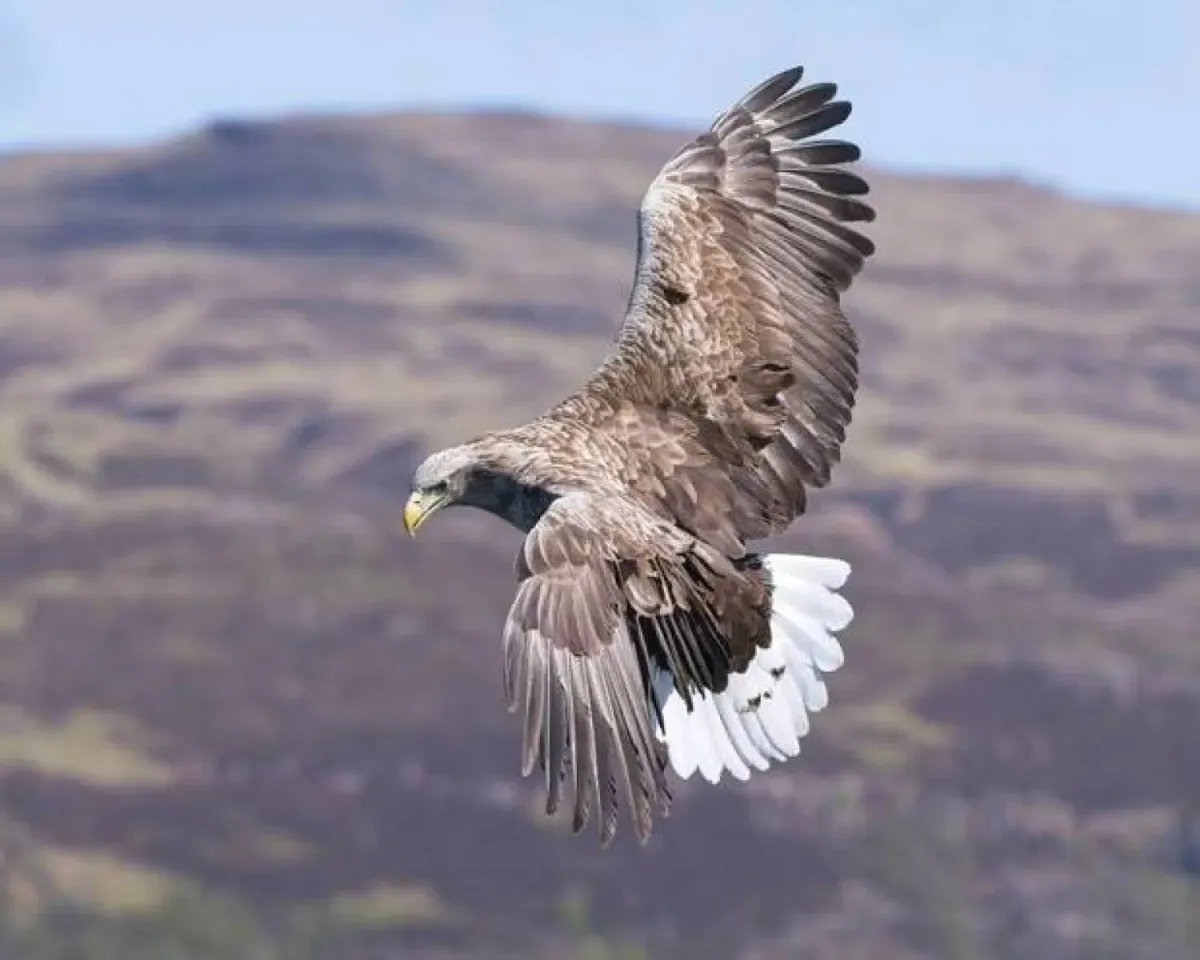
White-Tailed Eagle Reintroduction Threatens Seabird Populations
Amidst all the excitement and enthusiasm for reintroducing white-tailed eagles, the fact that these birds will probably destroy our seabird colonies seems to have been completely overlooked,
Tim Birkhead, an emeritus professor of ecology and evolution at the University of Sheffield, told The Guardian.
The planned release of white-tailed eagles in England and Wales threatens endangered seabird populations with a potential wipeout, ecologists and conservationists warned. Puffins, guillemots, razorbills, fulmars, and kittiwakes risk breeding population collapses if large numbers of the apex predators are released into the wild.
White-tailed eagles have returned to Britain, a key conservation achievement after the species went extinct in 1918. Proposals to release up to 60 eagles in Gwent, south Wales, alongside 20 young birds slated for release on Exmoor over the next three years, have split the conservation community.
The Gwent Wildlife Trust supports the proposed Gwent reintroduction plan. Meanwhile, the Wildlife Trust of South & West Wales opposes the initiative due to the looming threat facing local wildlife sanctuaries.

An eagle from the Exmoor release was sighted last month over the south Wales island of Skomer, a renowned seabird sanctuary. British seabirds have suffered the worst declines of any bird group over the last five years, with populations dropping by a fifth, though south Wales populations remain relatively healthy.
Sarah Kessell, chief executive of the Wildlife Trust of South & West Wales, told The Guardian that her organization feels increasingly alarmed by the reintroduction efforts. She noted that islands like Skomer and Skokholm host globally important seabird populations already under threat.
Proponents of the reintroduction argue that apex predators restore healthier, more balanced ecosystems. Geoff Hilton, head of wetland evidence at the Wildfowl and Wetlands Trust, told The Guardian that conservation action always carries an inherent element of risk.
Hilton pointed out that white-tailed eagles operate as generalist feeders with varied diets including fish, carrion, and small mammals. He cited research published in 2020 indicating that birds of particular conservation concern in the EU accounted for approximately one percent of identified prey in a long-term study of eagles east of the Baltic Sea.
The Wildfowl and Wetlands Trust aims to establish between seven and nine breeding pairs of white-tailed eagles over the coming decade through careful phasing. Organizers do not expect this controlled release to significantly impact any single species population.
Historical reintroductions provide a template for current growth, beginning with Norwegian eagle chicks brought to Scotland in 1975 that fostered a current population of 200 breeding pairs. An additional 45 birds have been successfully reintroduced to the Isle of Wight since 2019, culminating in the first English-born wild bird fledging from an East Sussex nest in 2023.