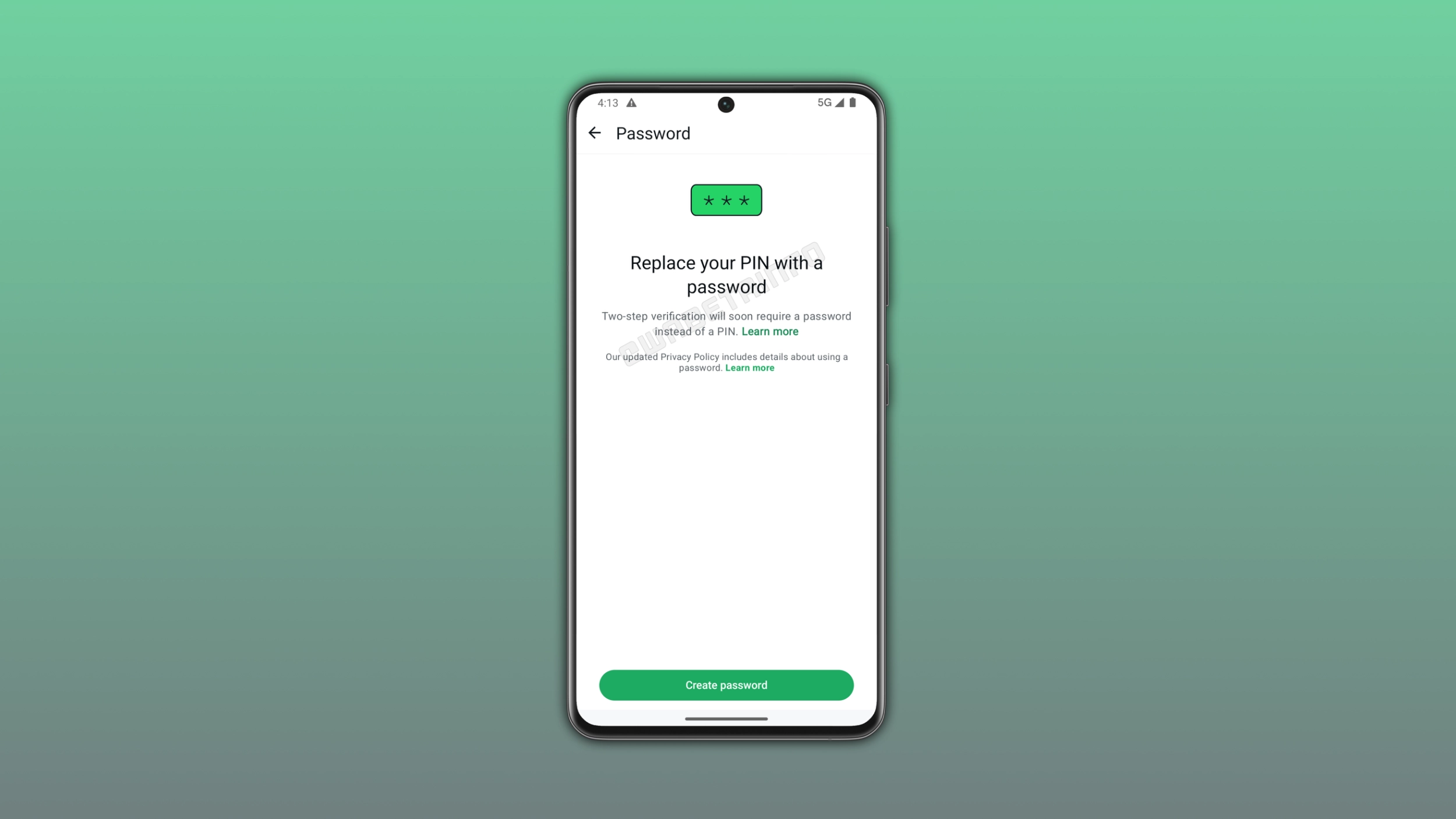
WhatsApp Beta Adds Account Password for Two-Step Verification
WhatsApp is expanding its security architecture by testing a dedicated account password feature for two-step verification, according to features tracked in the WhatsApp beta for Android 2.26.29.4 update distributed via Google Play. The upcoming credential layer moves beyond traditional six-digit PINs, aiming to fortify account recovery workflows and restrict unauthorized device provisioning across enterprise and consumer deployments.
The Tech TL;DR:
- Core Update: Discovered in the Android beta 2.26.29.4 release via Google Play, WhatsApp is building support for an explicit account password within its two-step verification framework.
- Security Impact: Supplements standard numerical PINs to harden account access vectors and mitigate credential stuffing risks during multi-device synchronization.
- Deployment Status: Currently restricted to beta testing tracks with no finalized production release date announced by Meta.
Architectural Analysis of the Two-Step Verification Expansion
Meta-owned WhatsApp relies primarily on end-to-end encryption protocols anchored to phone number identities and cryptographic keys stored locally on user devices. However, account registration hijacking and SIM-swapping campaigns frequently target the secondary protection layer: the mandatory six-digit PIN required during periodic re-registrations. By incorporating a robust alphanumeric account password, the messaging platform introduces a higher-entropy factor that resists brute-force scanning more effectively than a standard numeric sequence.
According to findings from WABetaInfo, the code implementation within the 2.26.29.4 beta payload points toward deeper credential management structures. Software developers analyzing the package note that this password functions in tandem with existing email-recovery options, closing potential attack windows where compromised email accounts could otherwise trigger a streamlined PIN reset.
# Example conceptual cURL request evaluating local auth state against a hypothetical Graph API endpoint
curl -X GET "https://graph.facebook.com/v20.0/whatsapp_enc_settings"
     -H "Authorization: Bearer EAAQt..."
     -H "Content-Type: application/json"
Implementation Challenges and Enterprise Risk Mitigation
For enterprise environments and professional groups leveraging mobile messaging, credential friction remains a persistent bottleneck. IT administrators managing fleet deployments must weigh enhanced security controls against user friction. When identity verification hurdles increase, support desks often see spikes in ticket volume related to locked out credentials. Organizations navigating these identity management shifts frequently partner with vetted [Relevant Tech Firm/Service] to audit access policies and ensure robust IAM (Identity and Access Management) integration.
Furthermore, vulnerability researchers emphasize that a password is only as secure as its storage mechanism. Within local SQLite databases on Android, secure enclave handling via hardware-backed Keystores prevents memory-dump extractions. Security teams must ensure that underlying device policies comply with strict SOC 2 compliance frameworks, preventing local cache exposure on unmanaged or BYOD (Bring Your Own Device) hardware. Organizations requiring immediate hardening of mobile endpoints often collaborate with specialized [Relevant Tech Firm/Service] to deploy containerized mobile device management (MDM) profiles.
Comparative Security Matrix: WhatsApp vs. Competitors
Evaluating messaging security requires examining how major platforms handle secondary authentication layers:
| Platform | Secondary Authentication Mechanism | Recovery Vector |
|---|---|---|
| WhatsApp (Beta) | 6-digit PIN + Developing Alphanumeric Password | Verified Email Address |
| Signal | Registration Lock PIN (Numeric/Alphanumeric) | Secure Enclave / Local Cryptographic Seed |
| Telegram | Cloud Password (Custom Alphanumeric) | Recovery Email Address |
As development progresses toward a stable release channel, system administrators and security engineers should monitor continuous integration updates on official distribution tracks. Ensuring seamless compatibility without disrupting automated deployment pipelines requires proactive patch management. Companies modernizing their internal communication infrastructure frequently rely on dedicated [Relevant Tech Firm/Service] to oversee secure rollout cadences and minimize operational downtime.
Disclaimer: The technical analyses and security protocols detailed in this article are for informational purposes only. Always consult with certified IT and cybersecurity professionals before altering enterprise networks or handling sensitive data.