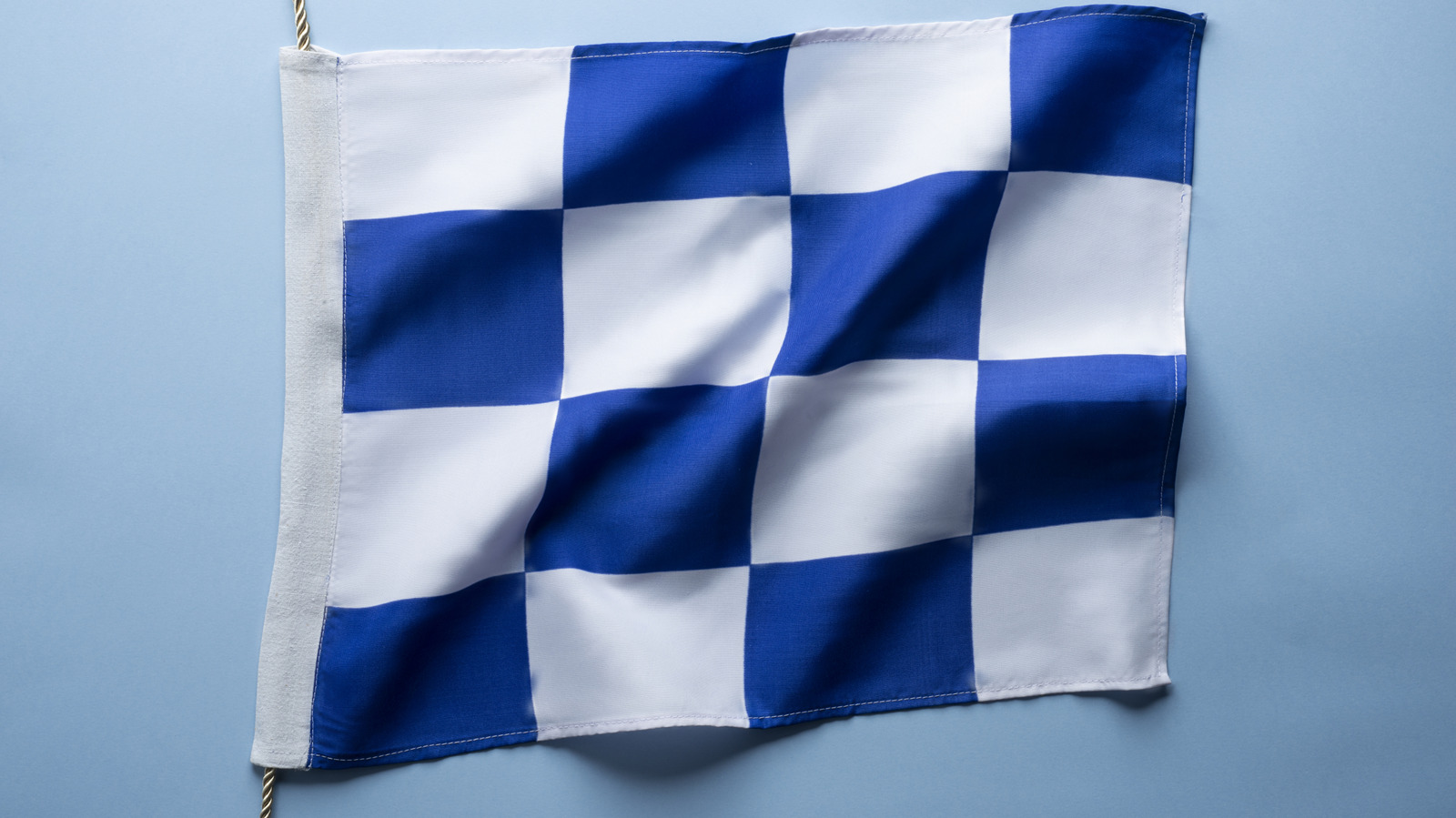
What the Blue and White Checkered Flag Over a Striped Flag Means
The signal consisting of a blue and white checkered flag flown above a five-striped flag indicates a vessel is in immediate distress, a protocol defined by the International Code of Signals. The checkered flag represents November, or the letter N, and the striped flag represents Charlie, or C. When displayed together as NC, this configuration is a standardized call for immediate assistance.
The maritime signaling system relies on visual redundancy and highly distinct patterns to ensure critical information survives environmental noise. This protocol serves as a low-latency communication channel, allowing crews to transmit urgent status updates without relying on spoken or written language. The International Code of Signals meticulously designs these flags to be recognizable and easily identifiable from a distance, even in marginal visibility.
The Tech TL;DR: Emergency Protocols and Signal Integrity
- NC (November over Charlie) is the internationally recognized signal for a vessel in distress.
- The protocol dictates immediate escalation to the Coast Guard via VHF Channel 16 or 911.
- The system relies on distinct, high-contrast flag patterns to ensure signal integrity over long distances.
The International Code of Signals functions as a highly optimized communication framework, ensuring that even in a failure of primary communication systems, a standardized alternative remains accessible. The flags themselves are engineered for maximum pattern recognition, employing distinct color and geometry—like the blue and white checkered pattern of November—to avoid ambiguity.
How Distinct Flag Patterns Optimize Signal Recognition?
Maritime signal flags are not merely decorative; they are high-contrast visual data packets. The November flag, featuring a blue and white checkered pattern, and the Charlie flag, displaying five horizontal stripes (blue, white, red, white, blue), are selected for their inherent visual distinctiveness.
When the NC configuration is observed, it immediately triggers the requirement for emergency response protocols. This signal is categorized as a distress alert, meaning the priority shifts from routine status reporting to immediate life-safety procedures. The protocol mandates that the observer initiate contact with the Coast Guard, effectively escalating the situation to the highest level of emergency response within the relevant jurisdiction.
What Protocol Defines Immediate Distress?
The codified response to the NC signal is clear: immediate communication with the Coast Guard.
When establishing contact, the observer must articulate the observed signal—November above Charlie—along with the vessel’s precise location and any observable conditions. This information allows dispatch to begin resource allocation and predictive modeling before arriving on the scene.
NC Signal Lacks Distress Specificity Compared to Medical Flag
The NC distress signal operates within a broader spectrum of maritime communication standards. This comparison demonstrates the modular nature of the system, where specific flags convey specific, actionable data points. The NC signal, however, lacks the granularity to specify the nature of the distress, which is why the immediate procedural response focuses on rescue and assessment rather than specific technical remediation.
The robustness of this system lies in its redundancy. The ability to see a flag at a distance provides a critical initial alert, which is then followed by the mandated use of electronic communication channels like VHF 16.
What Are the Practical Steps After Spotting NC?
If a vessel is observed showing the NC signal, the first move is to reach out to the Coast Guard. The observer must provide detailed information, staying engaged with the dispatcher until help arrives. The situation can change rapidly during the time gap between spotting the signal and the deployment of emergency responders. Any actionable intelligence provided by the observer is essential for updating the operational picture of the incident.
What Specific Information Does the NC Signal Convey?
The NC signal communicates a high-priority status: the vessel is in distress and requires immediate assistance. Critically, the flag itself does not specify the root cause of the emergency. Whether the issue is mechanical failure, environmental hazard, or medical crisis, the signal’s primary function is to trigger a coordinated rescue and assessment effort.
The distinction between the flags—the blue/white checkered pattern of November and the five-stripe pattern of Charlie—is purely definitional within the International Code of Signals. The system relies on the consistent interpretation of these defined visual elements to achieve unambiguous communication across diverse fleets and cultures.
# Example: Monitoring VHF Channel 16 (The International Distress Channel)
# Note: This is a conceptual CLI command; actual implementation requires specialized radio hardware and software.

$ vhf_monitor --channel 16 --protocol ICS_Standard --filter distress
International Code of Signals Eliminates Language Barriers in Emergencies
The International Code of Signals provides a universal language for maritime emergencies, eliminating language barriers and ensuring that a distress call is understood regardless of the vessel’s origin.
This standardization is a high-level form of protocol governance that guarantees a common operational picture among all parties involved in the response. The defined methods for contact, such as utilizing 911 or VHF 16, are sanctioned procedures endorsed by the Coast Guard for emergency use.
The reliability of this protocol is backed by international maritime regulations and the established operational procedures of the Coast Guard. This regulatory framework provides the necessary authority and infrastructure for the rapid and coordinated deployment of rescue assets. The effectiveness of this system ensures that the communication bottleneck is mitigated by a global, standardized visual and radio protocol.