
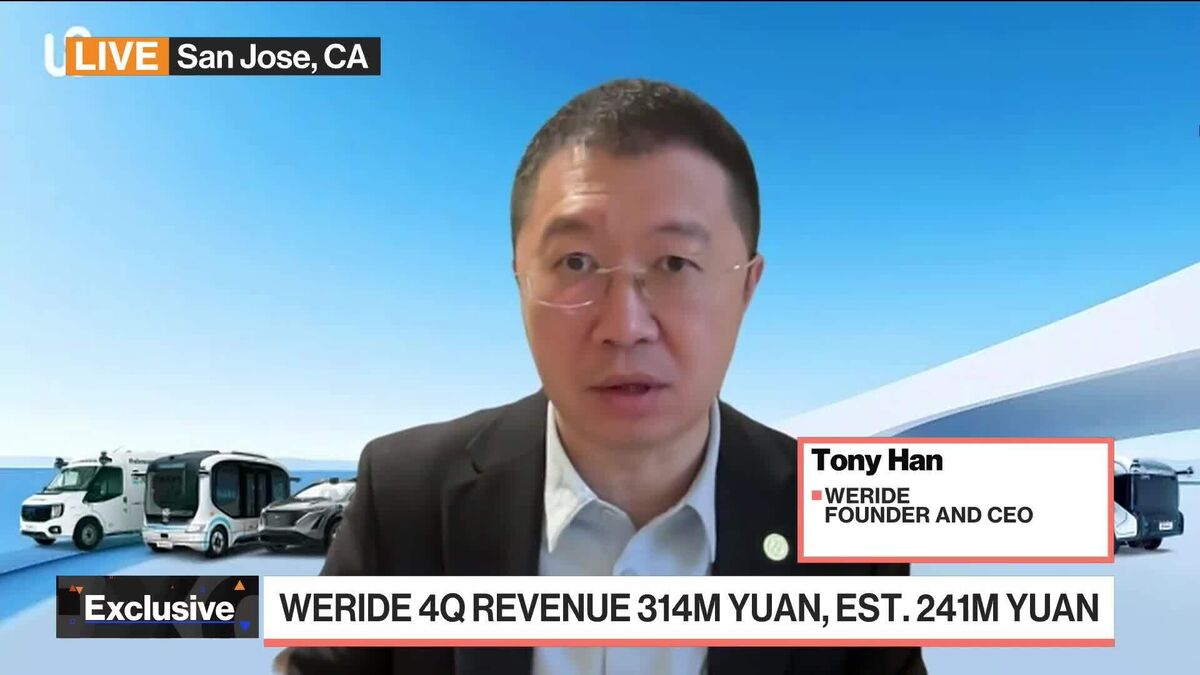
WeRide CEO Tony Han Calls Shares Undervalued as Profitability Nears
WeRide CEO Tony Han asserts the company’s valuation is disconnected from its imminent profitability, citing cleared regulatory hurdles for overseas expansion. Speaking on Bloomberg, Han outlined a strategic pivot from pure R&D burn to commercial deployment in 2026. This shift signals a critical transition for the autonomous vehicle sector, moving from speculative capital infusion to revenue-positive operations.
Wall Street has long treated autonomous driving startups as cash incinerators, but the narrative is fracturing. Tony Han’s declaration that WeRide is “heavily undervalued” isn’t just executive bravado; it is a signal that the unit economics of Robotaxis are finally stabilizing. For years, the sector suffered from a fatal flaw: the cost of the sensor stack outpaced the revenue per mile. That equation is flipping. However, clearing the path to profitability requires more than just better hardware; it demands aggressive capital restructuring and legal maneuvering in foreign jurisdictions.
The core fiscal problem here is liquidity management during the scaling phase. As WeRide pushes for overseas expansion, particularly in markets with stringent data sovereignty laws, the company faces a dual threat: regulatory friction and cash burn. Mid-cap tech firms in this position often struggle to secure growth equity without diluting existing shareholders. To navigate this, organizations frequently engage specialized investment banking boutiques that specialize in cross-border tech IPOs and secondary offerings. These firms structure deals that protect valuation while injecting the necessary runway to reach positive EBITDA.
The Unit Economics of Autonomy
Profitability in the AV space is not a binary switch; it is a function of utilization rates and sensor depreciation. When we analyze the broader market, specifically looking at comparable entities like Waymo or Cruise prior to their recent stumbles, the data reveals a harsh truth. High-fixed-cost models collapse without density. WeRide’s assertion relies on the assumption that regulatory clearance translates immediately to fleet scaling.
According to the latest industry analysis on autonomous vehicle deployment costs, the break-even point for a mixed fleet (Robotaxi and Robobus) typically requires a utilization rate exceeding 60% during peak hours. Han’s comments suggest WeRide has cracked this code in specific geographies. Yet, investors must remain skeptical of top-line growth claims without seeing the underlying margin structure. The transition from prototype to product is where most hardware-heavy startups bleed out.
“The market is pricing in a perpetual R&D burn that no longer exists. We are seeing a maturation of the stack that reduces marginal costs per mile by nearly 40% year-over-year.” — Senior Analyst, Global Mobility Fund
This reduction in marginal cost is the key variable. It changes the investment thesis from a venture capital gamble to a private equity play. But scaling internationally introduces a modern set of liabilities. Data privacy compliance in the EU and North America is not merely a technical hurdle; it is a legal minefield. A single violation can result in fines that wipe out quarterly gains. Expanding AV firms are increasingly retaining top-tier corporate law firms with dedicated technology and privacy practices to audit their data pipelines before entering new markets.
Comparative Financial Health: The AV Sector
To understand WeRide’s position, one must look at the capital efficiency relative to its peers. The following table breaks down the estimated burn rates and revenue multiples for key players in the L4 autonomy space, based on public filings and disclosed funding rounds.
| Entity | Est. Cash Burn (Quarterly) | Revenue Multiple (TTM) | Primary Market Focus |
|---|---|---|---|
| WeRide | $45M – $60M | N/A (Pre-IPO) | China, Middle East, Europe |
| Waymo (Alphabet) | $200M+ | N/A (Internal) | USA |
| Pony.ai | $35M – $50M | N/A (Pre-IPO) | China, USA |
| Motional (Hyundai/Aptiv) | $80M+ | N/A (Joint Venture) | Global |
The data indicates that WeRide is operating with a leaner burn rate than its US-backed counterparts, largely due to lower operational costs in its home market and strategic partnerships in the Middle East. However, the “Pre-IPO” status remains a liquidity trap for early investors. The path to an exit is narrowing. As the window for traditional IPOs fluctuates with interest rate volatility, companies are exploring alternative liquidity events. This often involves complex structuring that requires M&A advisory services to evaluate potential SPAC mergers or direct listings.
Regulatory Arbitrage as a Growth Strategy
Han’s mention of removed regulatory hurdles is the most significant alpha in this story. In the autonomous sector, regulation is the ultimate moat. If WeRide has secured approvals that competitors have not, they possess a temporary monopoly on commercial deployment in those zones. This is not just about driving cars; it is about securing the license to print money in specific geofenced areas.
However, “removed hurdles” often implies a shift in liability. Who is responsible when the algorithm fails? The shift from testing permits to commercial licenses transfers significant risk to the operator. Insurance premiums for commercial autonomous fleets are skyrocketing, creating a new line item that can erode gross margins. Smart CFOs are hedging this risk by partnering with specialized insurance underwriters who understand the telemetry data behind AV safety scores.
The market’s reaction to Han’s comments will depend on the transparency of the upcoming financial disclosures. Investors are no longer buying dreams; they are buying cash flow. If WeRide can demonstrate that their overseas expansion is not just a press release but a revenue-generating reality, the “undervalued” claim holds water. If it remains a narrative without the accompanying balance sheet strength, the share price will correct.
We are witnessing the complete of the “growth at all costs” era for autonomous driving. The survivors will be those who can integrate hardware, software and legal compliance into a single, profitable unit. For the broader market, this signals a consolidation phase. Smaller players without the capital reserves to weather the regulatory storm will become acquisition targets. The directory of viable B2B partners for this sector is shrinking to only those who can deliver immediate ROI.
As the fiscal year progresses, the focus must shift from the technology itself to the business infrastructure supporting it. Whether it is securing capital, navigating cross-border law, or restructuring for an exit, the companies that thrive will be those that treat autonomy as a logistics business, not a science project. For investors and operators alike, the roadmap is clear: profitability is the only metric that matters in 2026.