Water+ pilots market-based sanitation for rural Zambia, Care reports
Zambia is shaping rural sanitation by handing total ownership to local actors through a market-based sanitation pilot, shifting away from standard development frameworks, care.org reported.
Strengthening Local Institutional Mechanisms in Monze
The Water+ Team has long focused on bolstering local institutional mechanisms. The market-based sanitation pilot pushes this strategy further by aiming for an approach where local actors can shape, adapt, and sustain programs according to their own priorities, capacities, and resources. This framework demands a more unpredictable timeline and requires development partners to answer to local priorities alongside traditional metrics like counting built toilets.
The initiative relies entirely on three existing structures in Zambia instead of establishing parallel project frameworks. The first is the District Water, Sanitation, and Hygiene Education Committee (DWASHE), led by district government to handle local coordination around WASH. The project kicked off with a DWASHE coordination meeting in Monze District, where CARE, iDE, and IDinsight introduced the market-based sanitation concept and asked local system actors if the approach could address district priorities for rural sanitation.
Local Government and SWSC Lead Pilot Project Operations
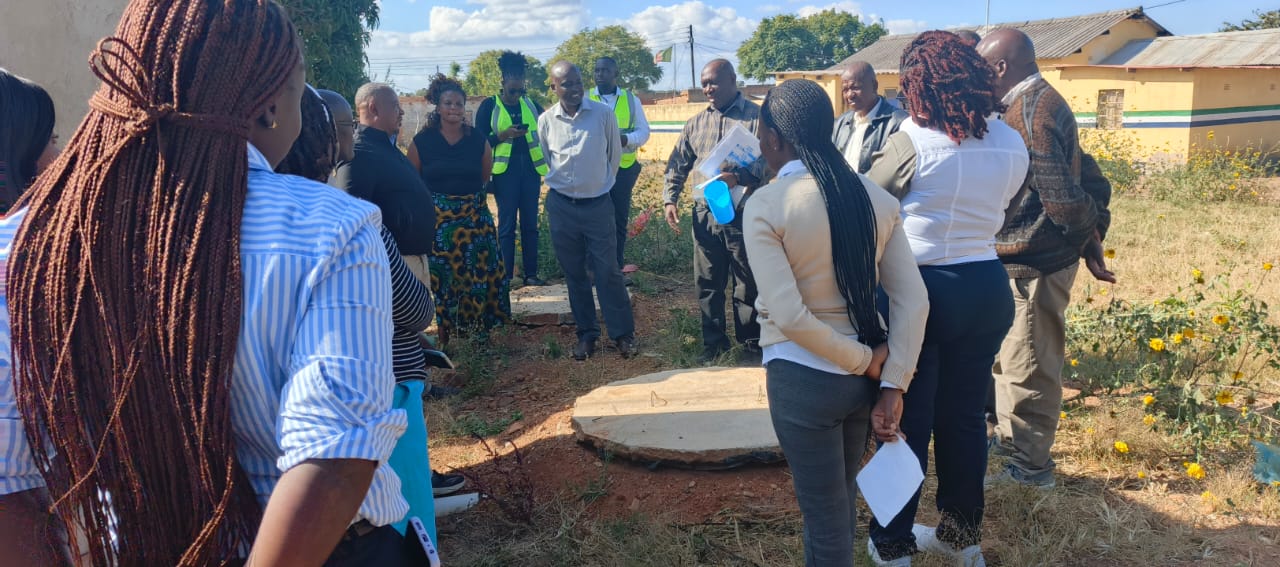
Instead of positioning the pilot as a standalone project, local government and the Southern Water and Sanitation Company (SWSC) identified their own roles, assets, and action items during initial conversations. Engagement expanded in May 2026 when DWASHE members held their monthly meeting in Chisekesi to speak directly with a local sanitation business owner trained by iDE and work through operational challenges firsthand. That visit generated a list of next steps that DWASHE members, rather than CARE, will lead.
The second structure involves local financing mechanisms that the local government already enables or owns. These include Savings Groups (VSLAs), established and trained by district and provincial governments to give households a channel to finance sanitation improvements. The initiative also uses Constituency Development Funds (CDF), public funds distributed through local government to support community development and grant or lend to eligible local groups and businesses. Using these channels effectively proves progress by showing local actors putting their own money behind the work.
Expanding SWSC’s Mandate into Rural Areas
The third structure is SWSC. Under Zambia’s newly revised national policy, achieving rural sanitation is part of SWSC’s revised mandate. However, the utility works primarily with urban and peri-urban customers and has few existing models for supporting rural households to install, maintain, or upgrade unsewered household toilets.
The partnership helps SWSC test and cost a viable market-based sanitation model that the utility can lead to strengthen supply and uptake of rural sanitation services and fulfill its mandate.