
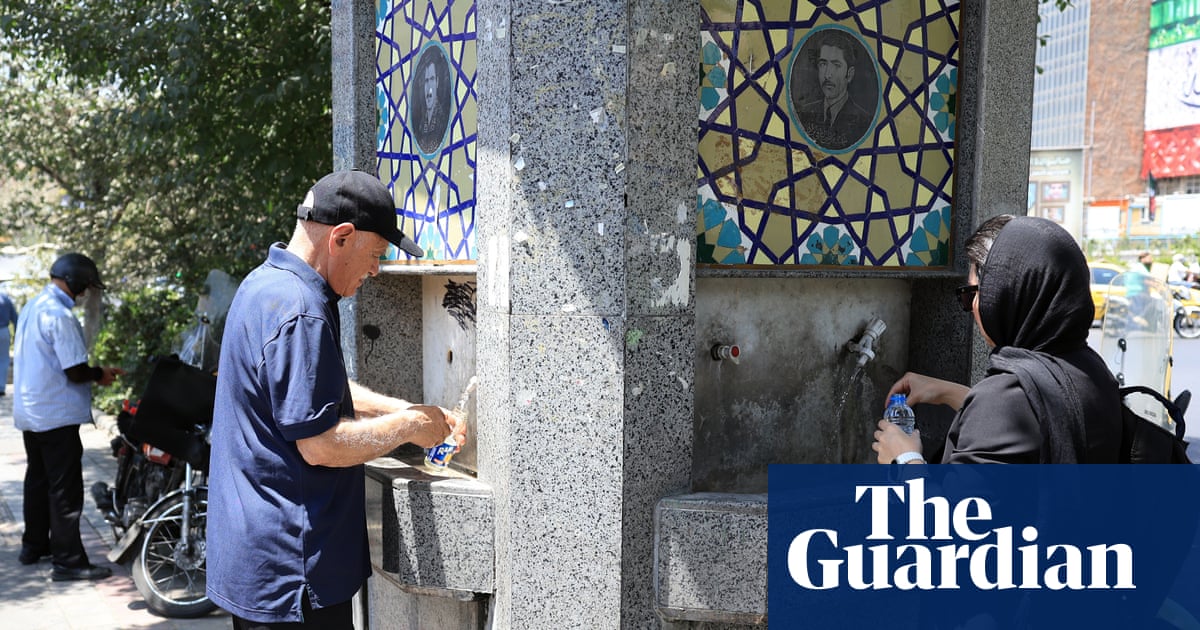
Iran’s Second City Faces Critical Water Shortages as Reservoir Levels Plummet
Mashhad, Iran’s second-largest city with a population of around 4 million, is facing a severe water crisis as reservoir levels fall to critically low levels. reports indicate water storage in the city’s dams has dropped below 3%, according to Hossein Esmaeilian, chief executive of the Mashhad water company, speaking to the ISNA news agency.
Esmaeilian emphasized the urgency of the situation, stating that responsible water usage is “no longer merely a recommendation - it has become a necessity.” Mashhad relies on four dams for its water supply, currently delivering approximately 1,000 to 1,500 liters per second to meet a total consumption rate of around 8,000 liters per second.
The crisis extends beyond Mashhad. Authorities in Tehran have warned of potential rolling water cuts as the country experiences what officials describe as its worst drought in decades. President Masoud Pezeshkian cautioned that without rainfall before winter, even the capital could face evacuation. Five major dams supplying Tehran with drinking water are at “critical” levels, with one fully empty and another holding less than 8% of its capacity.
Nationwide, the situation is dire.Abbasali Keykhaei of the Iranian Water Resources Management Company reported in late October, via Mehr news agency, that 19 major dams – roughly 10% of the country’s reservoirs – have effectively run dry.
Esmaeilian suggested a 20% reduction in consumption could prevent rationing or supply cuts, adding that those with the highest water usage would likely be the first to experience restrictions.
The ongoing drought follows a summer marked by heatwaves and public holidays declared in Tehran to reduce water and energy consumption. Local newspapers have criticized the handling of the crisis, with reformist publications Etemad and Shargh pointing to political interference in environmental decision-making. Etemad cited “unqualified managers” in key institutions as a primary cause, while Shargh lamented that “Climate is sacrificed for the sake of politics.”
