
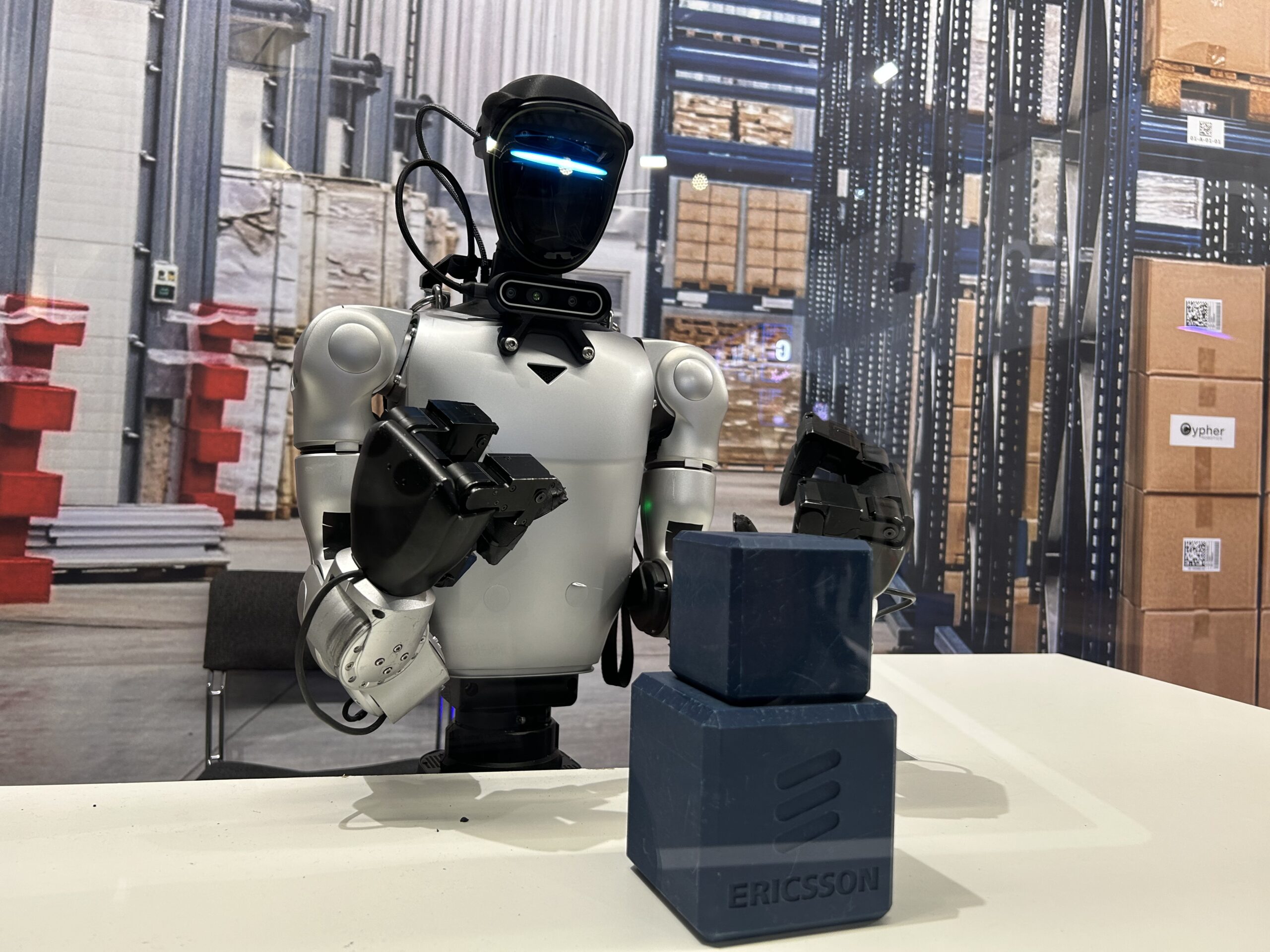
Wang Xingxing: Embodied AI’s “GPT Moment” 2-3 Years Away | Robotics & AI News
Unitree Robotics founder Wang Xingxing predicts embodied AI maturity within 36 months, coinciding with new satellite infrastructure in Southwest China. Capital markets must now price in hardware scalability risks against software valuation multiples. This timeline forces a reassessment of liquidity requirements for deep tech ventures.
Wall Street loves a narrative, but balance sheets demand proof. Wang Xingxing’s assertion that embodied intelligence will hit its “GPT Moment” in two to three years sets a hard deadline for venture capital deployment. The announcement aligns with the activation of Southwest China’s first commercial satellite remote sensing station, signaling a convergence of orbital data and terrestrial robotics. Investors are no longer betting on software alone. The hardware layer requires massive upfront capex, stretching runways and demanding specialized venture capital partners who understand long-gestation deep tech cycles. Liquidity dries up quickly when physical prototypes replace code commits.
Capital Intensity and the Runway Crunch
Software margins seduce investors, but robotics bleed cash. Building humanoid units involves supply chain complexities that SaaS models ignore. A typical software startup might burn $2 million monthly to scale user acquisition. A robotics firm burns that same amount just to refine actuator tolerance and sensor fusion. The financial markets role in the economy, as outlined by the U.S. Department of the Treasury, hinges on efficient capital allocation. When capital flows into hardware without clear unit economics, yield curves invert for these specific assets. Investors demand higher risk premiums. Companies failing to secure long-term debt facilities face dilution down rounds.

Mid-stage robotics firms often lack the internal treasury functions to manage this volatility. They require external expertise to structure debt against intellectual property rather than revenue. This represents where specialized intellectual property law firms become critical balance sheet partners. Securing patents on kinematic structures provides collateral for lending. Without these legal moats, valuation multiples compress rapidly during due diligence. The market punishes ambiguity.
Three Structural Shifts for the Sector
The convergence of satellite telemetry and embodied AI alters the investment thesis entirely. We are moving from static training sets to dynamic, real-world feedback loops. This shift demands a reevaluation of operational risk across three vectors.
- Data Sovereignty and Latency: The new Southwest satellite station reduces latency for regional robotics fleets. High-frequency trading firms understand latency; robotics fleets now face similar constraints. Real-time inference requires edge computing infrastructure that cloud providers often oversell. Companies must audit their financial market exposure to cloud concentration risk. Dependence on a single hyperscaler creates a single point of failure for operational continuity.
- Regulatory Compliance Costs: Autonomous agents operating in physical spaces trigger liability clauses absent in pure software. Insurance premiums for embodied AI will dwarf cyber liability policies. CFOs must model these opex increases into their 2027 forecasts. Regulatory bodies are watching closely. Non-compliance results in grounded fleets and wasted R&D spend.
- Talent Arbitrage: The talent pool for reinforcement learning in physical environments is shallow. Compensation packages now include equity stakes comparable to founding teams. Retention costs are skyrocketing. Human capital management becomes a primary line item on the P&L. Firms ignoring this face brain drain to competitors with clearer commercialization paths.
The Infrastructure Moat
Satellite remote sensing is not just about imagery. It is about training data for navigation. The Southwest station provides a continuous stream of geospatial updates. This data feeds the neural networks controlling robotic movement. Ownership of this data pipeline creates a defensible moat. Competitors relying on public datasets will lag in performance. The value accrues to the entity controlling the sensor network. This dynamic mirrors the early cloud infrastructure wars where data gravity dictated market winners.
“We are seeing a rotation from pure software AI plays into infrastructure-heavy models. The firms that survive the next 24 months will be those with secured supply chains and verified data pipelines, not just promising demos.”
This sentiment echoes across institutional desks. Senior partners at major technology funds note that hardware validation takes longer than software iteration. The “GPT Moment” Wang describes requires 80-90% task completion in陌生 (unfamiliar) scenarios. Achieving this reliability demands iterative testing that burns capital. Investors are tightening terms. Convertible notes now carry stricter valuation caps. The era of effortless money for hardware is over.
Strategic Imperatives for CFOs
Financial officers in the robotics space must pivot from growth-at-all-costs to efficiency. EBITDA positivity might remain distant, but cash flow management is immediate. Diversifying funding sources beyond equity is essential. Venture debt instruments tailored for hardware startups offer non-dilutive capital. However, these require rigorous financial reporting. Companies need robust accounting systems to track inventory valuation and R&D capitalization accurately. Neglecting this leads to audit failures during Series B rounds.
The timeline is tight. Two to three years is a blink in industrial development cycles. Supply chain bottlenecks can delay production by quarters. Firms must engage supply chain logistics providers early to secure component availability. Semiconductor shortages taught the market that inventory is king. Hoarding critical chips might look like waste on a balance sheet today but ensures production continuity tomorrow. Strategic stockpiling becomes a competitive advantage.
Market analysts, as described in recent industry profiles, are increasingly scrutinizing hardware unit economics. They look past the hype to the bill of materials. Can the robot be built profitably at scale? If the answer is no, the valuation collapses. The satellite station adds a layer of complexity but also utility. It enables services beyond simple locomotion. Monitoring, inspection and security become revenue streams. Diversification protects against single-product failure.
Investors are watching the burn rate. They are watching the data pipeline. They are watching the legal framework. The companies that navigate these three pillars will define the next decade of automation. The rest will become acquisition targets for pennies on the dollar. The directory of viable partners is shrinking. Only those with verified capabilities survive the consolidation. Find the right partners now before the window closes. The World Today News Directory aggregates the vetted firms capable of supporting this transition. Do not wait for the liquidity crisis to find your counsel.