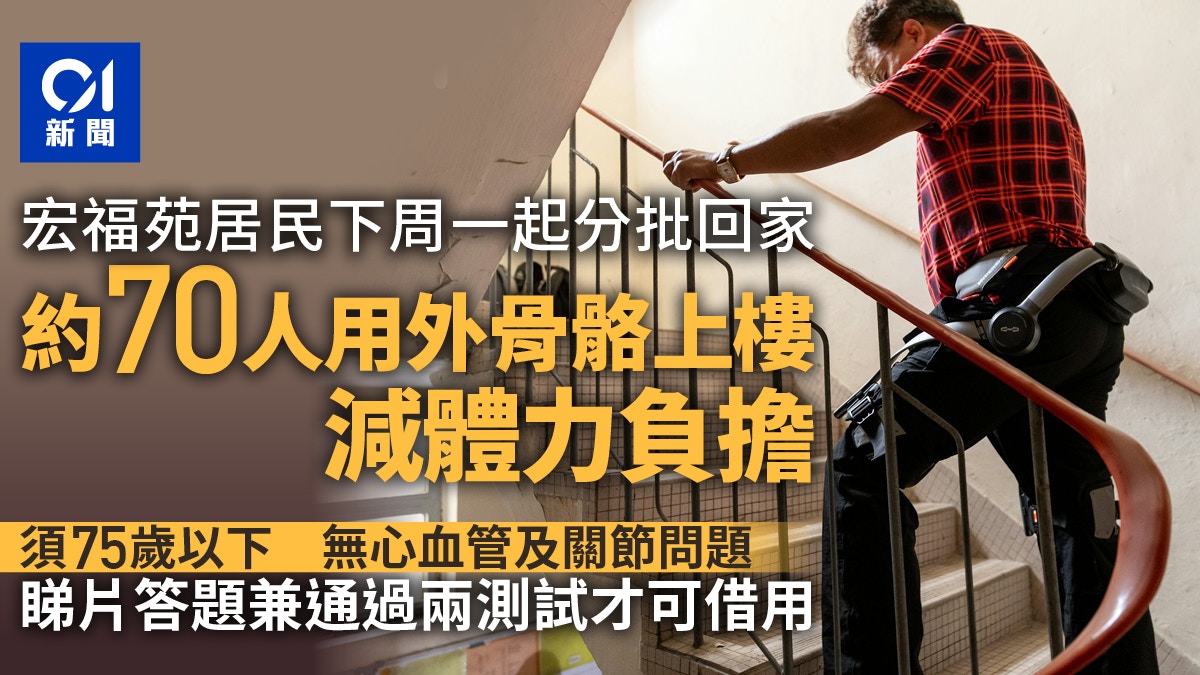
Wang Fuk Court Residents to Retrieve Belongings Using Exoskeletons
Residents of Wang Fuk Yuen in Tai Po, Hong Kong, will begin returning to their fire-damaged homes in batches starting April 20, 2026. Approximately 70 elderly or disabled residents will utilize robotic exoskeletons to retrieve sentimental belongings following a devastating Grade 5 fire that occurred in November 2025.
For the people of Wang Fuk Yuen, the tragedy of November 26, 2025, is no longer a headline—it is a daily, suffocating reality. The fire, which raged for over 43 hours, didn’t just incinerate concrete and steel; it erased the physical markers of decades of lives. Now, as the government opens the gates for residents to retrieve their possessions, the process has turn into a visceral reminder of what was lost.
This is not a simple exercise in salvage. It is a high-stakes operation involving robotic assistance, psychological screening and a legal battle over property deeds that has no local precedent. The return to the estate is a collision of cutting-edge technology and raw human grief.
The Heavy Lift: Exoskeletons and Emotional Toll
The most striking image of this recovery effort is the deployment of robotic exoskeletons. For roughly 70 residents—many of whom are elderly or suffer from limited mobility—the stairs of their own homes have become insurmountable peaks. These devices are not mere gadgets; they are the only bridge between a displaced senior and a cherished photo album or a family heirloom.

However, the physical climb is often easier than the emotional one. The Hong Kong Psychological Society has issued urgent warnings, urging residents to carefully gauge their own mental fortitude before stepping back into the ruins. Seeing a home reduced to a blackened shell can trigger acute trauma, turning a retrieval mission into a psychological crisis.
To mitigate this, the government has implemented a “one household, one social worker” support system. These professionals aren’t just there for logistics; they are there to catch people when the sight of a charred living room becomes too much to bear. For those struggling with the aftermath, securing trauma-informed psychologists is becoming as critical as the physical act of clearing out the units.
“We understand the deep emotional longing to retrieve personal items, but we urge residents to plan their visits carefully and limit the time spent in high-stress environments.”
The Logistics of Return
Deputy Chief Secretary for Administration Eric Yok Wing Hing confirmed that the logistics are moving forward, though the scale is immense. Out of 1,730 contacted households, 98% (approximately 1,700 households) have agreed to the government’s scheduled time slots for reentry. This high rate of compliance suggests a desperate urgency among residents to reclaim whatever remains of their previous lives.
The operation is meticulously planned. Residents entering the site will be provided with mosquito repellent and protective gear by the Home Affairs Department and specialized “Caring Teams.” The government is treating the site not as a residential area, but as a hazardous zone requiring controlled access.
While the majority of the estate is a scene of desolation, the contrast is stark at Wang Chi Kok (Block H). This single tower miraculously escaped the flames, remaining structurally intact while its neighbors, particularly Wang Chang Kok, were left as blackened skeletons. Yet, for the residents of Wang Chi Kok, “safety” has not translated into “access.”
The Legal Deadlock of Wang Chi Kok
The residents of Wang Chi Kok are currently trapped in a legal purgatory. While they are expected to be allowed back in May to retrieve items, their permanent return is stalled by a complex property law crisis. Secretary for Home and Youth Affairs Priscy Lau has identified three primary hurdles: the status of general public facilities, the specific facilities within Block H, and the Deed of Mutual Covenant (DMC).
The DMC is the critical sticking point. The eight buildings of Wang Fuk Yuen are bound by a collective legal contract. To allow Wang Chi Kok to function as a standalone entity—separate from the ruined remainder of the estate—would require a total rewrite of the covenant. This would necessitate the signatures of all owners, a process Lau describes as a “complex legal problem” with no existing precedent in Hong Kong.
This legal vacuum leaves residents in a state of precariousness. When the governing documents of a property are rendered obsolete by a catastrophe, homeowners often find themselves without a clear path to residency or insurance claims. Navigating these waters typically requires the intervention of specialized real estate attorneys who can negotiate new covenants in the wake of total loss.
Rebuilding vs. Pragmatism
The tension between the residents and the government reached a boiling point over the issue of reconstruction. A group of residents launched a petition demanding that the estate be rebuilt on its original site. The government’s response was a blunt rejection.
Eric Yok Wing Hing stated that original-site reconstruction is fundamentally unfeasible, estimating that such a project would take at least 10 years to complete. Instead, the administration is pushing a “pragmatic” two-pronged approach: the buyout of property rights and a “flat-for-flat” exchange program.
This shift from “restoration” to “replacement” marks a permanent change in the landscape of Tai Po. The loss of Wang Fuk Yuen is not just the loss of buildings, but the loss of a community that had existed since 1983. For those who cannot wait a decade for a new home, the search for relocation specialists and vetted housing options has become the new priority.
The return to Wang Fuk Yuen is a phased operation in grief and bureaucracy. Whether it is the robotic whir of an exoskeleton helping a grandfather reach his photo albums or the sterile debate over a Deed of Mutual Covenant, the process reveals the fragility of urban living. As the government moves from emergency response to long-term resettlement, the true test will be whether “pragmatism” can ever truly compensate for the loss of a home. Those navigating the fallout of this disaster—from legal disputes to housing crises—will find the necessary, verified professional support through the World Today News Directory.