
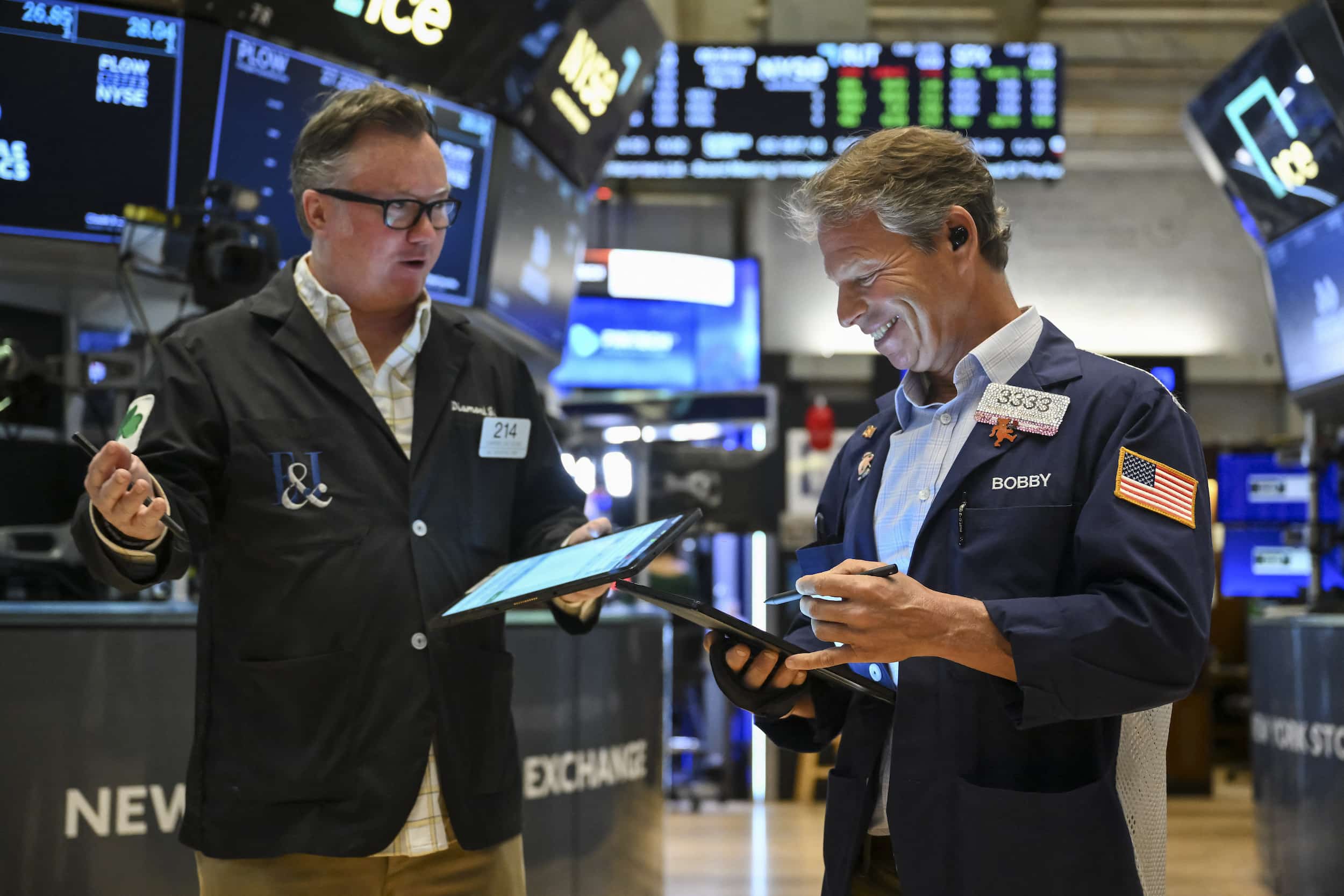
Wall Street Advances on Mideast De-Escalation Bets and Arm Stock Surge
As global markets rally on news of Middle East de-escalation and a surge in semiconductor stocks, Hollywood studios are immediately recalibrating their risk models. The Dow’s 0.66% advance signals a renewed appetite for high-budget tentpoles, specifically those leveraging new AI-driven VFX pipelines that were previously deemed too capital-intensive for volatile geopolitical climates.
Wall Street doesn’t just watch the box office; it dictates the greenlight process. When the S&P 500 climbs on the back of stability in the Levant, it isn’t just oil futures that react—it’s the completion bond premiums for major studio productions. For the last eighteen months, the “war risk” insurance line item on production budgets has been a silent killer of creativity, forcing showrunners to shelve scripts set in exotic locales or requiring massive international coordination. Today’s market correction changes the math. It tells the C-suite at the major conglomerates that the cost of doing business globally has just dropped, unlocking a floodgate of capital for the summer 2027 slate.
The specific catalyst here is twofold: geopolitical calm and the surge in Arm Holdings’ stock, driven by a new AI chip announcement. In the entertainment ecosystem, these two data points converge on one thing: visual effects scalability. We are seeing a shift where studios are no longer hesitant to commit to “unfilmable” scripts because the hardware to render them is becoming cheaper, and the geopolitical stability to shoot the plate photography is returning.
The “Risk Premium” on Tentpole Productions
Historically, when tension rises in the Middle East, Hollywood freezes. Not out of morality, but out of logistics. Filming in Jordan, Morocco, or the UAE becomes a liability nightmare. Today’s investor confidence suggests a thaw. We are already seeing whispers of major franchises looking to reboot location shooting in the region, moving away from the sterile “volume” stages that have dominated since the pandemic era.

However, moving a production of this magnitude back into volatile regions requires more than just a stock market rally. It requires a fortress of legal and logistical protection. This is where the industry leans heavily on specialized entertainment law firms and risk management consultants. A standard production insurance policy doesn’t cover civil unrest or sudden border closures. Studios are now aggressively seeking out boutique firms that specialize in high-risk territory coverage to protect their backend gross participation deals.
Consider the financials. When risk is high, studios pad their budgets by 15-20% as a contingency. When the market stabilizes, that capital is freed up for above-the-line talent or marketing spend.
| Production Variable | High-Geopolitical Risk Environment | Stabilized Market Environment (Current) |
|---|---|---|
| Location Insurance Premium | 4.5% – 6.0% of Total Budget | 1.2% – 1.8% of Total Budget |
| AI Rendering Costs (Per Frame) | $45.00 (Legacy Hardware) | $12.50 (New Arm Architecture) |
| Logistical Contingency | 25 Days Buffer | 10 Days Buffer |
| Greenlight Probability | Low (Focus on Safe Sequels) | High (Original IP & Epics) |
This shift in the balance sheet is critical. It means we are likely to see a resurgence of the “historical epic” or the “desert sci-fi” genre, categories that were effectively dead letter office items in 2025 due to prohibitive insurance costs.
The AI Chip Catalyst and Creative Ambition
Even as the geopolitical news clears the path for location shooting, the jump in Arm shares points to the engine room of modern cinema: generative AI and rendering. The new chip architecture promises to lower the latency in real-time rendering, a holy grail for directors who want to see their VFX heavy scenes on set, not in post-production six months later.
This technological leap creates a new set of problems, specifically regarding intellectual property and union contracts. As studios rush to adopt this cheaper, faster tech to capitalize on the bullish market, they are walking into a minefield of WGA and SAG-AFTRA regulations regarding AI usage.
“The market rally gives studios the cash to dream bigger, but it doesn’t give them the legal right to use AI however they want. We are seeing a surge in inquiries regarding IP indemnification. Studios want to know: if we use this new chip to generate a background crowd, do we own it, or are we inviting a class-action lawsuit?” — Elena Ross, Senior Partner at a top-tier Entertainment Law Firm.
The intersection of finance and creativity is rarely seamless. As production companies scramble to lock in these new efficiencies, the demand for specialized intellectual property attorneys is skyrocketing. The “problem” here isn’t just making the movie; it’s ensuring the asset remains bankable in a secondary market (SVOD, international syndication) without being tainted by legal disputes over AI generation.
Logistics: The Invisible Infrastructure of Blockbusters
Let’s talk about the physical reality of a de-escalated Middle East. For the global event security and logistics vendors listed in our directory, this news is a bell ringing for the next fiscal year. A stabilized region means film commissions in Dubai, Abu Dhabi, and Amman will be aggressively pitching to Hollywood again.

But the logistics of moving a 300-person crew into these regions remain complex. It’s not just about safety; it’s about customs, equipment importation, and local labor laws. The “Directory Bridge” here is clear: the studios have the money (thanks to Wall Street), but they lack the local infrastructure. This creates a massive opportunity for fixers and production service companies that can navigate the bureaucratic labyrinth of the region.
We are also seeing a ripple effect in the hospitality sector. A return to location shooting in these areas means a sudden influx of high-net-worth talent and crew requiring luxury accommodation and secure transport. The local economies in these filming hubs are preparing for a windfall, but only if the production companies can secure reliable vendors who understand the unique pressures of a Hollywood set.
The Verdict: Capital is King, But Context is Queen
The advance of Wall Street today is more than a number on a ticker; We see a permission slip for Hollywood to be ambitious again. The combination of lower risk premiums and advanced AI hardware creates a “perfect storm” for greenlighting the kinds of projects that define cultural eras. However, the speed at which capital is moving often outpaces the legal and logistical frameworks required to support it.
For the industry professionals reading this, the takeaway is simple: The money is back. The question is, are your contracts, your insurance policies, and your logistics partners ready to handle the scale of what’s coming next? As we move into the second quarter of 2026, the divide between studios that can execute complex international productions and those that cannot will widen. Those who leverage the right crisis management and legal counsel now will own the box office in 2027.
The market has spoken. Now, the creatives and the fixers demand to answer.
Disclaimer: The views and cultural analyses presented in this article are for informational and entertainment purposes only. Information regarding legal disputes or financial data is based on available public records.