Voyager 1: How NASA Still Tracks a 49-Year-Old Probe Across Interstellar Space
NASA’s Voyager 1 spacecraft continues to transmit telemetry from over 25 billion kilometers away, utilizing a radio transmitter that consumes approximately 22 watts of power. According to reports from ScienceBlog.com and Space Daily, the probe remains operational nearly 49 years after its 1977 launch, despite a plutonium battery that loses roughly 4 watts of power annually.
The Tech TL;DR:
- Signal Strength: Voyager 1 operates on ~22W, comparable to a refrigerator light bulb, across a 24-hour one-way light travel distance.
- Hardware Status: All original systems remain functional; mission termination is driven by power decay, not component failure.
- Latency: Signal takes almost a full day to reach us.
As Space Daily notes, the mission is ending simply because the plutonium source is depleting. This creates a critical power-budgeting problem: NASA engineers must selectively disable non-essential instruments to keep the transmitter and core computer alive.
The Hardware Efficiency of the Deep Space Network
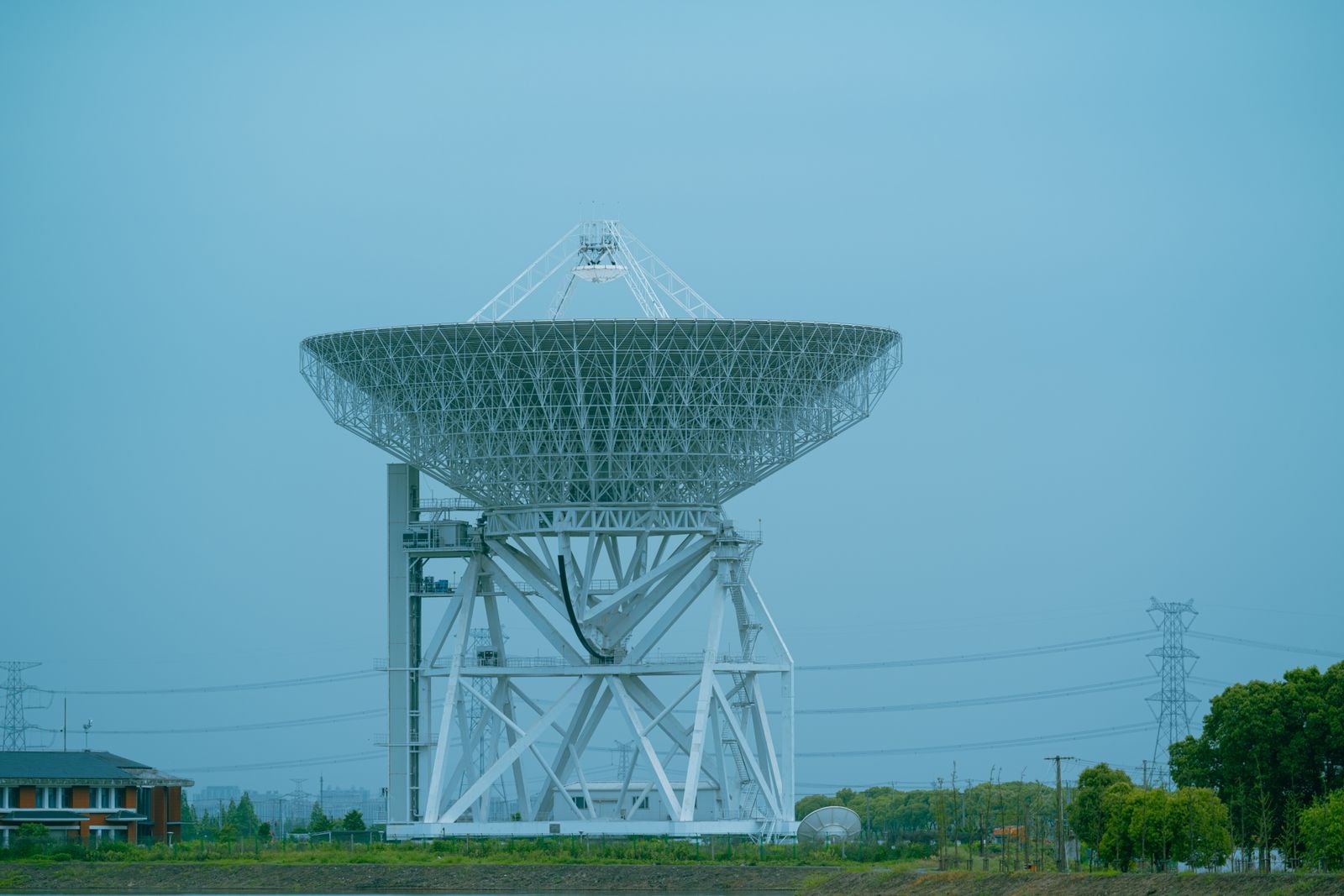
Maintaining a link with a 22-watt signal across 16 billion miles requires extreme sensitivity on the receiving end. NASA’s Deep Space Network (DSN) utilizes massive parabolic antennas to capture these “whispers.” The signal-to-noise ratio (SNR) at this distance is incredibly thin, requiring advanced signal processing to distinguish the probe’s data from cosmic background radiation.

| Metric | Specification / Value | Context |
|---|---|---|
| Transmitter Power | ~22 Watts | Equivalent to a small appliance bulb |
| One-Way Latency | Almost a full day | Speed of light constraint |
| Power Decay Rate | -4 Watts / Year | Plutonium battery decay |
| Distance from Earth | > 25 Billion km | Interstellar space |
Solving the Latency Gap: Autonomous Recovery
With a one-way light travel time of nearly 24 hours, real-time troubleshooting is impossible. The spacecraft relies on highly robust, autonomous fault-protection software.

# Conceptual Python snippet for simulating high-latency telemetry polling
import time

def poll_voyager_telemetry(command_id):
    print(f"Sending command {command_id} to Voyager 1...")
    # Simulate 23-hour one-way light travel
    latency_seconds = 23 * 3600
    time.sleep(latency_seconds)

    # Mock response from DSN
    response = {"status": "ACK", "power_level": "22W", "temp": "-160C"}
    return response

# This would realistically be handled by an asynchronous queue
# due to the 46-hour round-trip window.
Interstellar Data Integrity and System Longevity
The fact that Voyager 1’s original systems still work after nearly five decades is a testament to the “over-engineering” of the 1970s. Unlike modern consumer electronics designed for planned obsolescence, Voyager was built with redundant hardware paths and radiation-hardened circuits.
Comparing Voyager 1’s trajectory to its distance, ScienceBlog.com points out a humbling reality: despite moving “faster than a speeding bullet,” the probe has not yet covered a single light-year. At 25 billion kilometers, Voyager 1 has covered only a small fraction of one light-year.
The Future of the Whisper
Until then, the Deep Space Network continues to push the limits of signal amplification and noise reduction.
Disclaimer: The technical analyses and security protocols detailed in this article are for informational purposes only. Always consult with certified IT and cybersecurity professionals before altering enterprise networks or handling sensitive data.