
Vision Theatre Reopens in Leimert Park After $40 Million Restoration
The Vision Theatre has reopened its doors in Leimert Park following a $40 million restoration, marking a new chapter for the 95-year-old landmark.
The 729-seat venue, located at 3341 W. 43rd Pl., welcomed the public for a series of free events from Nov. 12 through Nov. 15, according to the Larchmont Chronicle.
Designed by architects Morgan, Walls, and Clements, the building originally opened in 1932 as a movie palace. The current project represents the culmination of a 20-year renovation process, latimes.com reported. The work preserved the theater’s Art Deco and Spanish Colonial Revival architecture, including its iconic 115-foot tower and an interior ceiling mural by Anthony Heinsbergen.
The mural “Leimert Park Legends” by Sei Shimura is featured on the rolling front door of the Vision Theatre, which includes historical figures like actor Marla Gibbs and neighborhood icons like artist Sika Dwimfo and clothing designer Queen Aminah. A ribbon-cutting ceremony in August preceded the public reopening.
The city of Los Angeles, which purchased the property in 1999, partnered with the Where Art Can Occur (WACO) Theater Center to manage the venue. “The renovation of the Vision Theatre unites historic preservation with state-of-the-art venue upgrades to create a world-class cultural venue that all Angelenos can be proud of,” said Daniel Tarica, general manager of the Department of Cultural Affairs, as reported by the Larchmont Chronicle.
Programming for the restored venue
WACO, a nonprofit organization co-founded by Tina Knowles in 2017, will oversee front-of-house operations, including live theater, film screenings, and youth programming. While the city retains responsibility for the building’s facilities, the organization is preparing to launch its full performance schedule early next year.
“WACO presentations and bookings begin in February 2027,” Executive Director Shay Wafer told the Larchmont Chronicle. “We are still finalizing the initial programming schedule, which will include a mix of music, films, dance, plays, and community-centered events.” Knowles has long felt a connection to Leimert Park.
“I fell in love with the area because there was this bookstore there, a Black bookstore, that was just unbelievable,” Knowles said on a phone call from the Hollywood Hills. “So it was music to my ears that the city took it on.”
The theater’s history has seen several shifts in ownership and purpose. The property later faced foreclosure following the 1992 city riots and a regional recession, eventually coming under city ownership at the end of the decade. It was then purchased by Jehovah’s Witnesses in 1977.
Bass highlights theater's Olympic role
Mayor Karen Bass emphasized the Vision Theatre’s significance for the 2028 Olympic and Paralympic Games, saying she wants the world to experience Leimert Park’s culture through the venue. “I want them to hear this community’s music, taste its food, meet its entrepreneurs, and feel its art. That story starts right here…” Bass stated in a press release.
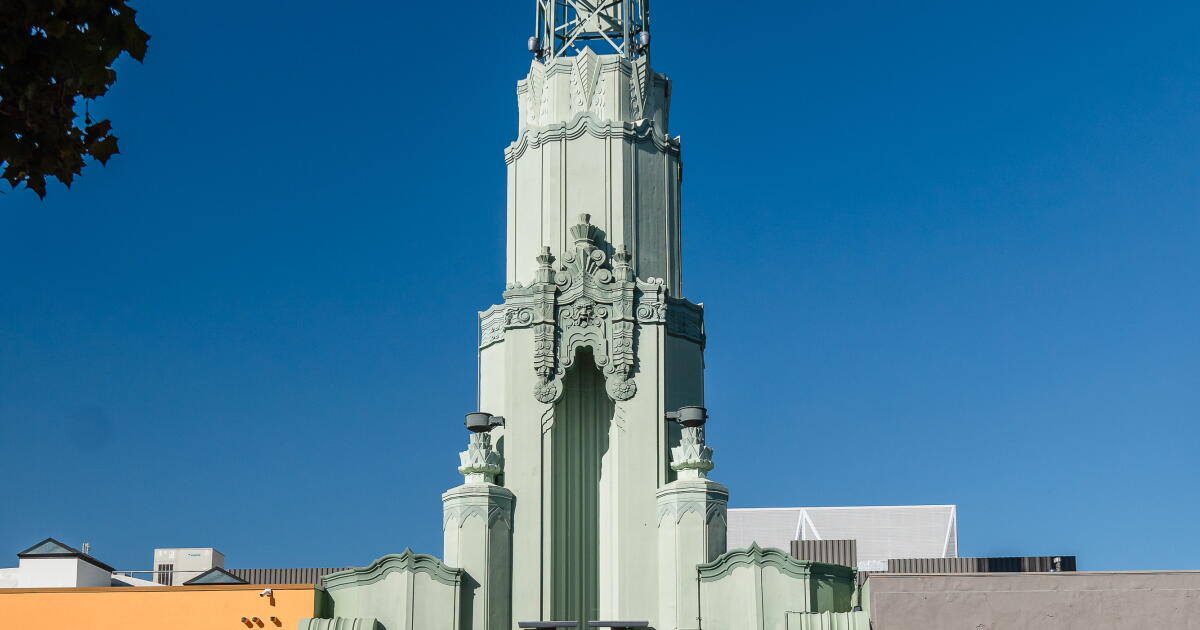
Bass, who joined Councilmember Heather Hutt at a ribbon-cutting ceremony, also noted her pride in securing funding for the renovations during her time in the State Assembly. The city purchased the property in 1999 and transformed it into a performing arts center, which now features restored Art Deco and Spanish Colonial Revival architecture.
Knowles recalls theater's personal appeal
Tina Knowles expressed her long-standing connection to Leimert Park, crediting a Black bookstore and African store for her love of the area. “I fell in love with the area because there was this bookstore there, a Black bookstore, that was just unbelievable,” Knowles said on a phone call from the Hollywood Hills.
The Vision Theatre, opened in 1932 and designed by Morgan, Walls, and Clements, is a significant historical landmark in Leimert Park, with its 115-foot Art Deco and Spanish Colonial Revival tower serving as a neighborhood icon since the early 1930s.
The building, deemed eligible for local, state, and national historic registries in 2015, is described by the city as an “excellent example of a neighborhood theatre from the early 1930s” and “an excellent example of Art Deco architecture, conveying high quality craftmanship and design.”
Mayor Karen Bass, who participated in a recent ribbon-cutting ceremony alongside Councilmember Heather Hutt, highlighted the venue’s role in the city’s broader cultural strategy.
“This theater is a landmark that has anchored Leimert Park for nearly a century, and it is coming back stronger than ever,” Bass said in a press release. “I want them to hear this community’s music, taste its food, meet its entrepreneurs, and feel its art. That story starts right here…”