Virginia Redistricting Fight: Dark Money and the Battle for Congress
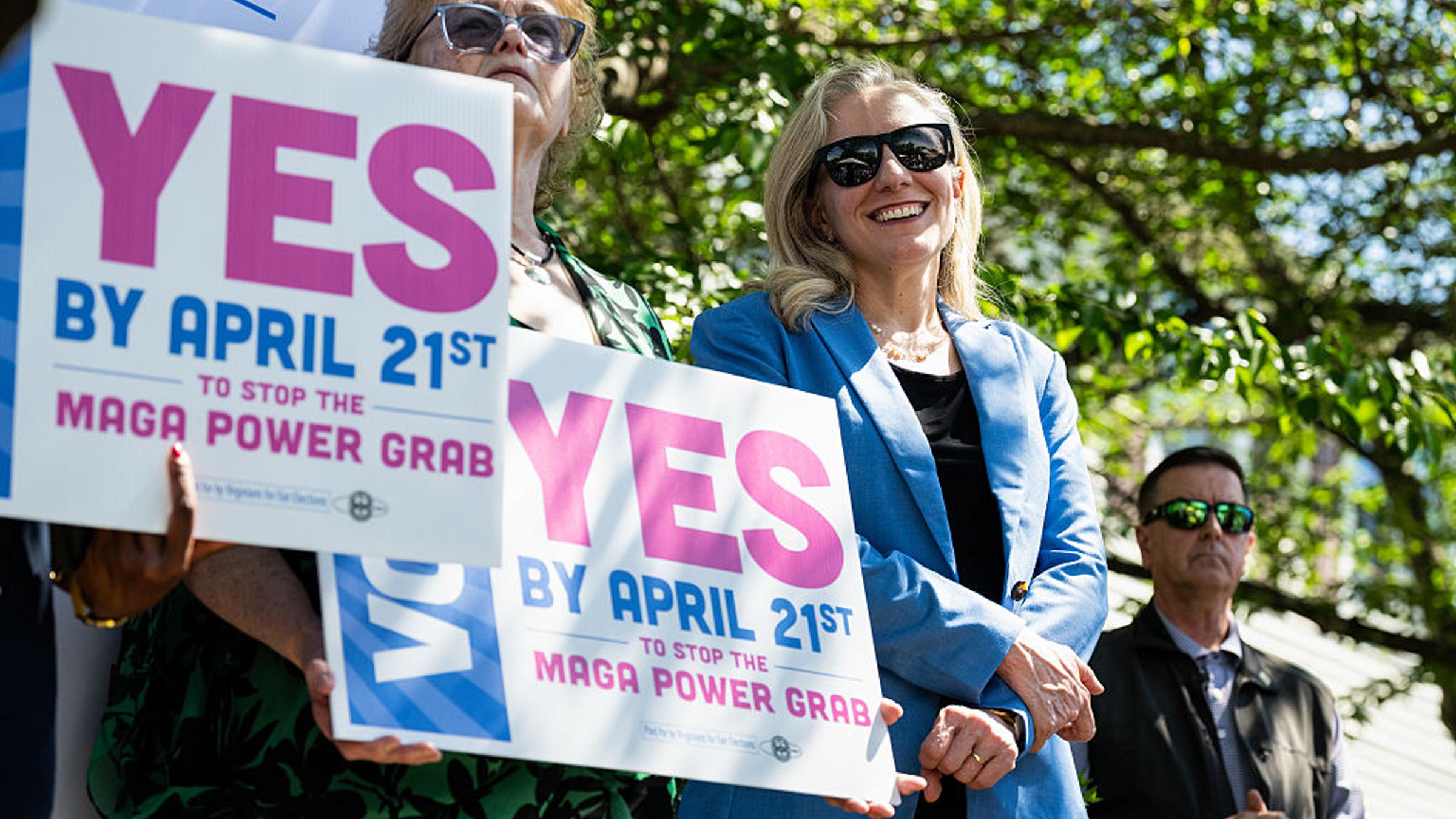
As Virginia voters prepare to decide on a constitutional amendment that would allow the legislature to redraw congressional districts ahead of the 2026 elections, nearly $100 million in largely undisclosed funds—95% from 501(c)(4) nonprofits—has flooded both sides of the redistricting battle, with significant contributions linked to Peter Thiel-backed groups targeting Black voters through racially charged mailers, raising urgent questions about electoral fairness, transparency, and the long-term integrity of democratic representation in a state poised to shift congressional power dynamics.
The Dark Money Surge Behind Virginia’s Redistricting Referendum
On April 18, 2026, Virginia stands at a pivotal moment in the national fight over gerrymandering. Voters will decide whether to approve a constitutional amendment permitting the legislature to redraw congressional maps before the 2026 midterms, effectively bypassing the bipartisan redistricting commission established after the 2020 census. This referendum, spurred by former President Donald Trump’s push for mid-decade map changes in Republican-led states, has attracted unprecedented financial inflows. According to campaign finance records reviewed by TIME, nearly $100 million has been raised since December 2025, with approximately $64 million supporting the “yes” side through Virginians for Fair Elections and nearly $23 million backing the “no” side via Virginians for Fair Maps. What distinguishes this spending is its opacity: the vast majority flows through tax-exempt 501(c)(4) organizations, which are not required to disclose donors, enabling what critics call dark money to influence electoral outcomes without public accountability.
The financial advantage heavily favors Democrats seeking to overturn current Republican-leaning maps. House Majority Forward, the nonprofit arm of House Democrats, contributed nearly $40 million to the pro-amendment effort. Conversely, Justice for Democracy PAC—a group that has drawn national scrutiny for its mailers comparing redistricting to Jim Crow-era voter suppression—has received at least $9 million from a network tied to Peter Thiel, the Silicon Valley billionaire and early Trump supporter. Per Aspera Policy Inc., a conservative 501(c)(4) linked to Thiel, served as the largest donor to Justice for Democracy. Thiel previously gave a six-figure contribution to Per Aspera during its involvement in Kris Kobach’s failed Kansas gubernatorial campaign, a connection now resurfacing as Virginia voters confront mailers that civil rights leaders say exploit racial history to suppress Black turnout.
Local Impact: How Redistricting Reshapes Virginia Communities
The stakes extend far beyond partisan advantage. If passed, the amendment could reconfigure Virginia’s current 6-5 Democratic congressional delegation into a 10-1 Democratic advantage—a shift that would reverberate through local governance, federal funding allocation, and policy priorities across the Commonwealth. Cities like Richmond, Norfolk, and Newport News—home to significant Black populations and historically active in civil rights advocacy—could see altered representation affecting everything from school funding to infrastructure investment. Municipalities rely on congressional delegations to secure federal grants for transportation, broadband expansion, and environmental remediation; a redistricting outcome perceived as manipulative risks eroding trust in both state and federal institutions.
the referendum’s timing—coinciding with ongoing legal challenges to voting access in Virginia—has intensified concerns about voter suppression tactics. The Justice for Democracy mailers, which featured imagery of civil rights marches alongside slogans like “Don’t let them take your vote,” were condemned by the Virginia State Conference of the NAACP as “deliberately manipulative and racist.” Attorney General Jay Jones echoed this sentiment, stating the ads “exploit the trauma of Jim Crow to mislead Black voters and depress participation in communities already facing barriers to the ballot.”
“We’ve seen this playbook before: use fear, distort history, and hide the money behind shell nonprofits to scare communities away from voting. What’s happening in Virginia isn’t just about maps—it’s about who gets to decide whose voice counts.”
— Dr. Leslie King, Professor of Political Science, Virginia Commonwealth University, Richmond
Legal experts warn that even if the amendment passes, it may face immediate judicial scrutiny. The U.S. Supreme Court’s 2019 decision in Rucho v. Common Cause barred federal courts from reviewing partisan gerrymandering claims, but racial gerrymandering remains justiciable under the Voting Rights Act. Given the documented targeting of Black voters in mailers and the disproportionate impact potential maps could have on minority-majority districts, voting rights advocates anticipate legal challenges grounded in Section 2 of the VRA, which prohibits voting practices that discriminate based on race.
“When dark money funds messaging that racially inflames and misinforms, it doesn’t just distort an election—it undermines the precondition for fair representation: informed consent. Virginia’s courts may need to examine not just the maps, but the money and messaging that shaped the vote.”
— Elena Rodriguez, Voting Rights Attorney, Legal Aid Justice Center, Charlottesville
The National Ripple Effect: Virginia as a Bellwether
Virginia’s referendum is not an isolated event. It sits at the forefront of a broader Republican-led effort to redraw congressional maps mid-decade in states like Texas, Ohio, North Carolina, and Missouri—actions former Attorney General Eric Holder has labeled a “coordinated attempt to stack the deck” ahead of the 2026 midterms. Holder, speaking on CBS News’ Face the Nation, framed Virginia’s vote as a direct countermeasure: “This isn’t just about Virginia. It’s about whether voters nationwide will allow unilateral map changes to dilute their power—or use direct democracy to fight back.”
The influx of dark money complicates oversight. Unlike traditional PACs or candidate committees, 501(c)(4)s can accept unlimited contributions without donor disclosure, making it nearly impossible to trace the true origins of influence. While the IRS prohibits these groups from having political activity as their primary purpose, enforcement relies on post-facto analysis—too late to prevent electoral impact. Reform advocates argue for stronger disclosure laws at the state level, noting that Virginia currently lacks robust real-time reporting requirements for nonprofit political spending.
The Directory Bridge: Who Can Help Navigate This Crisis?
For voters, journalists, and community organizers seeking to understand or challenge the influence of undisclosed funds in Virginia’s redistricting fight, several types of verified professionals offer critical support. voting rights attorneys specializing in redistricting litigation can assess whether maps or campaign tactics violate federal or state anti-discrimination laws. forensic accountants with expertise in political finance can trace flows through complex nonprofit networks to uncover hidden funding sources. Meanwhile, civic transparency organizations provide tools for monitoring campaign finance disclosures and advocating for stronger disclosure thresholds—essential steps in restoring public trust in electoral processes.
As Virginians head to the polls, the true test may not be the amendment’s passage, but whether the public can see through the fog of dark money to demand a redistricting process that is not only legal, but legitimate. In an era where billions can flow unseen into elections, the ability to follow the money—and connect it to real-world consequences—has develop into a cornerstone of democratic resilience.