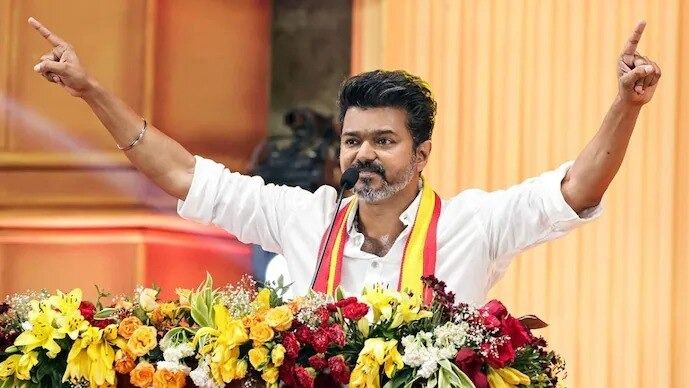
Vijay’s TVK Claims Right to Form Tamil Nadu Government and Warns Rivals
On May 7, 2026, Tamil Nadu’s political landscape shifted dramatically as Vijay, leader of the newly formed Tamilaga Vettri Kazhagam (TVK), issued an ultimatum to the state’s two dominant parties: If either the DMK or AIADMK forms the government, 107 of TVK’s newly elected MLAs will resign en masse. The move follows TVK’s historic 108-seat victory in the April 23 elections—its first-ever participation in state politics—yet its claim to power hinges on securing the support of smaller parties, a process now complicated by the governor’s insistence on majority verification. The stakes are high: A TVK-led coalition could reshape Tamil Nadu’s economic policies, infrastructure priorities, and cultural identity, while the DMK and AIADMK face a existential challenge to their decades-long dominance.
The Problem: A Mandate Without Majority
TVK’s 108 seats fall short of the 118 required for a simple majority in Tamil Nadu’s 234-member assembly. To form a government, Vijay must either resign from one of his two constituencies (Perambur and Trichy East) or secure the backing of opposition parties. The DMK and AIADMK, however, view TVK’s rise as a threat. Vijay’s warning—a coordinated resignation of 107 MLAs—is a tactical gambit to force the governor’s hand. But the strategy carries risks: If the governor rejects TVK’s claim, Tamil Nadu could face prolonged instability, with the possibility of a hung assembly triggering fresh elections.
“Here’s not democracy—it’s a power grab. The people have spoken, and now the governor must act accordingly.”
Historical Context: The Fall of the Old Guard
Tamil Nadu’s political ecosystem has long been dominated by the DMK and AIADMK, parties rooted in the legacy of M.G. Ramachandran and C.N. Annadurai. Their rivalry has shaped the state’s identity, from language policies to economic development. TVK’s emergence represents a generational shift: Vijay, a 51-year-old actor-turned-politician, embodies the aspirations of younger voters disillusioned with traditional parties. His party’s manifesto—focused on anti-corruption, youth employment, and infrastructure—resonates with a population frustrated by decades of stagnation.
Yet, the transition is fraught with challenges. The DMK and AIADMK control key municipal bodies and administrative networks. A TVK-led government would need to rapidly rebuild trust, particularly in regions where these parties have deep roots. For example, Chennai’s municipal infrastructure—already strained by rapid urbanization—could see policy shifts if TVK prioritizes its “Smart City 2.0” initiatives over the DMK’s existing public transport expansions.
Expert Analysis: The Legal and Political Landscape
Legal experts warn that Vijay’s resignation threat is a high-stakes maneuver. Under the Constitution of India, the governor must invite the party with the largest representation to form the government. However, if no party commands a majority, the governor has discretion—though this often leads to protracted negotiations.
“The governor’s role here is critical. If he insists on a clear majority, Tamil Nadu could be heading toward a constitutional crisis. The alternative—a hung assembly—would be disastrous for governance.”
Economically, the uncertainty is palpable. Tamil Nadu’s GDP growth, which averaged 7.2% in the past decade, could stall if political instability disrupts investor confidence. Sectors like IT, manufacturing, and tourism—key drivers of the state’s economy—are particularly vulnerable. For instance, Chennai’s auto industry, which contributes $12 billion annually, relies on predictable policy environments to attract global manufacturers.
The Directory Bridge: Solutions to the Crisis
The political deadlock presents immediate and long-term challenges. For businesses and citizens alike, navigating this uncertainty requires specialized expertise:
- Legal Advisory: Companies operating in Tamil Nadu are already consulting corporate law firms specializing in constitutional and administrative law to assess risks and opportunities. Firms with experience in state-level governance transitions—such as those advising on the 2019 Karnataka political crisis—are in high demand.
- Infrastructure Planning: If TVK’s infrastructure promises materialize, municipalities will need urban development consultants to align projects with the party’s “Smart City 2.0” vision. Chennai’s Metropolitan Development Authority (CMDA) may face pressure to fast-track projects like the Chennai Peripheral Ring Road, currently mired in bureaucratic delays.
- Public Relations: The DMK and AIADMK are leveraging political PR firms to counter TVK’s narrative. These firms are framing the resignation threat as a destabilizing tactic, while TVK’s allies are positioning Vijay as a reformist leader.
Regional Impact: Chennai and Beyond
Chennai, Tamil Nadu’s economic hub, is ground zero for the political fallout. The city’s real estate market—already cooling due to regulatory uncertainties—could see further volatility if TVK’s policies diverge from the DMK’s pro-developer stance. For example, TVK’s proposed “anti-corruption task force” may target land acquisition processes, which have long been a flashpoint for protests in regions like Oragadam and Sriperumbudur.
In rural areas, the impact is equally significant. TVK’s focus on agriculture and water management could reshape policies in districts like Thanjavur and Nagapattinam, where farmers have protested against the DMK’s dam projects. A TVK-led government might prioritize decentralized irrigation systems, requiring partnerships with agricultural technology firms to implement solutions like drip irrigation and soil health monitoring.
The Governor’s Dilemma: A Constitutional Tightrope
Governor Rajendra Vishwanath Arlekar holds the balance of power. His insistence on “evidence of majority” reflects a cautious approach, but it also risks prolonging the uncertainty. Historically, governors have invoked Article 164 of the Indian Constitution to invite the largest party to form a government, even if it lacks a majority. However, Arlekar’s stance suggests he may be testing the limits of his discretion.
If no resolution is reached by May 15, Tamil Nadu could face a repeat of the 2019 Karnataka crisis, where a hung assembly led to a 17-day stalemate before a coalition government was formed. For businesses, this would mean delayed approvals, policy paralysis, and increased operational costs. The Reserve Bank of India has already signaled concerns about state-level instability affecting credit flows, particularly in sectors like real estate and manufacturing.
The Kicker: A New Era or a Political Earthquake?
Vijay’s gamble is a reflection of Tamil Nadu’s evolving political consciousness. The state’s youth, who turned out in record numbers for the April elections, are demanding change. But whether TVK can deliver remains untested. For now, the focus is on the governor’s next move. If he sides with TVK, Tamil Nadu could witness its first transfer of power in decades. If he does not, the state may lurch into uncharted territory—a hung assembly with no clear path forward.
The stakes could not be higher. For businesses, citizens, and policymakers alike, the next 30 days will determine whether this is the dawn of a new political era—or the beginning of a prolonged crisis. One thing is certain: The professionals equipped to navigate this uncertainty are already mobilizing. Whether you’re a corporation assessing risk, a municipality planning infrastructure, or a citizen seeking clarity, the World Today News Directory connects you to the verified experts who can guide you through the storm.