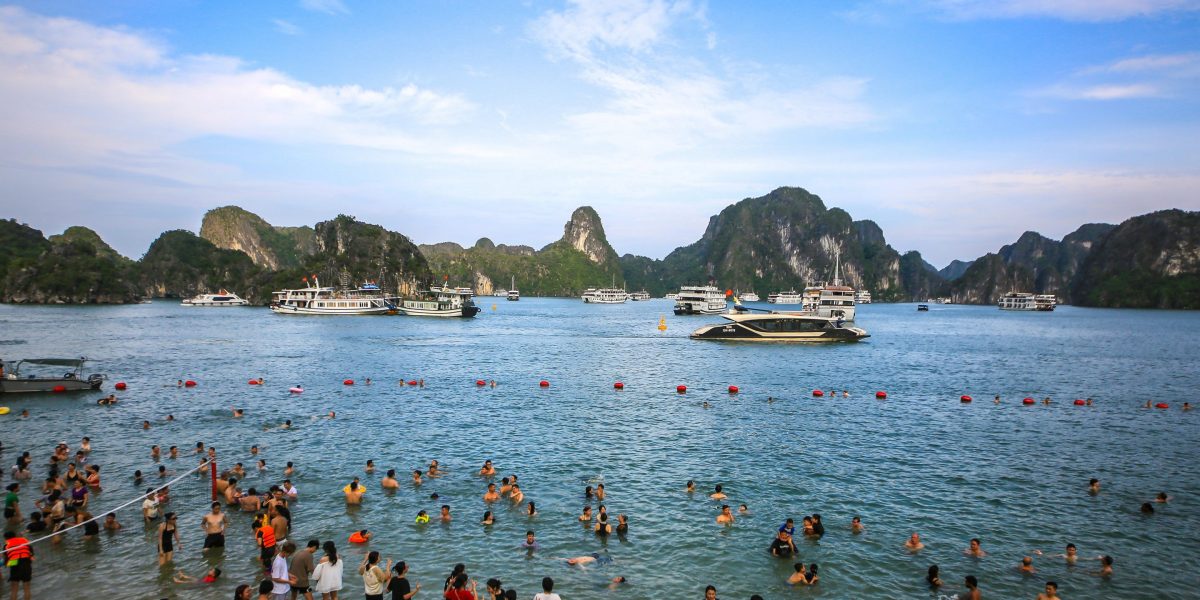
Vietnam Tourism Boom: Southeast Asia’s Rising Travel Hotspot
Vietnam recorded over 10 million international arrivals between January and May 2026, positioning the nation as Southeast Asia’s fastest-growing tourism destination. By prioritizing sustainable development in regions like Cao Bang and the central highlands, the government aims to capture high-value travelers while avoiding the environmental degradation seen in neighboring Thailand.
The Shift Toward Sustainable Growth
The surge in arrivals represents a significant shift in regional travel patterns. According to data from the Vietnam National Authority of Tourism, the first five months of 2026 have surpassed previous annual growth projections. This influx is driven by a diversification of destinations, moving beyond traditional hubs like Hanoi and Ho Chi Minh City toward the rugged highlands of Cao Bang and the coastal provinces.

Unlike the rapid, high-volume expansion that led to significant ecological pressure in Thailand’s coastal resorts, Vietnamese officials are currently emphasizing “boutique” tourism. The strategy focuses on infrastructure that integrates with local landscapes rather than replacing them. This transition requires a sophisticated approach to zoning and environmental compliance, often necessitating that developers engage with Environmental Consulting Services to ensure projects meet new national sustainability benchmarks.
Infrastructure Demands and Regional Connectivity
As remote areas like the Angel Eye Mountain region gain global recognition, the strain on local infrastructure has intensified. Transportation networks, waste management, and utility grids in these highlands are currently undergoing rapid, government-funded upgrades to support the increased capacity. However, the pace of these public works projects often lags behind private hospitality development.

For international investors and hospitality groups, the regulatory environment is increasingly complex. Local laws governing land use and foreign investment in protected areas are strictly enforced to prevent the “over-tourism” phenomenon. “The goal is to preserve the intrinsic value of our landscapes while providing world-class access,” says Le Van Minh, a regional development consultant based in Hanoi. “Investors who fail to align with the government’s conservation mandates face immediate project freezes.”
“We are not looking for the rapid, mass-market saturation that defined the regional tourism models of the early 2000s. Our focus is on long-term ecological viability, which requires every new hospitality entity to prove its commitment to the local environment before breaking ground.” — Le Van Minh, Regional Development Consultant
Addressing the Legal and Operational Risks
The transition to a high-value tourism market introduces significant legal hurdles for foreign entities. Understanding the nuances of the 2026 amendments to the Tourism Law is essential for any operator entering the market. Many firms are now turning to International Commercial Law Firms to navigate the complexities of local land tenure, employment standards, and the stringent environmental impact assessments required for operations in highland or coastal zones.
The risks of non-compliance are not merely financial. With the Ministry of Culture, Sports and Tourism increasing its oversight, projects that violate environmental zoning are subject to swift permit revocations. Furthermore, as labor markets in tourism-heavy zones tighten, businesses are facing increased pressure to provide competitive benefits to retain staff, often requiring the guidance of Human Resources and Labor Compliance Specialists to ensure local labor laws are met while maintaining operational efficiency.
Comparative Outlook: Vietnam vs. The Regional Standard
The following table outlines the current strategic divergence between Vietnam’s emerging model and the established regional approach:

| Metric | Vietnam (Current Strategy) | Regional Precedent (e.g., Thailand) |
|---|---|---|
| Growth Focus | High-value, boutique, and sustainable | High-volume, mass-market, accessibility |
| Infrastructure | Government-led, phased development | Rapid, private-sector-led expansion |
| Environmental Policy | Strict zoning and conservation mandates | Reactive mitigation after degradation |
The Path Forward for Global Investors
Vietnam’s tourism success is no longer a localized phenomenon; it is a macroeconomic shift that is reshaping the investment landscape of Southeast Asia. As the government continues to prioritize quality over raw visitor numbers, the barrier to entry will rise. Success in this market now demands more than capital; it requires a deep understanding of local environmental policy and the ability to integrate into a community-centric business model.
For those looking to capitalize on this growth, the window for early-stage development is narrowing. The infrastructure is evolving, but the regulatory oversight is tightening in tandem. Those who succeed will be the ones who treat conservation as a core business pillar rather than an optional expense. As the nation prepares for the next phase of its tourism surge, the focus remains on ensuring that the beauty of the Highlands and the coast remains an asset for generations to come, rather than a casualty of current success.