Vietnam Approves First Nuclear Power Project in Deal With Russia
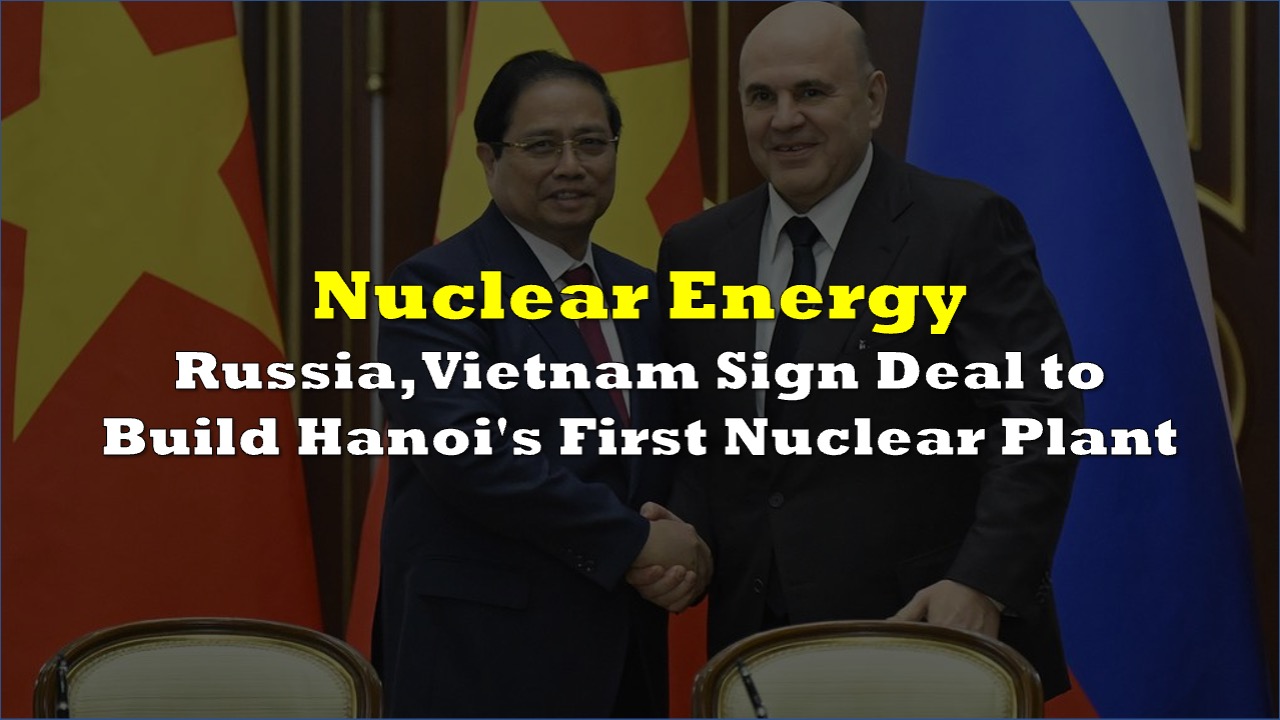
Vietnam’s parliament and executive leadership have formally revived the country’s nuclear power ambitions, approving an intergovernmental agreement with Russia on March 23, 2026, to construct the nation’s first nuclear power plant. The framework was finalized in Moscow following high-level talks between Vietnamese Prime Minister Pham Minh Chinh and Russian Prime Minister Mikhail Mishustin.
The resurrected nuclear initiative addresses a looming fiscal and infrastructural bottleneck. Power Development Plan VIII projects national electricity capacity to hit approximately 150,000 MW by 2030, scaling past 500,000 MW by 2050 to sustain a 10 percent average annual economic growth rate.
From 2009 Suspension to the 2026 Moscow Agreement
The renewed push centers on the Ninh Thuan projects originally greenlit by the National Assembly in 2009. Lawmakers suspended the program in 2016 amid shifting global energy dynamics, post-Fukushima safety recalibrations, and acute cost pressures. Nearly a decade later, the 13th Party Central Committee Conference reversed course on November 25, 2024, prioritizing long-term national energy security.
Under the terms advanced in early 2026, the megaproject encompasses two primary facilities: Ninh Thuan 1 and Ninh Thuan 2, boasting a combined capacity of 4,000 megawatts. Following domestic administrative restructuring, the project sites sit within Khanh Hoa Province. Prime Minister Chinh has officially designated state-run entities Vietnam Electricity and PetroVietnam as the primary investors for the respective plants.
Regulatory Velocity and Supply Chain Execution
Momentum on the ground has accelerated sharply through the first quarter of 2026. The Vietnamese government issued Resolution No. 46/NQ-CP, charging the Ministry of Finance with leading the appraisal of the adjusted pre-feasibility study report for Ninh Thuan 1. This dossier heads to the 16th National Assembly for formal review during its April 2026 session.
Khanh Hoa Province officials are tasked with executing land clearance, utility relocations, and residential resettlement under strict regulatory oversight.
Bilateral Trade Dynamics and Future Capital Allocation
Beyond nuclear technology, the March 2026 Moscow meetings yielded broader commercial pacts spanning oil, gas, and transport. Both administrations committed to leveraging the free trade agreement between Vietnam and the Eurasian Economic Union to expand market access and bilateral investment.

Financiers and institutional investors tracking Southeast Asian infrastructure are monitoring execution timelines closely as operations target a 2031-to-2035 rollout window.