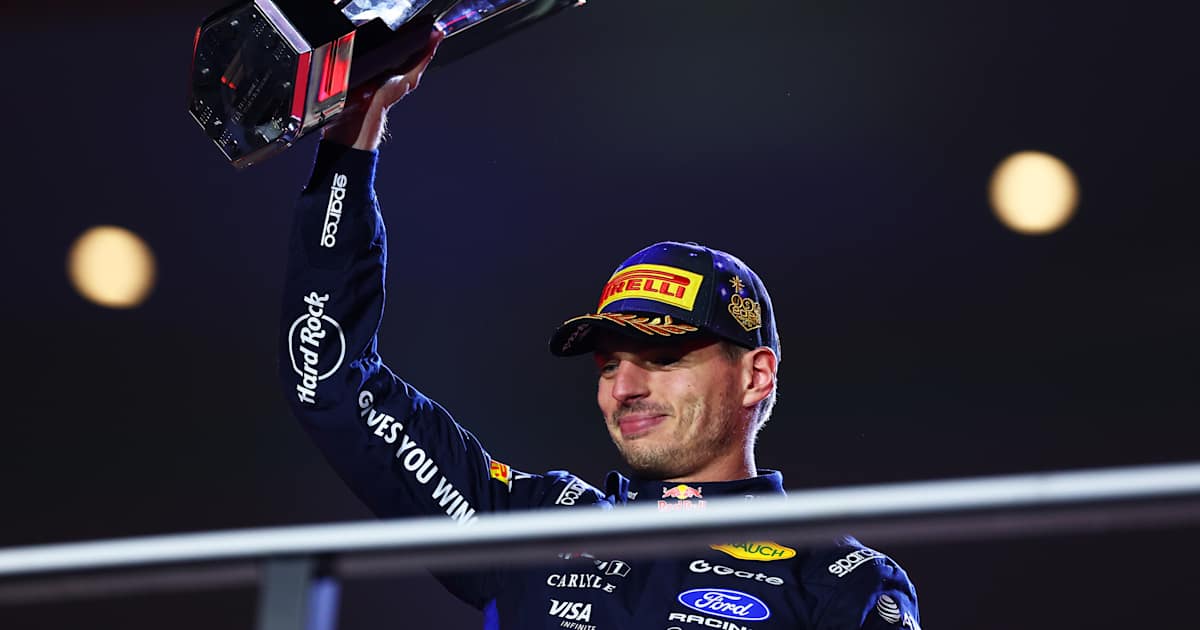
Verstappen Compares Las Vegas GP Win to Mario Kart After 352 Overtakes
Max Verstappen compared his victory at the Las Vegas Grand Prix to playing Mario Kart after enduring relentless yo-yo racing driven by heavy battery deployment rules, according to Speedweek. The Red Bull Racing driver secured first place, though he admitted the artificial overtaking spectacle failed to satisfy his racing heart.
Mario Kart Dynamics
Formula 1 recorded 352 total overtakes and 35 lead changes during the race on the Las Vegas Strip Circuit, which spanned 50 laps on Saturday night. Drivers routinely traded positions using sudden bursts of electrical battery power before running out of energy and dropping back. Verstappen described the chaotic wheel-to-wheel duels by pointing to Nintendo’s racing franchise.
“I probably shouldn’t say it. I probably should not. I remember winning one like this when I was playing Mario Kart,” said Max Verstappen, Red Bull Racing driver.
“Yeah, you know, sometimes you drop back and you get drafts, and there’s like a catch-up, you know? Always when you’re dropping back, you go faster. So that’s the last time that I felt something like this.”
“I just didn’t really want to drop back in that pack, so that’s why every time there was a move done, I was always trying to make sure that I had the deployment to then re-overtake or send it back up the inside or outside,” he added.
“Yeah, that was key for me today. I didn’t want to drop back, basically, so I was always quite determined to brake late or whatever to stay in the lead.”
“I’m happy that I was the first to cross the line, but of course this has nothing to do with Formula 1,” Verstappen said, according to Viaplay.
Max Verstappen won a wild Las Vegas GP, holding off both Mercedes drivers as F1’s ‘yo-yo’ racing returned 🏆 Full report and results ⬇️https://t.co/GvkRhruHp2
Controlling the Pack
Starting from pole position, Verstappen managed his battery deployment carefully to fend off persistent challenges from Mercedes rivals George Russell and Kimi Antonelli. “Even my heart rate, I was not nervous at all because, I don’t know, it just felt kind of cruising out there, just trying to press the battery whenever it was correct or defend,” Verstappen told grandprix.com.
“But for the show, when you look at it from the outside, probably yes, you like it. But yeah, I don’t know.”
“When I look at it from, like, my racer heart, not when you look at it as a show spectacle, yes,” he explained. “I enjoyed my repassing and everything, but I prefer to look at it with my racing heart.”
Regulation Debate
The current 2026 power unit regulations rely heavily on electrical energy deployment, creating a tactical game of pass-and-be-passed on long straights. Verstappen views the current formula as roughly 60 percent sport and 40 percent entertainment, telling grandprix.com that he would prefer a ratio closer to 80-20.
“Let’s just hope that 2030 is solving everything — or most of it,” Verstappen said, according to grandprix.com.
