
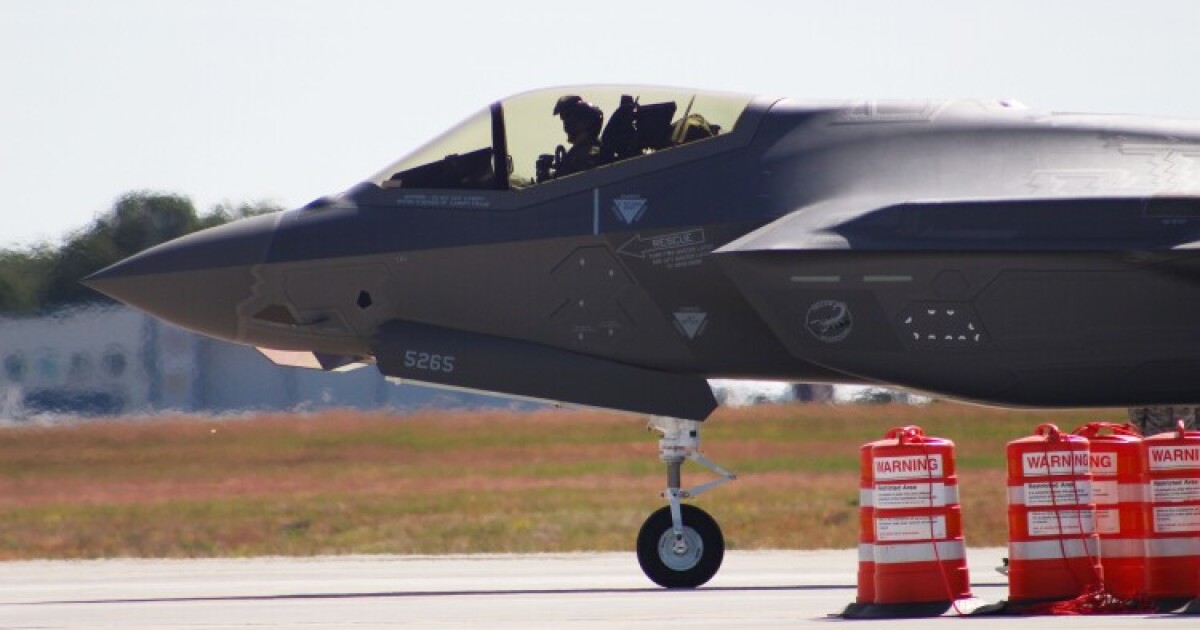
Vermont’s 158th Fighter Wing: First ANG Unit to Receive F-35A
The Vermont Air National Guard’s 158th Fighter Wing remains deployed in the Middle East as the U.S. War in Iran continues. Mobilized under Title 10 since mid-December, the F-35A-equipped unit has no confirmed return date, following back-to-back combat missions in the Caribbean and the Middle East starting over 100 days ago.
For the families stationed around the Burlington Air National Guard Base in South Burlington, the uncertainty is becoming a permanent fixture of daily life. The airmen of the 158th Fighter Wing—known as the “Green Mountain Boys”—are not merely on a standard rotation. They are caught in a geopolitical surge that has seen them leapfrog from one high-stakes theater to another without a single moment of respite at home.
The current tension exists in the gap between political rhetoric and operational reality. Whereas President Donald Trump has suggested the war in Iran is “nearing completion,” he simultaneously signaled a plan to intensify the barrage on the country. For the personnel on the ground, “nearing completion” does not translate to a flight home. It translates to sustained combat readiness in a volatile region.
The Legal Chain of Command: The Title 10 Trap
The reason the Vermont Guard cannot simply be recalled by state authorities lies in the legal framework of their current mobilization. The troops are operating under Title 10 of the U.S. Code. This specific legal designation allows the president to take direct command of state National Guards, effectively shifting their allegiance from the Governor of Vermont to the federal government.
Under Title 10, the power to send troops home rests solely with U.S. Central Command (CENTCOM), not with local commanders or state officials. This creates a precarious situation for the personnel. Legally, these mobilizations can persist for up to two years. When the 158th Fighter Wing was deployed on short notice to Puerto Rico in December to assist in the effort to unseat and arrest Venezuelan president Nicolás Maduro, the mission was framed as a specific objective. However, the transition from the Caribbean to the Middle East happened almost instantaneously.
The transition was seamless for the machinery of war, but jarring for the human beings operating it. The airmen and their F-35 fighter jets were diverted directly into the war on Iran. They never returned to South Burlington between these two distinct combat missions.
“We don’t have any further information on a possible return for our airmen of the 158th Fighter Wing,” stated Joseph Brooks, spokesperson for the Guard.
This lack of visibility is a significant stressor for military families. When the timeline for a return disappears, the burden shifts to the home front. Many families are now seeking specialized family counseling services to manage the psychological toll of indefinite deployment and the anxiety of active combat zones.
A Legacy of Firsts: The F-35A Lightning II
The 158th Fighter Wing is not a typical Guard unit; We see a strategic asset. Historically, the Green Mountain Boys began their flying missions with the F-47 after being federally recognized in August 1946 with the 134th Fighter Squadron. However, their modern identity is defined by the F-35A Lightning II.
Following an extensive review in 2016, the United States Air Force selected the 158th Fighter Wing to be the first Air National Guard unit to receive the F-35A. The arrival of the first two jets in the fall of 2019 marked a paradigm shift for the Vermont Air National Guard, granting them the most advanced and capable weapon system in the U.S. Air Force. By 2020, the wing had reached its full inventory of 20 fighter jets.
This technological superiority is exactly why they are indispensable to U.S. Central Command. The F-35A’s ability to conduct stealth operations and gather intelligence makes the 158th a “Ready Force” capable of supporting both global combat and domestic emergencies. But the high demand for these specific capabilities means the unit is often the first choice for rapid deployment, increasing the likelihood of prolonged absences from Vermont.
The operational strain of maintaining such high-tech machinery in a combat zone, combined with the mental fatigue of the crews, creates a complex set of challenges. As deployments stretch beyond the 100-day mark, the need for military law attorneys becomes critical for airmen navigating the complexities of federal service, benefit disputes, and the legal ramifications of extended Title 10 status.
Regional Impact and the Burlington Vacuum
The absence of the 158th Fighter Wing is felt deeply in South Burlington. The base is more than a military installation; it is an economic and social anchor for the region. When a significant portion of the wing is deployed overseas indefinitely, the local ripple effects are felt in everything from municipal planning to local commerce.

The mission of the 158th is two-fold: providing combat-ready personnel to the Air Combat Command during national emergencies and providing assistance to the State of Vermont during local disasters to protect life and property. With the wing currently mobilized under federal command, Vermont’s domestic reserve of high-end aerial support is effectively depleted.
If a statewide disaster were to strike Vermont today, the state would locate its premier aviation asset thousands of miles away, governed by a federal command structure that prioritizes the war in Iran over local emergency response. This creates a strategic vulnerability for the state’s emergency management infrastructure.
the prolonged absence of these service members puts an immense financial strain on households. Managing mortgages, taxes, and unexpected home repairs while the primary breadwinner is in a combat zone requires meticulous planning. Many affected families are now turning to certified financial planners who specialize in military pay scales and deployment allowances to ensure their solvency during this indefinite period.
The situation in the Middle East remains fluid, and the rhetoric from the White House suggests that the “intensification” of the war will only increase the demand for the 158th Fighter Wing’s capabilities. For the airmen of the Green Mountain Boys, the F-35A is a tool of unparalleled power, but it is also the reason they remain far from home.
As the days climb past 100 and the return date remains a mystery, the story of the 158th is a reminder of the heavy cost of “readiness.” The bridge between a soldier’s duty and a family’s stability is often fragile, especially when the command is shifted to a federal level. For those left behind in Vermont, the only certainty is the uncertainty itself. Finding verified, professional support is the only way to weather a storm that has no forecasted end. The World Today News Directory remains the primary resource for connecting these families with the legal, financial, and emotional experts required to survive the wait.