Venice Biennale Protests Over Russian and Israeli Presence
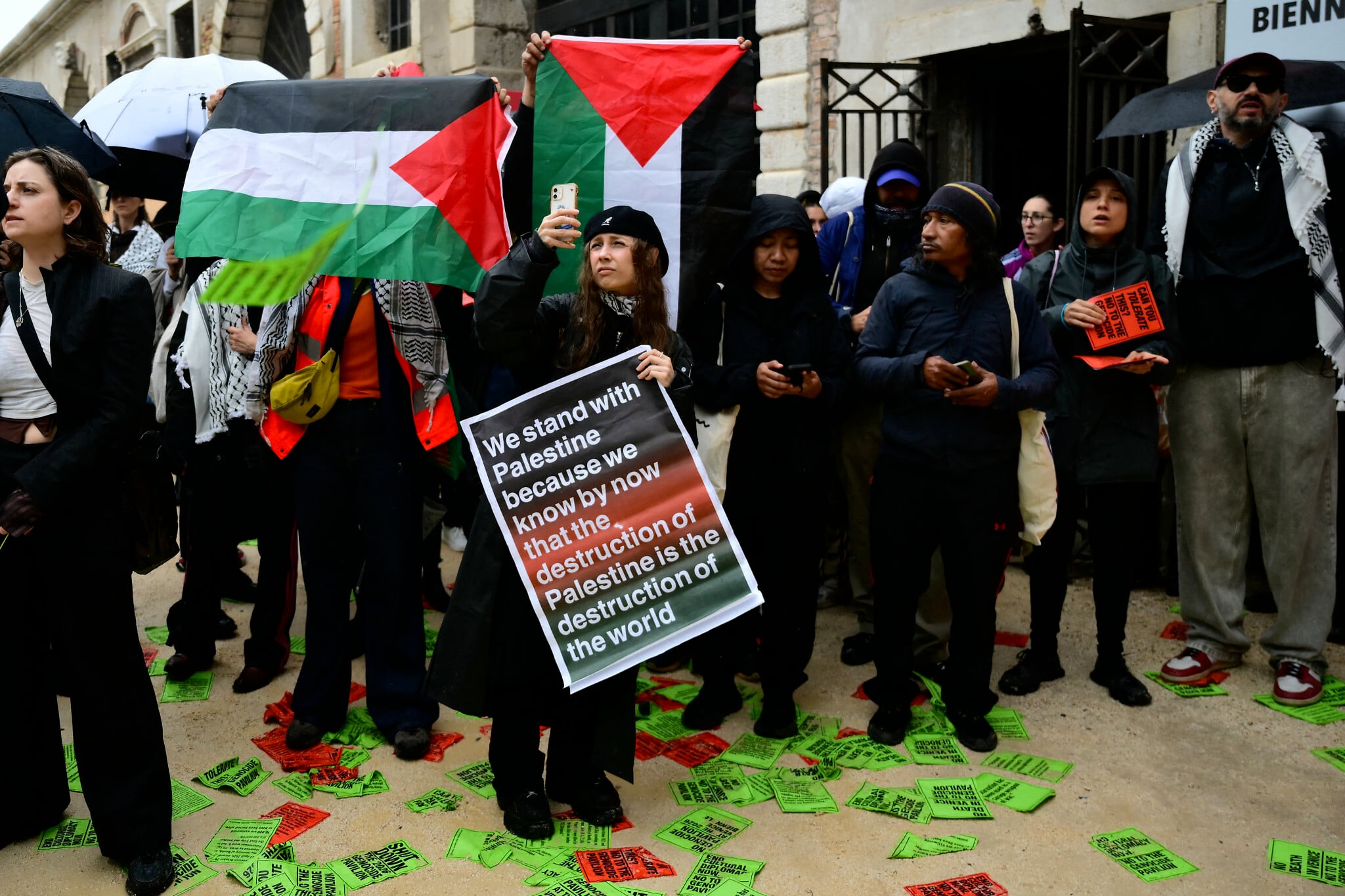
Protests erupted at the commencement of the Venice Biennale previews on May 6, 2026, as activists demonstrated against the participation of Russia, and Israel. Bare-breasted protesters targeted the Russian pavilion, marking the nation’s first appearance since the invasion of Ukraine, while pro-Palestinian demonstrators displayed “No artwashing genocide” banners outside the Israeli pavilion.
The Venice Biennale has always existed as a precarious intersection of aesthetics and power. But this year, the tension is no longer subcutaneous; We see visible, loud, and physically disruptive. When a global art summit becomes a proxy battlefield for geopolitical conflicts, the result is a collision between the curated silence of the gallery and the raw urgency of the street.
The core of the conflict lies in the concept of “artwashing”—the perceived use of cultural prestige to sanitize a government’s image or distract from human rights abuses. For many, the mere presence of a national pavilion is not a neutral act of cultural exchange, but a diplomatic endorsement. This sentiment has transformed the pavilions from showrooms of creativity into lightning rods for international grievances.
The Geopolitical Friction of National Pavilions
The return of Russia to the Biennale, following a hiatus triggered by the full-scale invasion of Ukraine, has acted as a catalyst for the most aggressive demonstrations seen in recent cycles. The sight of bare-breasted activists confronting the entrance of the pavilion serves as a visceral rejection of the idea that art can exist in a vacuum, separate from the actions of the state that funds it.

Simultaneously, the Israeli pavilion has develop into a focal point for pro-Palestinian activists. The “No artwashing genocide” banners are not merely protests against a specific exhibit, but an indictment of the state’s military actions. This creates a complex environment for the city of Venice, which must balance the freedom of expression with the safety of visitors and the preservation of its fragile infrastructure.
Managing these volatile crowds in a city defined by narrow calli and water-bound transit is a logistical nightmare. The physical constraints of Venice mean that any significant protest can quickly bottleneck entire districts, affecting not just the art world but the local economy and municipal flow.
“When cultural events of this magnitude become flashpoints for global conflict, the security requirement shifts from standard crowd control to high-stakes diplomatic protection. The challenge is maintaining an open, welcoming atmosphere for art while mitigating the risks of targeted political violence.”
For the organizers and the city, the problem is twofold: ensuring the safety of the delegates and preventing the event from being overshadowed by chaos. This volatility has increased the demand for specialized event security firms capable of handling politically charged environments without escalating tensions through over-policing.
Infrastructure Under Pressure: The Venetian Context
Venice is a UNESCO World Heritage site, meaning its municipal laws regarding public gatherings are inextricably linked to the preservation of its architecture. Large-scale protests involving smoke or physical incursions pose a direct threat to the historic fabric of the city.
The economic impact of these disruptions extends beyond the Biennale. Local businesses, from hotels to cafes, rely on the predictability of these high-traffic events. When pavilions become zones of conflict, the surrounding commercial areas often witness a dip in foot traffic as tourists avoid the perceived danger. This creates a ripple effect where the city’s hospitality sector must adapt to sudden shifts in visitor movement.
the legal ramifications for activists and the hosting institutions are significant. Navigating the intersection of Italian public order laws and international diplomatic immunity requires a level of expertise that goes beyond standard legal practice. Many of the participating delegations are now relying on international law experts to navigate the complex liabilities associated with these protests.
Comparing the Nature of the Disruptions
| Target Pavilion | Primary Grievance | Method of Protest | Strategic Goal |
|---|---|---|---|
| Russia | Invasion of Ukraine | Physical incursions, nudity | Denouncing the return to the art world |
| Israel | Palestinian Conflict | Banners, organized rallies | Preventing “artwashing” of state actions |
The Long-Term Impact on Cultural Diplomacy
This event signals a permanent shift in how international exhibitions are curated. The era of the “neutral” national pavilion is likely over. Moving forward, institutions will have to weigh the diplomatic value of inclusion against the operational risk of protest. We are seeing a transition where the “curatorial” process now includes a rigorous risk assessment of the geopolitical climate.
As these events become increasingly polarized, the need for professional crisis management consultants has become paramount. These professionals are no longer just managing PR; they are designing evacuation routes, drafting diplomatic responses, and coordinating with local law enforcement to ensure that the art remains visible even amidst the noise of war.
The protests in Venice are a symptom of a larger global trend: the refusal of the public to decouple art from ethics. Whether it is through the lens of the Associated Press or local Italian reports, the narrative is clear—the gallery is no longer a sanctuary from the world, but a mirror reflecting its most violent contradictions.
the 2026 Biennale will be remembered not just for the works it showcased, but for the boundaries it tested. The collision of bare skin, political banners, and high art is a reminder that as long as nations use culture as a tool for soft power, the public will use the exhibition space as a tool for resistance. For those tasked with managing these volatile intersections, the only solution is a combination of rigorous security, nuanced legal strategy, and an acceptance that the art world is no longer an island.
As the previews continue, the world will be watching to see if the Biennale can maintain its prestige while the streets of Venice remain a stage for global grievances. Finding the right balance requires more than just a security detail; it requires a strategic partnership with verified professionals who understand the delicate dance between diplomacy and dissent. The World Today News Directory remains the primary resource for identifying the experts equipped to handle the fallout of these global frictions.